
Dog Allergic Reaction Symptoms: A Guide for Queens Pet Owners
It’s a scary moment for any pet owner. One minute your dog is fine, and the next they’re scratching uncontrollably, or worse, their face is starting to swell. These are classic dog allergic reaction symptoms, which can range from mild itching to a life-threatening emergency.
For pet owners in Queens neighborhoods like Oakland Gardens, Bayside, and Fresh Meadows, knowing what to look for is the first step. This guide uses clear, calm language to help you identify symptoms, know when it’s an emergency, and take the right steps.
How to Spot Dog Allergic Reaction Symptoms

When you see your dog in distress, it's natural to feel concerned. An allergic reaction is your dog's immune system overreacting to something it considers a threat. The trigger could be from an insect bite, something in their food, or an allergen in the air during a walk in Cunningham Park.
Here are the signs to watch for, broken down into common and more serious symptoms.
Common Signs (Usually Skin-Related)
Most allergic reactions first appear on your dog's skin. You may notice:
- Intense Itching and Scratching: This is more than a normal scratch. It’s persistent, frantic scratching that seems to offer no relief.
- Red, Inflamed Skin: Check their belly, paws, armpits, and ears. The skin may look pink or red, and you might see angry, weeping sores known as "hot spots."
- Hives: These are small, raised bumps that can appear suddenly all over your dog’s body. You can often feel them better than you can see them.
- Constant Licking or Chewing: Many dogs will focus on their paws, licking or chewing them until the skin is raw and the fur is stained.
More Serious Signs
Sometimes, a reaction goes beyond the skin. Keep an eye out for these signs that suggest a more widespread issue:
- Digestive Upset: Sudden vomiting or diarrhea can point to a food allergy or a more severe, systemic reaction.
- Facial Swelling (Angioedema): A swollen face, muzzle, or eyelids is a major warning sign. This is often seen after an insect sting and can worsen quickly.
- Sneezing and Watery Eyes: Similar to human seasonal allergies, you might see a runny nose or sneezing.
If you spot any of these signs, it's time to get professional advice.
Text us at 718-301-4030. If symptoms are severe or after hours, go directly to a 24/7 emergency hospital.
Urgent vs. Emergency: When to Get Help Now

When you see your dog having an allergic reaction, it’s important to assess how serious it is. Not every reaction is an immediate crisis, but knowing the difference between an urgent issue and a true emergency helps you get the right care.
Let's break down how to make that call for your pet in Queens Village, Hollis, or Little Neck.
Signs That Need Urgent Care (See a Vet Soon)
Many allergic reactions are uncomfortable for your dog but not immediately life-threatening. These situations warrant a call to your vet for guidance and an appointment.
Urgent care symptoms include:
- Mild, localized hives on one part of the body.
- Constant scratching or licking that prevents your dog from settling down.
- A single episode of vomiting or diarrhea, but your dog is otherwise acting normally.
- Red, itchy skin or paws without facial swelling or breathing trouble.
These symptoms mean your dog is uncomfortable and needs help. A vet visit can provide relief and prevent the problem from getting worse.
Signs That Are a True Emergency (Go to a Vet NOW)
An emergency is a "stop everything and go now" crisis. We're talking about anaphylaxis, a severe and rapid reaction that can be life-threatening without immediate treatment.
Emergency symptoms include:
- Swelling of the face, muzzle, or throat. This is a major red flag, as it can block their airway.
- Difficulty breathing, such as wheezing, gasping, or frantic panting. For more details, see our guide on signs of respiratory distress in dogs.
- Widespread hives that appear suddenly all over their body.
- Pale, white, or blue-tinged gums, signaling a dangerous lack of oxygen.
- Sudden collapse, weakness, or disorientation.
- Severe or repeated vomiting or diarrhea.
If you see any of these signs, do not wait. Go directly to the nearest 24/7 emergency veterinary hospital. To learn more, read our general guide on when to take a dog to the emergency vet.
What to Do Before You Arrive at the Vet

Once you've decided to seek veterinary care, a few simple steps can help ensure a safe trip and a more effective visit.
Practical Steps to Take:
- Call Ahead: Let the veterinary clinic know you are on your way. Briefly describe your dog's symptoms. This gives the team time to prepare.
- Travel Safely: Secure your dog in a carrier or on a leash. An anxious or pained dog can act unpredictably.
- Take a Photo: Symptoms like hives or swelling can change quickly. A photo or short video on your phone is incredibly helpful for the vet.
- Think About Triggers: Try to recall anything new your dog was exposed to. A new treat? A walk in a different park? A bee or wasp sting?
- Do Not Give Human Medication: Avoid giving medications like Benadryl only if your veterinarian advises. The wrong dose can be harmful and may interfere with the treatments your dog needs.
Staying calm can help keep your dog calm, too.
Text us at 718-301-4030. If symptoms are severe or after hours, go directly to a 24/7 emergency hospital.
Common Causes of Dog Allergic Reactions in Queens
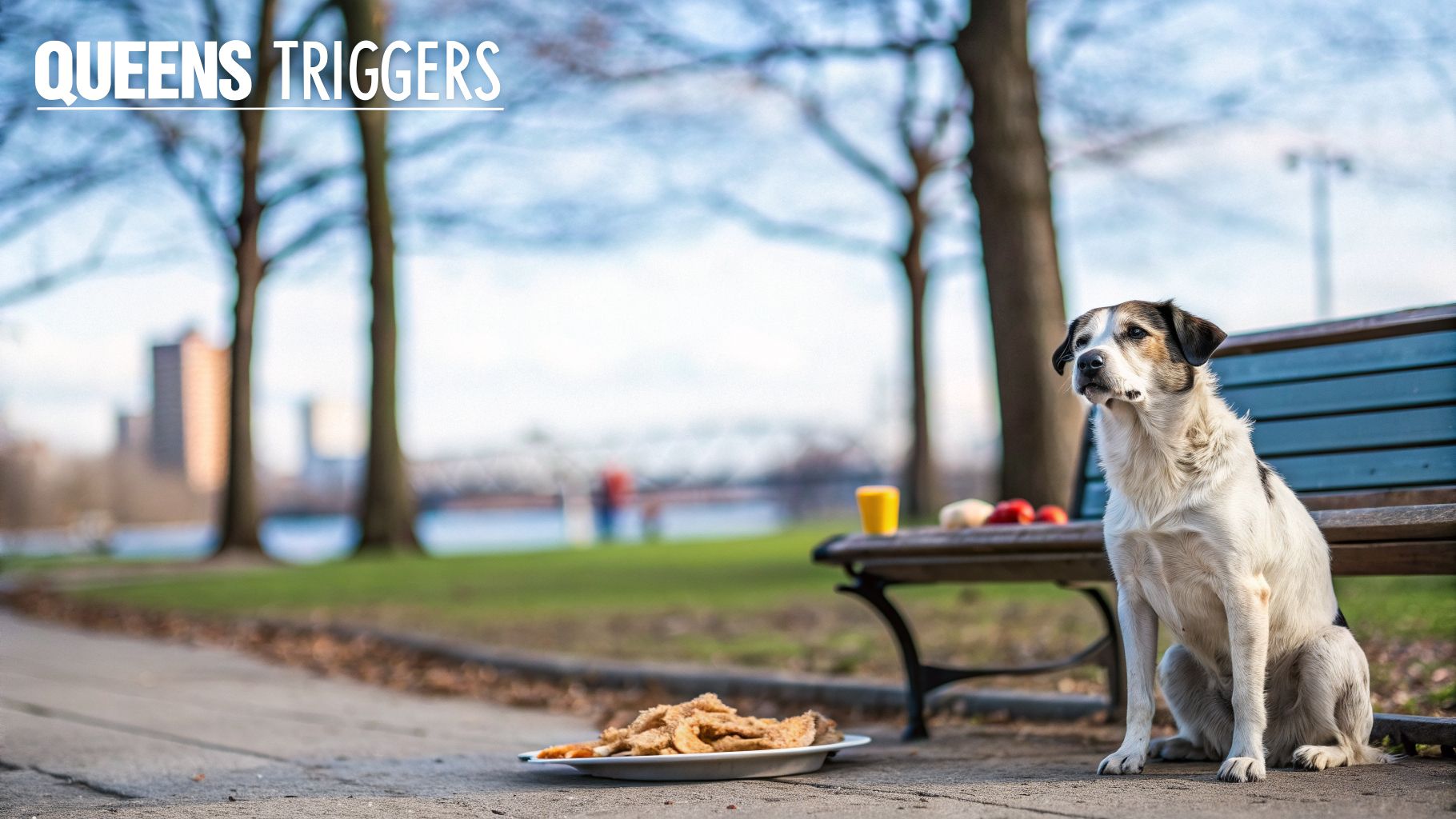
The cause of your dog’s discomfort is often found in their everyday world—from our beautiful Queens parks to right inside your home in Glen Oaks or Hollis.
- Environmental Allergens: These are the most common triggers. Your dog may inhale them or absorb them through their skin.
- Pollen: From trees, grasses, and weeds in local parks.
- Mold Spores: Common in humid Queens summers.
- Dust Mites: Tiny organisms living in carpets, bedding, and furniture.
- We are seeing environmental allergies get worse, partly because warmer weather extends pollen season. You can read more about how climate change is affecting dog allergies on time.com.
- Food Allergies: While less common than environmental allergies, a true food allergy can cause chronic itching and digestive issues. The most frequent culprits are proteins like beef, chicken, and dairy. You can see the full study on canine food allergies for more data. Diagnosing them requires a strict elimination diet under veterinary guidance, often using a prescription dog food for allergies.
- Insect Bites and Stings: A single bee, wasp, or hornet sting can cause a severe acute reaction, including facial swelling and hives. Flea bites are another major trigger for dogs with Flea Allergy Dermatitis (FAD).
Figuring out the cause is key to providing long-term relief.
Text us at 718-301-4030. If symptoms are severe or after hours, go directly to a 24/7 emergency hospital.
Short FAQ for Queens Pet Owners
Here are quick answers to some of the most common questions we hear from pet owners in Bayside, Oakland Gardens, and surrounding neighborhoods.
What are the first signs of an allergic reaction in a dog?
The first signs are often skin-related: sudden, intense itching, redness (especially on the belly and paws), or hives (small bumps under the skin). Some dogs may start licking their paws obsessively.
Can I give my dog Benadryl?
You should only do this if your veterinarian advises. The dosage for dogs is very different from that for humans, and an incorrect dose can be ineffective or even harmful. Always get professional guidance first.
How do I know if my dog's reaction is an emergency?
Any difficulty breathing or significant swelling of the face, muzzle, or throat is an emergency. Other emergency signs include collapse, pale gums, and widespread hives. If you see these, go to a 24/7 vet hospital immediately.
What should I do if my dog gets stung by a bee?
First, if you can see the stinger, try to scrape it out with a credit card rather than squeezing it with tweezers. Watch your dog closely for the next hour for signs of swelling, hives, or breathing trouble. If any of these appear, it's time to seek veterinary care.
For any concerns about your dog's health, we are here to help.
Text us at 718-301-4030. If symptoms are severe or after hours, go directly to a 24/7 emergency hospital.
