

Signs of Respiratory Distress in Dogs: A Guide for Queens Pet Owners
As a dog owner, you know your pet's normal behavior better than anyone. You know their happy, open-mouthed pant after a great run in Alley Pond Park. You also have that gut feeling when something is just… off.
When it comes to your dog's breathing, that feeling is important. True respiratory distress isn't just heavy panting; it's a visible, audible struggle for air. Recognizing the signs is the first step toward getting them the help they need.
Is It Normal Panting or an Emergency?
It’s a scary moment when your dog’s breathing suddenly shifts from normal to a genuine fight for every breath. For our clients in Oakland Gardens, Bayside, and Fresh Meadows, this is a common urgent concern.
Normal panting is how your dog cools down. It’s usually quick, shallow, and stops once they rest. Distress is different. It’s often paired with a sense of panic in their eyes, strange body postures, and noises that signal a problem in their airways.
Here’s a clear way to see the difference:
| Symptom | Normal Panting (After Play or Heat) | Respiratory Distress (Potential Emergency) |
|---|---|---|
| Breathing Effort | Looks easy, almost effortless. | Deep, labored breaths. You see their belly and chest moving dramatically. |
| Sounds | Quiet or light panting sounds. | Loud, harsh noises like wheezing, gurgling, or high-pitched sounds. |
| Gum Color | Healthy and pink. | Pale, white, gray, or blue-tinged gums. |
| Behavior | Relaxed, happy, and responsive. | Anxious, restless, panicked, or refuses to lie down. |
| Recovery | Breathing returns to normal within minutes of rest. | Breathing difficulty persists or gets worse, even after rest. |
Trust your instincts. If something about your dog’s breathing feels wrong, it probably is. Your quick action can make all the difference. Text us at 718-301-4030. If symptoms are severe or after hours, go directly to a 24/7 emergency hospital.
Obvious Signs Your Dog Is Struggling to Breathe
When a dog can’t catch their breath, the signs are usually unmistakable. Spotting these red flags is crucial for getting them help, whether you're in Oakland Gardens or Bayside. This isn’t the happy panting after a game of fetch. True respiratory distress is loud, labored, and a clear signal that something is seriously wrong.
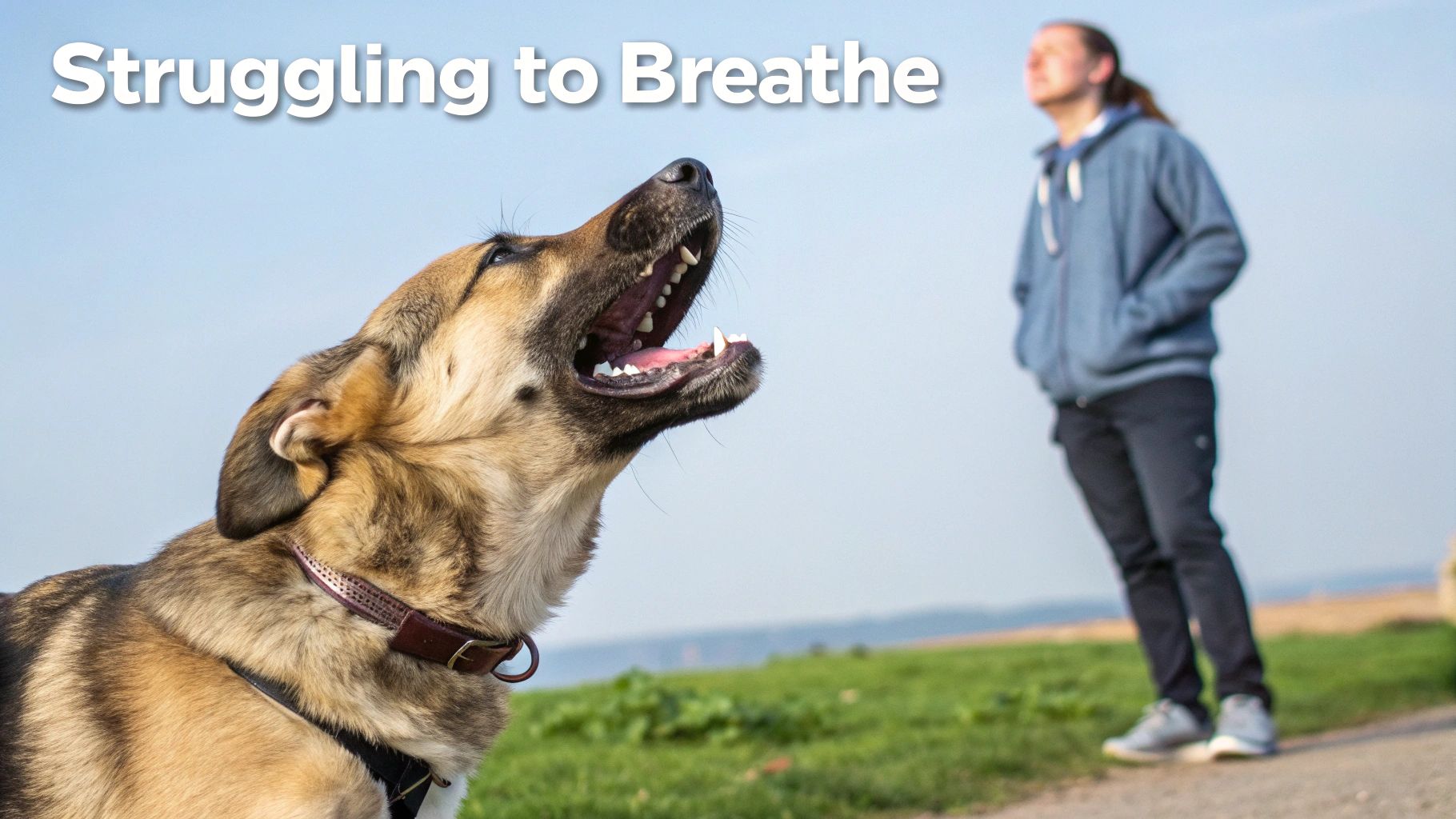
Unusual Noises and Coughing
Healthy breathing is quiet. A dog in distress is often noisy. Listen for these specific sounds:
- Loud, Harsh Breathing: A high-pitched, wheezing sound when your dog breathes in. This often points to a blockage high up in the airway.
- Wet or Gurgling Sounds: A major red flag for fluid in the lungs, which can be caused by heart failure or pneumonia.
- "Goose Honk" Cough: A dry, loud, honking cough that is the classic sign of tracheal collapse, common in small dog breeds.
- Deep, Persistent Coughing: A hacking cough that won’t quit could signal bronchitis, heart disease, or an infection.
These aren't just little noises. They're your dog’s way of signaling for help.
Visible Physical Effort
You don't just hear the struggle; you can see it. Watch for their nostrils flaring with every breath. You might also see their chest and abdomen moving in a deep, exaggerated way. This is labored breathing and looks completely different from the fast movements of normal panting.
Breathing difficulties should never be ignored. If your dog is making strange noises, coughing persistently, or visibly struggling to breathe, it is a clear signal that they need veterinary evaluation.
Respiratory problems are common. Studies show upper respiratory tract disorders happen at a rate of 50.56 cases per 10,000 dog years at risk, ranking them among the most frequent health issues vets see. You can find more on these studies from the National Center for Biotechnology Information.
Rapid or Shallow Breathing
The speed of your dog's breathing is another key sign. Vets call this tachypnea. It’s a huge concern when it’s happening while they are resting or calm. A healthy dog at rest takes about 15 to 35 breaths per minute. If your dog is consistently breathing faster than that, it means their body is working overtime to get enough oxygen.
Text us at 718-301-4030. If symptoms are severe or after hours, go directly to a 24/7 emergency hospital.
Subtle Signs of Breathing Difficulties
Not all signs of respiratory distress are loud or frantic. Sometimes, the first clues are quieter shifts in your dog's behavior. For pet owners in communities like Hollis or Queens Village, learning to spot these subtle signals is key to getting help before a problem becomes a crisis.
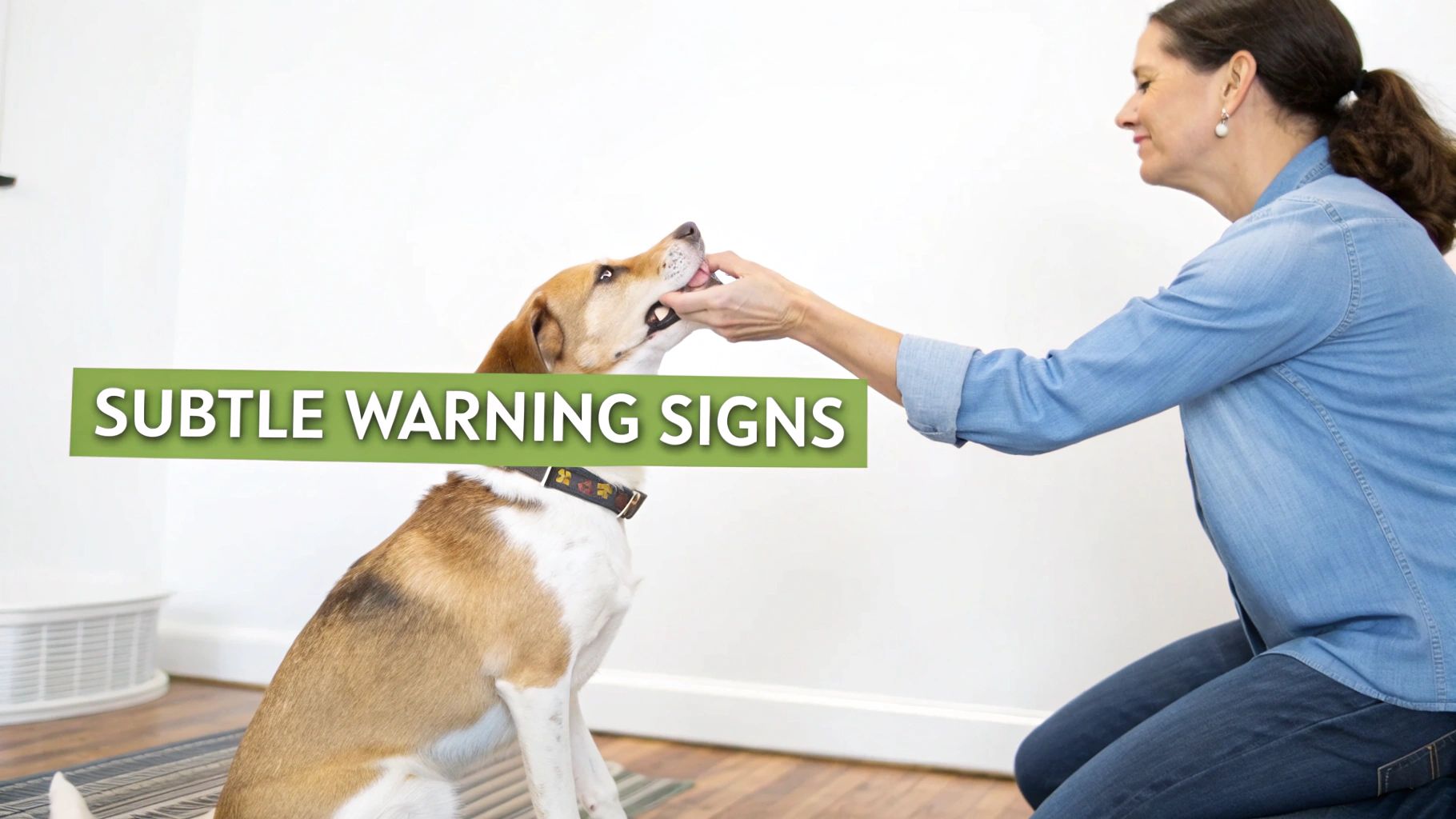
Often, the first sign is a sudden reluctance to do things they once loved. If your normally playful dog is uninterested in a walk or gets tired after just a minute of fetch, they could be telling you they can't get enough air.
Changes in Behavior and Posture
When it's hard to breathe, a dog's instincts take over. They adjust their body to make getting oxygen easier. Keep an eye out for these quiet shifts:
- Restlessness: A dog who can't catch their breath often can't settle down. They might pace because lying down can make that feeling of breathlessness worse.
- Reluctance to Lie Down: If your dog insists on sitting up or sleeps propped on their chest, take note. Lying on their side can put pressure on the lungs.
- Standing with Elbows Out: You might see your dog standing in a wide stance. This is an instinctual attempt to open their chest cavity, giving the lungs more room to expand.
- Stretching the Neck: A dog struggling for air will often stretch their head and neck forward to help open the airway.
These behaviors are your dog's silent way of communicating that something is wrong.
Checking Gums: A Critical Step
One of the most direct ways to check your dog's oxygen levels is to look at their gums. This simple check can tell you if their body is getting the oxygen it needs.
Gently lift your dog’s upper lip. Healthy gums should be a bubblegum pink. If you see pale, white, gray, or bluish-tinged gums, it’s a sign of cyanosis—a critical lack of oxygen in the blood. This is a medical emergency that requires immediate veterinary attention.
Text us at 718-301-4030. If symptoms are severe or after hours, go directly to a 24/7 emergency hospital.
Urgent Vet Visit vs. Immediate Emergency
When you notice something is wrong, your mind races. Is this a minor issue or a crisis? Knowing the difference between a situation that needs an urgent vet visit and a true emergency can help you act fast. For pet owners in Oakland Gardens, Bayside, and our surrounding Queens neighborhoods, having a clear plan is everything.
When to Call for an Urgent Appointment
An urgent situation needs a vet’s attention soon, but your dog is still relatively stable. You shouldn't ignore these signs, but they don't signal immediate collapse.
Contact your vet for an urgent appointment if you see:
- A new, mild cough that only happens occasionally.
- Slightly faster breathing while your dog is resting, but their gums are still pink.
- Sneezing or a runny nose without labored breathing.
These symptoms are a heads-up that something isn't right. For more guidance on emergency situations, you can learn more about finding an emergency vet in Queens on our website.
When to Go to an Emergency Hospital Immediately
A true emergency is when symptoms are severe and getting worse quickly. Every second counts.
Go directly to a 24/7 emergency hospital if your dog shows any of these signs:
- Gasping for air or breathing with their mouth wide open.
- Gums that are blue, purple, gray, or very pale. This is a critical sign of low oxygen.
- Constant, uncontrollable coughing or making choking sounds.
- Collapse or extreme weakness.
- Obvious panic paired with trouble breathing.
- Standing with their neck stretched out and elbows pointing away from their body.
These are unmistakable red flags. Your dog is in a life-threatening situation and needs immediate help.
Text us at 718-301-4030. If symptoms are severe or after hours, go directly to a 24/7 emergency hospital.
What's Causing Your Dog's Breathing Problems?
Labored breathing isn't a disease itself—it's a symptom that something else is wrong. For pet owners across Queens, from Glen Oaks to Little Neck, understanding potential causes can help you talk to your vet.
Infections and Inflammation
Often, the culprit is an infection or inflammation in the respiratory tract.
- Kennel Cough: This contagious illness causes a harsh "goose honk" cough. While usually mild, it can sometimes progress to pneumonia.
- Pneumonia: A serious lung infection where air sacs fill with fluid. You might notice a wet cough, fever, and low energy.
- Chronic Bronchitis: Long-term inflammation of the airways that leads to a persistent cough, often worse with excitement.
Your Dog's Breed and Anatomy
Sometimes, the problem is structural. This is a huge issue for some popular breeds in Queens. Flat-faced breeds like French Bulldogs and Pugs are brachycephalic. Their anatomy can lead to Brachycephalic Obstructive Airway Syndrome (BOAS), making it hard for them to breathe.
For these breeds, breathing problems are a major concern. Studies show 15.35% of screened brachycephalic dogs have signs of respiratory issues. Snoring and snorting aren't just "normal"—they often signal a need for a vet assessment. You can learn more about respiratory health in brachycephalic breeds on veterinarypaper.com.
Tracheal collapse is another structural problem where the windpipe weakens. It is common in small breeds and causes that "goose honk" cough.
Heart Disease and Other Issues
A dog's heart and lungs work together. If the heart isn't pumping well, fluid can back up into the lungs, a condition called congestive heart failure (CHF). This is a true life-threatening emergency.
Other causes can include:
- Foreign Objects: A piece of a toy or food stuck in the airway.
- Allergies: A severe reaction can cause swelling in the airway.
- Trauma: A chest injury can damage the lungs.
- Tumors: A growth can block the flow of air.
No matter the suspected cause, recognizing the signs and getting a professional diagnosis is what matters most.
Text us at 718-301-4030. If symptoms are severe or after hours, go directly to a 24/7 emergency hospital.
What to Do Before Arriving at the Vet
You've spotted the signs, made the call, and are now in the car. The drive can feel long, and your stress can make your dog's breathing worse. The most important thing you can do is stay calm.

A few practical steps can help keep your dog stable. Your goals are to lower stress, keep them cool, and ensure nothing obstructs their airway.
Practical Steps for the Car Ride
- Stay Calm: Talk to your dog in a soft, soothing voice. Your calm energy can help lower their anxiety.
- Ensure Good Ventilation: Crack the windows or use the AC on a gentle setting. Cool, fresh air can provide relief.
- Minimize Handling: Let your dog find a comfortable position. Don't force them to lie down or sit a certain way.
- Call Ahead: Let the veterinary hospital know you're on your way with a dog in respiratory distress. This allows the team to prepare.
What NOT to Do
In a panic, it's easy to try something that could make things worse.
- Do NOT Give Medications: Never give any medications only if your veterinarian advises. Many human drugs are toxic to dogs.
- Do NOT Force Food or Water: A dog struggling to breathe can easily choke.
- Do NOT Put Anything in Their Mouth: Don't try to clear their throat with your fingers unless you can easily see and grab an object.
Your job is to get your pet to professional care as safely and quickly as possible.
Text us at 718-301-4030. If symptoms are severe or after hours, go directly to a 24/7 emergency hospital.
Short FAQ: Common Questions on Dog Breathing
As vets serving Queens, from Bayside to Hollis, we get many calls from worried pet owners. Here are straightforward answers to common questions.
Is it normal for my dog to breathe fast while sleeping?
Yes, this can be normal, especially for puppies and senior dogs dreaming in their REM cycle. What matters more is their resting respiratory rate—their breathing rate when calm and awake. If that rate is consistently over 30-35 breaths per minute, it’s time to call a vet.
Can allergies cause serious breathing problems in my dog?
Usually, dog allergies show up as itchy skin. While a severe allergic reaction can cause breathing issues, it's less common. More often, chronic issues like bronchitis can flare up. Do not recommend human medications unless explicitly stated as “only if your veterinarian advises.”
What is reverse sneezing? Is it an emergency?
Reverse sneezing is a loud, snorting sound that happens when a dog pulls air in through their nose rapidly. It looks alarming but usually stops on its own within a minute. It is not a sign of respiratory distress and is not an emergency. If it happens a lot, mention it at your next vet visit.
What extra signs should I watch for in my flat-faced dog?
If you own a Pug, French Bulldog, or other flat-faced (brachycephalic) breed, be extra watchful. Look for excessive noise, frequent gagging, collapsing after minor exercise, or struggling in mild heat. These are signs of Brachycephalic Obstructive Airway Syndrome (BOAS) and require a vet's attention.
All dog owners should also be aware of a worrying outbreak of atypical canine infectious respiratory disease (aCIRD). It can start with a cough but progress to pneumonia in as little as 24 to 36 hours. You can learn more about this dog respiratory illness on respiratory-therapy.com.
At Union Vet NY, we're here to give you clear answers and compassionate care for your pet in Queens, from Oakland Gardens and Bayside to Fresh Meadows and beyond. If you're ever worried about your dog’s breathing, don't wait.
Text us at 718-301-4030. If symptoms are severe or after hours, go directly to a 24/7 emergency hospital.
