

When to Take Your Dog to the Vet in Queens: An Emergency Guide
When your dog is suddenly sick or injured, the most pressing question is, when should I take my dog to an emergency vet? It's a stressful moment for any pet owner in Queens, from Bayside to Hollis. Hesitation is normal, but some signs are too serious to ignore.
As a general rule, symptoms like severe pain, any trouble breathing, major injuries, collapsing, or seizures are absolute emergencies and require immediate medical attention. Trust your instincts. If something feels seriously wrong with your dog, it’s always better to be safe and seek professional advice right away.
Text us at 718-301-4030. If symptoms are severe or after hours, go directly to a 24/7 emergency hospital.
Recognizing a Pet Emergency in Queens
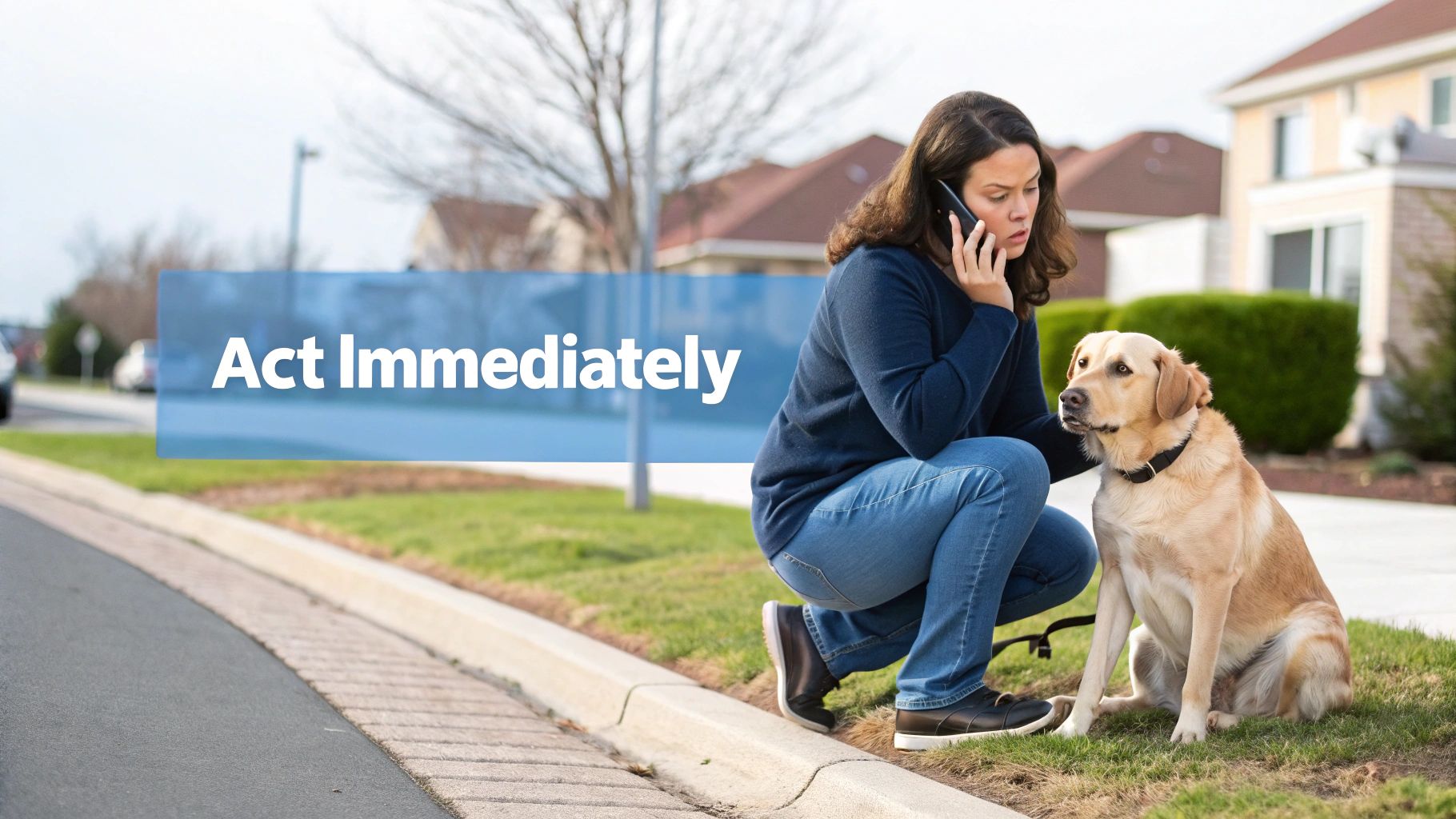
You know your dog better than anyone. But under pressure, telling the difference between a minor issue and a life-threatening crisis is difficult. This guide provides clear, calm direction to help you make the right decision for your pet.
Spotting these signs early can make all the difference. Think of this as your checklist for those high-stress moments.
Urgent Care vs. Emergency: Key Symptoms
Knowing whether to rush to a 24/7 hospital or call your regular vet for an urgent visit can be confusing. This quick guide breaks down common symptoms to help you decide.
Go to a 24/7 Emergency Hospital Immediately for:
- Difficulty Breathing: Gasping, choking, constant coughing, or blue-tinged gums.
- Major Trauma: Hit by a car, a serious fall, or large, deep wounds.
- Collapse or Seizures: Unable to stand, unresponsive, sudden weakness, or any seizure activity.
- Severe Vomiting/Diarrhea: Repeated episodes, especially with blood, or if they can't keep water down.
- Bloated Abdomen: A swollen, hard, or painful belly, often accompanied by unproductive retching (trying to vomit but nothing comes up).
- Known Toxin Ingestion: Ate chocolate, antifreeze, human medications, or toxic plants.
Call Your Vet for Urgent Advice for:
- Mild Coughing: A new, mild cough, but breathing is otherwise normal.
- Minor Injuries: A small cut or a limp without signs of severe pain.
- Lethargy: Seems more tired than usual but is still responsive and can walk.
- Minor Stomach Upset: One or two episodes of vomiting or diarrhea but is acting okay otherwise.
This is a starting point. When in doubt, always seek professional medical advice.
Text us at 718-301-4030. If symptoms are severe or after hours, go directly to a 24/7 emergency hospital.
Critical Symptoms You Should Never Ignore
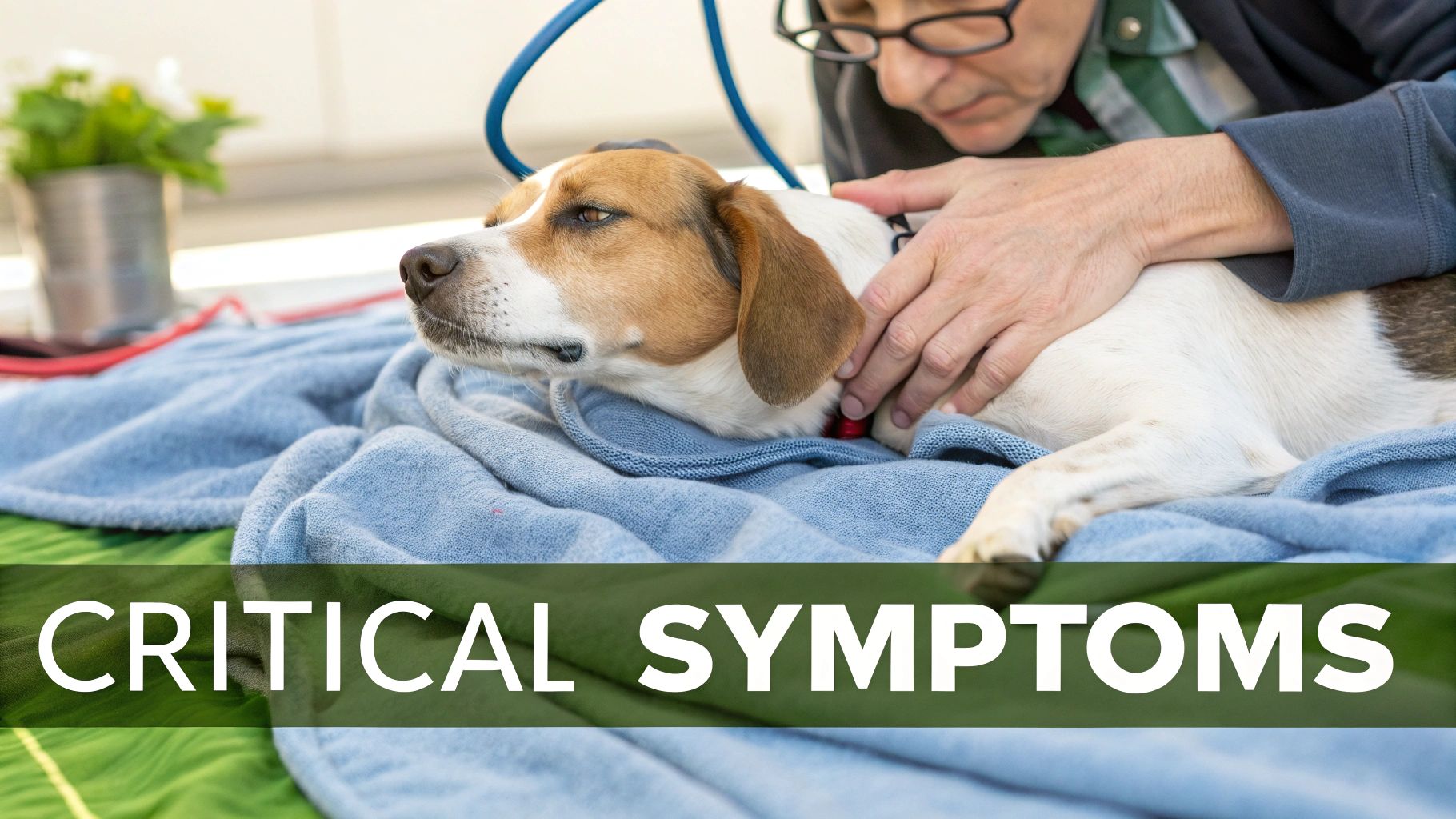
Some symptoms are your dog's way of signaling they need immediate help. For pet owners across Fresh Meadows, Glen Oaks, and our surrounding Queens neighborhoods, being able to spot these signs means you can act fast when it matters most.
Breathing and Neurological Distress
Trouble breathing is always an emergency. If you see your dog gasping for air, choking, or making strange sounds when they breathe, get help immediately. Pale, blue, or grey gums are also a critical sign that their body isn’t getting enough oxygen.
Neurological symptoms are just as urgent. This includes:
- Any seizure, even if it’s brief.
- A sudden collapse or inability to stand.
- Loss of balance or severe disorientation.
- Major changes in consciousness.
Trauma and Severe Pain
Obvious physical trauma requires an immediate vet visit. This includes being hit by a car, a bad fall, a visible broken bone, or bleeding that won't stop. Even if your dog seems fine after an accident, internal injuries can be invisible and dangerous.
Signs of severe pain also count as an emergency:
- Constant whining or crying out.
- A rigid, hunched posture.
- Sudden aggression when approached.
- Extreme restlessness.
Abdominal and Urinary Problems
A hard, swollen, or bloated abdomen is one of the most critical symptoms. It can signal Gastric Dilatation-Volvulus (GDV), or "bloat," a deadly condition where the stomach twists. Every minute counts.
The inability to urinate is also a life-threatening emergency. If your dog is straining to pee with little or no result, it could be a urinary blockage, which can cause irreversible damage in just hours.
Text us at 718-301-4030. If symptoms are severe or after hours, go directly to a 24/7 emergency hospital.
Household Dangers and Stomach Issues

Your home in Queens Village or Little Neck contains many items that can be dangerous to a curious dog. Accidental poisonings and severe stomach upset are two of the most common reasons for emergency vet visits.
Common Household Toxins to Watch For
It is critical to keep these items out of your dog's reach.
- Human Foods: Chocolate, xylitol (in sugar-free gum and some peanut butters), grapes, raisins, onions, and garlic.
- Human Medications: Ibuprofen (Advil) and acetaminophen (TylenoI) are highly toxic. Keep all pills secured.
- Common Plants: Lilies, sago palms, tulips, and azaleas can be poisonous.
- Household Chemicals: Cleaning supplies, antifreeze, and rodenticides.
If you suspect your dog has ingested a toxin, call a vet immediately. Do not wait for symptoms to appear.
When Vomiting and Diarrhea Become an Emergency
An upset stomach is common, but how do you know when it’s serious? Go to the vet right away if you see these signs:
- Repeated Episodes: Vomiting or diarrhea that happens multiple times in a few hours can lead to dangerous dehydration.
- Blood: Any blood in the vomit or stool is an immediate red flag.
- Other Symptoms: If stomach issues are paired with extreme tiredness, weakness, or a painful belly, it's a critical emergency.
- Unproductive Retching: A dog trying to vomit but producing nothing could be a sign of bloat (GDV).
For a more detailed breakdown, you can read our guide on when dog vomiting and diarrhea is an emergency.
Text us at 718-301-4030. If symptoms are severe or after hours, go directly to a 24/7 emergency hospital.
What to Do Before You Arrive at the Vet
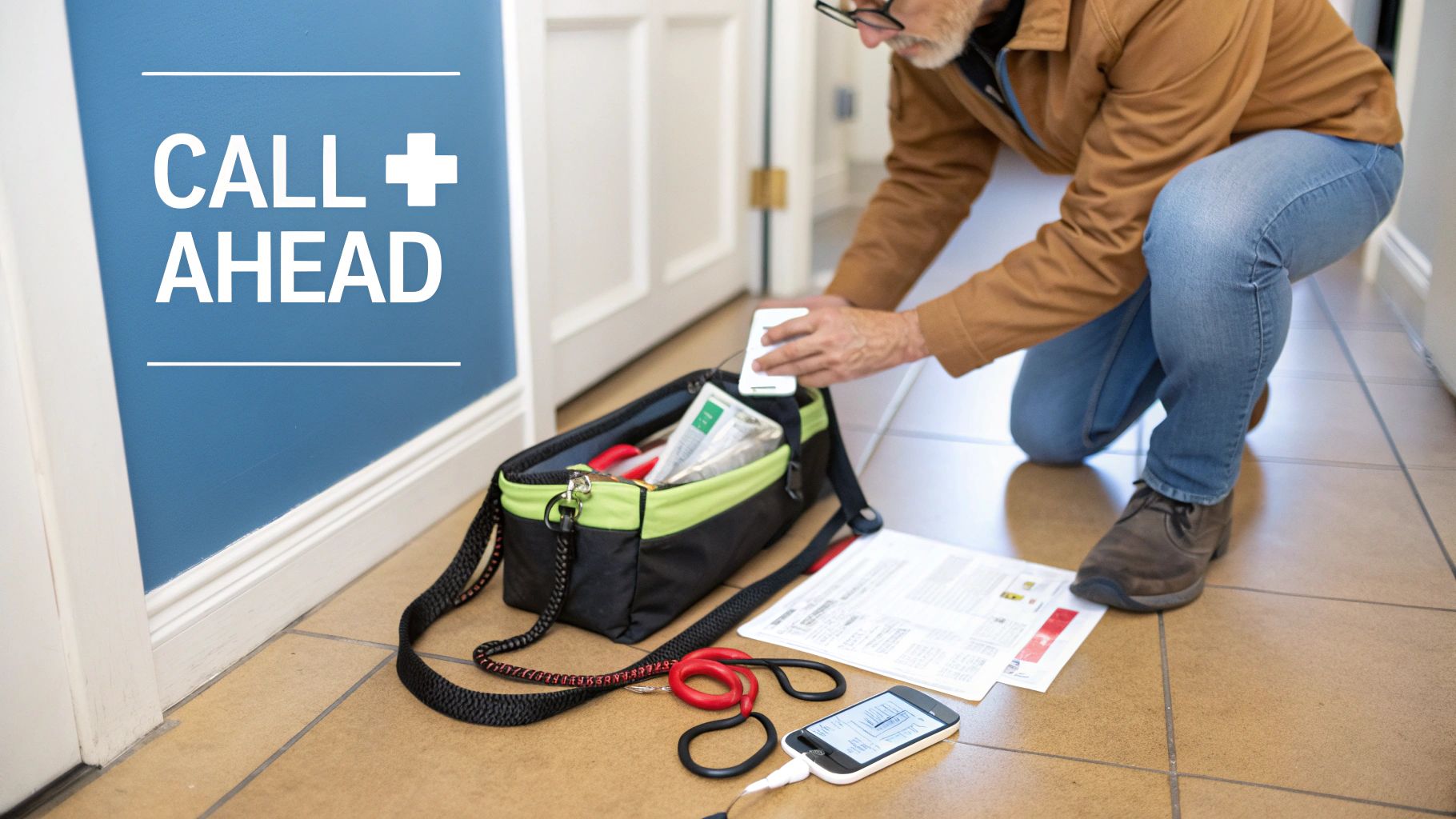
You’ve decided to get help. Now, a few practical steps can ensure a safer trip and help the veterinary team provide faster treatment.
1. Call Ahead
Whether you're coming to our clinic or heading to a 24/7 hospital, calling ahead is critical. This allows the team to prepare for your specific situation.
2. Transport Your Dog Safely
A dog in pain can be unpredictable. Move them gently to avoid causing more injury.
- Small Dogs: Wrap them snugly in a blanket and place them in a carrier.
- Large Dogs: If they can't walk, use a sturdy blanket as a makeshift stretcher. Ask someone to help you lift them carefully.
- Safety Note: A dog in pain might bite. A muzzle can be helpful, but never muzzle a dog that is having trouble breathing, is choking, or is actively vomiting.
3. Gather Essential Information
Grab these items before you leave:
- Your dog's medical history, including any known health conditions or allergies.
- Any medications or supplements your dog is currently taking.
- If your dog ate a toxin, bring the container or a photo of the item.
Being prepared helps you stay calm during a stressful time. For non-emergency situations, you can schedule veterinary appointments with us.
Text us at 718-301-4030. If symptoms are severe or after hours, go directly to a 24/7 emergency hospital.
Frequently Asked Questions from Queens Pet Owners
It's normal to have questions when you're worried about your pet. Here are some calm, clear answers to common concerns we hear from pet owners in our community.
How do I know if it can wait until morning?
If your dog shows any severe signs—like trouble breathing, seizures, collapse, uncontrolled bleeding, or a hard, swollen belly—do not wait. Go to a 24/7 emergency hospital immediately. For less clear issues, it's always smarter to get professional advice than to risk your pet's condition worsening overnight. Trust your gut.
Can I give my dog human pain medication?
No, not unless explicitly advised by your veterinarian. Common human pain relievers like ibuprofen (Advil) and acetaminophen (Tylenol) are extremely toxic to dogs and can cause severe kidney or liver failure. Always consult a professional before giving your pet any medication.
My dog ate something toxic but seems fine. Should I still worry?
Yes. Many toxins have delayed effects, meaning a dog can seem perfectly normal for hours before symptoms appear. By then, serious internal damage may have already occurred. If you suspect your dog has ingested something poisonous, seek veterinary help immediately. Do not wait for them to act sick.
At Union Vet NY, we are here to support you and your pet. We proudly serve our neighbors in Oakland Gardens, Bayside, Fresh Meadows, Glen Oaks, Little Neck, Hollis, Queens Village, and the surrounding areas.
Text us at 718-301-4030. If symptoms are severe or it's after our business hours, please go directly to a 24/7 emergency hospital. To learn more about our services, visit us at https://unionvetny.com.
Article created using Outrank
