

A Guide to Prescription Dog Food for Allergies in Queens
Is your dog constantly scratching? Chewing their paws raw? Dealing with endless ear infections? If you're a pet owner in Queens neighborhoods like Oakland Gardens or Bayside, this probably sounds familiar, and it's heartbreaking to watch. The culprit is often a food allergy, and the solution may be a special prescription dog food for allergies designed to calm their overactive immune system.
Identifying Signs of a Food Allergy in Your Dog

It's easy to dismiss constant scratching as just a habit. But when your dog is clearly uncomfortable day after day, there's usually a medical reason that needs a closer look. A food allergy is simply your dog's immune system getting its wires crossed. It flags a common food ingredient—usually a protein like chicken or beef—as a dangerous invader and launches an inflammatory attack.
In dogs, this reaction usually shows up on their skin or in their gut.
When Symptoms Need Veterinary Attention
Here in Queens, we see a lot of seasonal allergies from pollen. But if your dog’s symptoms are a year-round problem, it’s time to look at what’s in their food bowl.
To help you spot the signs, we've put together a list of common red flags.
Common Allergy Symptoms in Dogs
- Skin Issues:
- Relentless scratching, biting, or chewing (especially at paws, groin, or base of tail)
- Recurrent ear infections (often smelly, with head shaking or tilting)
- Red, inflamed skin or "hot spots"
- Hair loss from constant licking
- Hives or rashes
- Digestive Issues:
- Chronic diarrhea or loose stools
- Frequent gas
- Vomiting
If you're nodding along to several of these, it's a strong signal that something isn't right.
Food allergies are a major source of misery, causing about 20% of all allergic skin problems in dogs. And you, the owner, are often the first to know something is wrong—studies show 60% of owners spot symptoms before a vet does.
The most common complaints? A whopping 72% of dogs with food allergies relentlessly lick and chew their paws. Another 48% suffer from recurring ear infections. If you want to dive deeper, you can learn more about these key findings on canine food allergies.
Constant licking that leads to raw skin, ear infections that keep coming back, or persistent digestive problems are clear signs that it's time for professional veterinary help.
Emergency vs. Urgent Care
Knowing when an issue is urgent versus a true emergency is crucial. While most allergy signs are manageable, some can become serious fast.
- Urgent (See a Vet Soon): Persistent scratching that breaks the skin, chronic vomiting or diarrhea, and smelly, inflamed ears that won't get better.
- Emergency (Go to an ER Immediately): Sudden facial swelling (especially around the eyes and muzzle), any difficulty breathing, widespread hives, or if your dog collapses.
What to Do Before Arriving
If you notice emergency signs, get your dog to a vet immediately. Call the emergency hospital on your way so they can prepare. Stay calm, as your dog can sense your anxiety. Do not give your dog any human medications unless your veterinarian advises.
Text us at 718-301-4030. If symptoms are severe or after hours, go directly to a 24/7 emergency hospital.
How Vets Uncover Food Allergies in Dogs
When you suspect your dog's food is behind their endless scratching or stomach troubles, getting a clear answer is all that matters. Figuring out a food allergy isn’t a simple test. It’s a careful, methodical process, and for pet owners in Queens, it's the first step toward real relief.
The only reliable way to diagnose a food allergy is with an elimination diet trial. It's the gold standard because it gives us clear results by directly testing your dog's reaction to what they eat.
Why Not Just a Blood Test?
It's a common question: "Can't we just run a blood test?" While blood or skin tests are great for finding environmental triggers like pollen, they are notoriously inaccurate for food allergies. They often give false positives, leading you to avoid foods that were never the problem.
An elimination diet is like a clean slate. We remove all the usual suspects at once. By feeding your dog a special diet and nothing else, we can see if their symptoms improve. If they do, we're on the right track.
The Steps of an Elimination Diet Trial
The process requires a serious commitment from everyone in the house. The trial typically lasts for 8 to 12 weeks and means feeding your dog a specific prescription diet—and absolutely nothing else.
-
Consultation and Diet Selection: We will prescribe a therapeutic diet. This will be a hydrolyzed protein diet (where proteins are broken down so small the immune system can’t recognize them) or a novel protein diet (using a protein your dog has never eaten before, like kangaroo or venison).
-
The Strict Feeding Period: For the next two to three months, your dog eats only this food. That means no treats, no table scraps, and no flavored medications or supplements. Even one bite of the wrong thing can trigger the allergic reaction again and reset the clock.
-
Symptom Monitoring: During this time, you'll track your dog's progress. Is the itching getting better? Are the ear infections clearing up? Improvement is the strongest sign that a food ingredient was the culprit. You can find more info on what to watch for in our articles on dog digestive health.
An elimination trial is a commitment, but it’s the only way to get a true diagnosis. Success depends on being 100% strict—one slip-up can skew the results and prolong your dog's discomfort.
Confirming the Allergy with a Food Challenge
If your dog's symptoms improve, the last step is to identify the specific trigger. We do this with a "food challenge." Under our guidance, you'll reintroduce a single ingredient from their old food—like chicken—while keeping them on the prescription diet.
If the allergy symptoms return, we've found our culprit. From there, we can work together to find a long-term food that keeps them free of that specific allergen.
Text us at 718-301-4030. If symptoms are severe or after hours, go directly to a 24/7 emergency hospital.
Understanding How Prescription Allergy Diets Work
When your vet suggests a prescription dog food for allergies, you might wonder what makes it so special. The difference comes down to the science-backed way these diets are made to calm down your dog's overactive immune system.
Prescription diets are a medical tool designed to stop the false alarm that causes allergic reactions. They use clever strategies to get your dog's body back in balance.
Hydrolyzed Protein Diets: The Invisibility Cloak
The most common strategy is the hydrolyzed protein diet. This food uses a scientific process called hydrolysis to break up common proteins (like chicken or soy) into pieces so tiny they become essentially invisible to the immune system.
Because the protein fragments are too small for the immune system to recognize, the alarm never goes off. This is why a dog with a known chicken allergy can often eat a chicken-based hydrolyzed diet without any issues.
Novel Protein Diets: The Newcomer Strategy
The second approach uses a novel protein. "Novel" just means new—the diet is built around a protein source your dog has likely never eaten before.
Common novel proteins include:
- Kangaroo
- Venison
- Rabbit
- Alligator
Since your dog's immune system has never encountered these proteins, it hasn't had a chance to build an allergic response to them. This method works well for dogs with known allergies to multiple common proteins.
Why Over-the-Counter Foods Don't Cut It
You've probably seen pet store foods labeled "limited ingredient" or "for sensitive skin." While well-intentioned, they aren't made with the same medical-grade precision. The biggest problem is cross-contamination.
Commercial food plants often run different formulas on the same equipment. This means tiny particles of chicken, beef, or other allergens can easily get into a bag of "lamb and rice" food. For a highly allergic dog, that trace amount is enough to trigger a reaction.
Prescription diets are produced in facilities with strict cleaning protocols to prevent this issue. This guarantees the food is pure enough for a diagnostic trial and for long-term management.
Text us at 718-301-4030. If symptoms are severe or after hours, go directly to a 24/7 emergency hospital.
Making a Smooth Transition to a New Diet
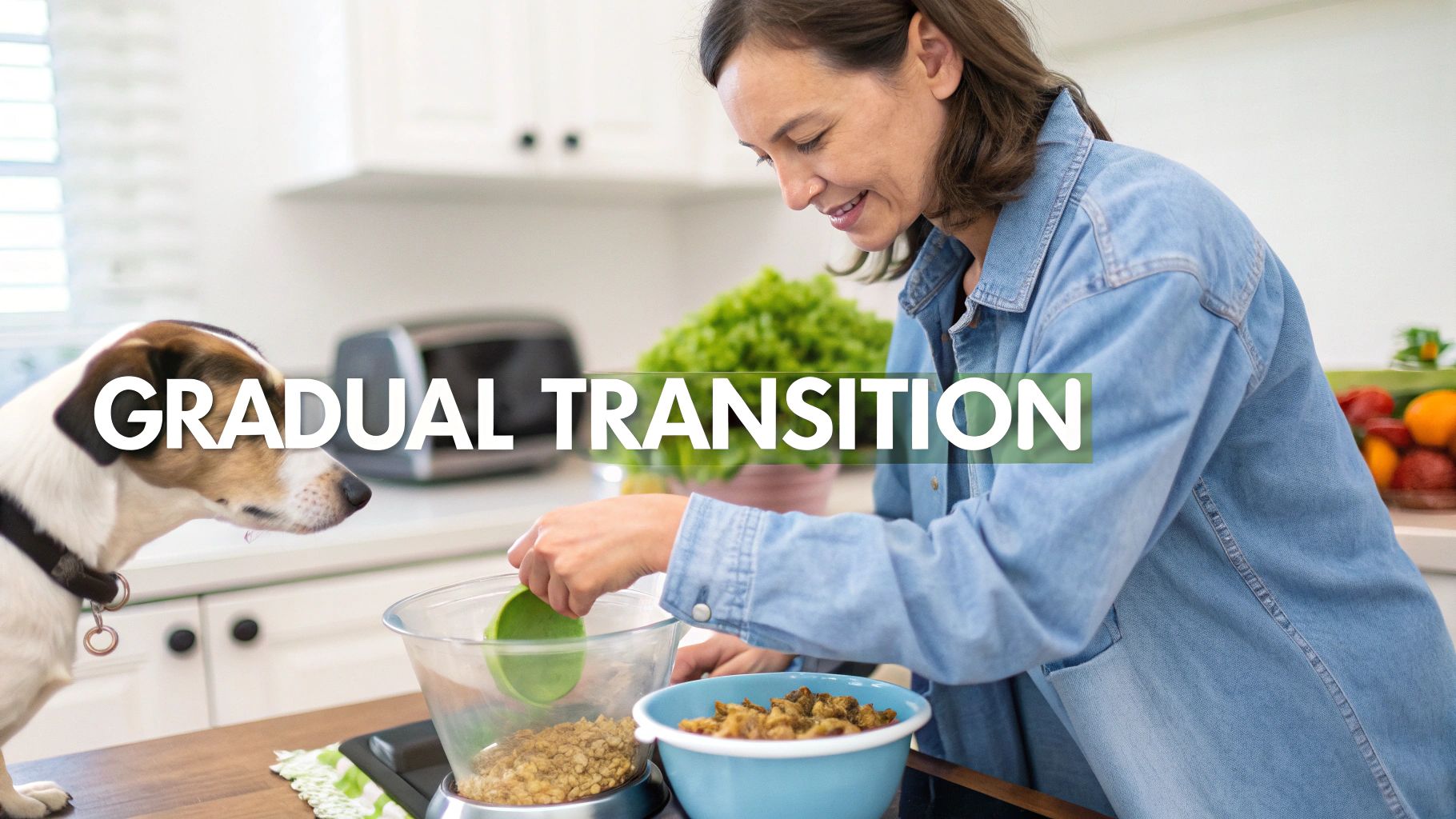
Starting your dog on a new prescription dog food for allergies is a huge step. But you can't just swap the food overnight. A sudden change can cause vomiting or diarrhea. The secret is a slow, gradual introduction over about 7 to 10 days. This gives your dog’s gut a chance to adjust.
The 7-10 Day Transition Plan
Patience is key. Follow a simple mixing schedule. If you see signs of an upset stomach, pause at the current ratio for an extra day or two.
Here’s a step-by-step plan:
- Days 1-2: Mix 75% old food with 25% new prescription food.
- Days 3-4: Move to a 50/50 mix of old and new.
- Days 5-6: Adjust to 25% old food and 75% new prescription food.
- Day 7 onward: You're there! Your dog should now be on 100% of the new diet.
For more tips, check out our guide on what to feed a dog with a sensitive stomach.
Overcoming Common Transition Hurdles
Switching foods can bring a few challenges, especially during a strict elimination diet. For households in Queens communities like Fresh Meadows or Queens Village, consistency is the key to success.
Managing a Multi-Pet Home
If you have other animals, you must feed them separately. This prevents your allergic dog from sneaking a bite of the wrong food. Feed them in another room and pick up all food bowls right after they finish.
Keeping the Whole Family on Board
The "no treats, no table scraps" rule can be tough. It's crucial that everyone—from kids to visitors—understands how important this is. A single stolen piece of cheese can trigger a reaction and set your progress back weeks.
The success of an elimination trial hinges on 100% compliance. Every member of your household must be a part of the team.
Handling a Picky Eater
Some dogs are skeptical of new foods. If your dog turns their nose up, try these tricks:
- Warm it up: Adding a little warm water to wet food can make it smell more appealing.
- Hand-feed: Offer a few kibbles from your hand to create a positive association.
- Be patient: Don't give in and offer their old food. A healthy dog will eat when it gets hungry.
Text us at 718-301-4030. If symptoms are severe or after hours, go directly to a 24/7 emergency hospital.
Frequently Asked Questions
For pet owners in Queens—from Hollis to Little Neck—getting straight answers about prescription diets makes all the difference.
Q: What is an urgent symptom vs. an emergency?
A: Urgent symptoms are persistent but not immediately life-threatening. This includes constant scratching that breaks the skin, chronic vomiting, or recurrent ear infections. An emergency involves life-threatening signs like facial swelling, difficulty breathing, or collapse. If you are ever unsure, it's best to seek veterinary care. For more details, see our guide on when to take your dog to an emergency vet.
Q: What should I do before coming to the vet for an emergency?
A: Call the hospital while you are on your way so the team can prepare. Drive safely and try to keep your dog calm and comfortable. Do not give any medications, including human ones like Benadryl, unless your veterinarian advises you to do so. The wrong dose can be harmful.
Q: Why is prescription dog food more expensive?
A: The higher price reflects the extensive research, high-quality ingredients, and specialized manufacturing that goes into each bag. These diets are made to meet strict medical standards, preventing cross-contamination and ensuring they are safe for even the most sensitive dogs. You're paying for a formula that's been proven to deliver results.
Q: How long will my dog need this special food?
A: It depends on your dog. For some, the diet is a short-term tool to diagnose an allergy. Afterward, you might switch to a commercial food that avoids the trigger ingredient. For other dogs with multiple sensitivities, staying on the therapeutic diet for life is the simplest way to keep them symptom-free.
Q: What if the prescription diet doesn't work?
A: If symptoms don't improve after a strict 8-12 week food trial, it's a strong sign that a food allergy isn’t the main problem. The real culprit is more likely environmental allergies (atopy) from things like pollen or dust mites. This result isn't a failure; it's a crucial clue that points us in the right direction for treatment.
Text us at 718-301-4030. If symptoms are severe or after hours, go directly to a 24/7 emergency hospital.
At Union Vet NY, our team is here to guide you through every stage of managing your dog’s allergies with compassion and expertise. Learn more about how we can help your pet thrive at Union Vet NY.
