

Can Cats Get Kennel Cough? A Guide for Queens Pet Owners
Yes, cats can get a form of 'kennel cough'. While we often think of it as a dog's illness, the main bacteria, Bordetella bronchiseptica, can pass between species, including to our feline friends.
For pet owners in Queens, especially in multi-pet households, understanding this risk is the first step in keeping your cat healthy. This guide uses clear, calm language to explain what you need to know.
Understanding "Kennel Cough" in Cats
"Kennel cough" is a common term for a group of respiratory illnesses, not a single disease. In cats, the most frequent cause is Bordetella bronchiseptica, a bacteria that leads to an upper respiratory infection with symptoms similar to those seen in dogs.
For our clients in neighborhoods like Oakland Gardens, Bayside, and Fresh Meadows, it's important to know that a single, indoor-only cat has a very low risk. However, the risk increases if your cat shares a home with other pets or spends time in boarding facilities.
How Common Is It?
A cat’s lifestyle is the biggest factor. Cats in shelters, multi-pet homes (especially with dogs), or boarding kennels have much higher exposure. It’s similar to a child starting daycare—more social contact means more opportunities to catch a bug.
Studies confirm this. The prevalence of Bordetella can be as high as 19.5% in rescue catteries, a significant jump from the near-zero risk in single-cat homes. You can read more about these Bordetella infection findings to see the data.
This isn't to cause panic for pet owners in communities like Glen Oaks and Little Neck, but to build awareness. It is a manageable risk when you know what to look for.
Kennel Cough in Cats: Key Facts
Here is a quick summary of what every cat owner should know about Bordetella.
| Aspect | Key Information for Cat Owners |
|---|---|
| Main Cause | The primary bacterial agent is Bordetella bronchiseptica. |
| Transmission | Spreads through airborne droplets from coughing/sneezing, direct contact, or sharing contaminated items like food and water bowls. |
| Cross-Species Risk | Yes, it can pass between dogs and cats in the same household. |
| Key Symptoms | A persistent cough, sneezing, watery eyes, and nasal discharge are common signs. |
If you notice any of these signs and feel concerned, getting professional advice is the best course of action.
Text us at 718-301-4030. If symptoms are severe or after hours, go directly to a 24/7 emergency hospital.
Symptoms of Feline Kennel Cough
When your cat isn't feeling well, you notice. For pet parents in neighborhoods like Hollis and Queens Village, identifying the signs of a respiratory infection early can make a significant difference in your cat's recovery.
The most common sign is a cough, which in cats often sounds like a dry, hacking noise. You might mistake it for your cat trying to cough up a hairball. This sound indicates airway irritation.
Key Symptoms to Watch For
A Bordetella infection can cause several other noticeable symptoms. Pay close attention to your cat’s behavior and appearance.
Here’s a checklist of common signs:
- Persistent Sneezing: More than just a random sneeze; look for frequent sneezing fits.
- Nasal or Eye Discharge: Noticeable clear, yellow, or greenish discharge from their nose or eyes.
- Lethargy: Your normally playful cat may seem tired, withdrawn, or uninterested in activities.
- Decreased Appetite: A loss of interest in food is a common sign that a cat feels unwell.
- Mild Fever: Your cat may feel warmer than usual to the touch and act sluggish.
It's important to note that some of these signs overlap with other health issues. For example, lethargy is also one of the signs of heart disease in cats.
Important: Never give your cat human medications only if your veterinarian advises. Many over-the-counter products are toxic to cats and can cause serious harm.
Text us at 718-301-4030. If symptoms are severe or after hours, go directly to a 24/7 emergency hospital.
When to Seek Veterinary Care: Urgent vs. Emergency
It's natural to worry when your cat starts coughing. For pet owners in Oakland Gardens, Bayside, and surrounding Queens communities, understanding when to seek care is vital.
Some symptoms require a veterinary appointment, while others are true emergencies.
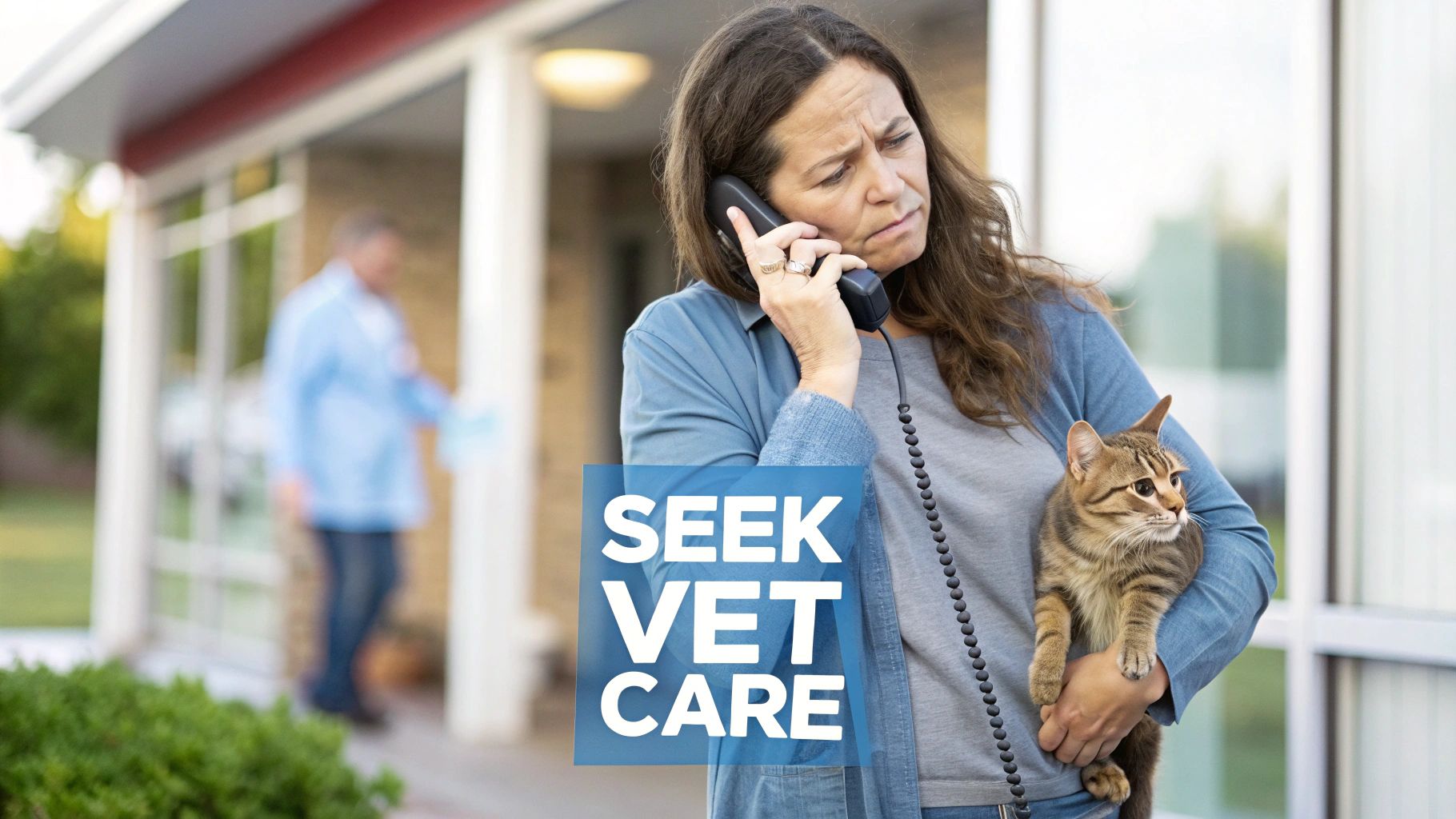
Urgent vs. Emergency Signs
Knowing how to tell these situations apart can help you act appropriately. For a more detailed look, you can review our guide on when to take your cat to the emergency vet.
Here is a quick guide to help you decide:
When It’s Urgent (Call for an appointment)
Your cat needs to be seen soon if they show these signs:
- A cough that lasts more than a day or two
- Persistent sneezing
- Discharge from the eyes or nose
- Lower energy levels than usual
- Skipping a meal or eating less
When It’s an Emergency (Go to a 24/7 ER immediately)
These symptoms indicate a life-threatening situation:
- Difficulty breathing (labored, shallow, or rapid breaths)
- Open-mouth breathing or panting
- Wheezing sounds
- Pale or blue-tinged gums
- Collapse or extreme weakness
Any difficulty breathing is always an emergency. Do not wait. Go to the nearest 24/7 emergency veterinary hospital immediately.
What to Do Before You Arrive
If you've determined your cat needs veterinary care, these steps can help:
- Keep your cat calm: Place them in a quiet, comfortable room before putting them into a secure carrier.
- Isolate from other pets: If you live in a multi-pet household in areas like Fresh Meadows or Hollis, separate the sick cat. Provide them with their own food, water, and litter box to prevent spreading illness.
- Do not give medication: Never administer human over-the-counter drugs, as they can be toxic to cats.
If you are unsure what to do, we are here to provide guidance.
Text us at 718-301-4030. If symptoms are severe or after hours, go directly to a 24/7 emergency hospital.
How Cats Get Infected and Who’s Most at Risk
Understanding how kennel cough spreads is key to protecting your cat. The bacteria Bordetella bronchiseptica travels through tiny airborne droplets released when an infected animal coughs or sneezes.
Infection can also occur through direct nose-to-nose contact or by sharing contaminated items like food bowls, water dishes, bedding, or toys.
High-Risk Environments
Some situations carry a higher risk of exposure. For pet owners in our Queens communities, it's helpful to be aware of these hotspots.
- Animal Shelters: The close proximity of many animals allows respiratory illnesses to spread quickly.
- Boarding Kennels: Even well-maintained facilities present a risk due to the number of pets coming and going.
- Multi-Cat Households: The infection can easily pass from one cat to another. The risk is even greater if a dog in the home carries the bacteria.
The risk in crowded environments is well-documented. In U.S. shelters, respiratory infections can affect up to 80% of cats within two weeks of their arrival. You can read more about this research at ControlPointDx.com.
Which Cats Are Most Vulnerable?
While any cat can get sick, some are more likely to develop a severe illness because their immune systems are not as robust.
Cats at the highest risk include:
- Young Kittens: Their immune systems are still developing.
- Senior Cats: Their natural defenses may be weaker.
- Cats with Pre-existing Conditions: Those with Feline Immunodeficiency Virus (FIV), Feline Leukemia (FeLV), or chronic respiratory issues are more vulnerable.
If your cat falls into one of these categories, extra vigilance is recommended.
Text us at 718-301-4030. If symptoms are severe or after hours, go directly to a 24/7 emergency hospital.
Veterinary Diagnosis and Treatment Options
If you suspect your cat has a respiratory illness, a veterinary visit is the most important step. For pet owners in Oakland Gardens, Bayside, and surrounding areas, knowing what to expect can ease some of the stress.
A veterinarian will start with a physical exam, listening to your cat's heart and lungs and asking about the symptoms you've observed at home, such as changes in energy and appetite.
Pinpointing the Cause
To confirm a diagnosis and rule out other issues, your vet may recommend specific tests.
- Nasal or Throat Swabs: A sample is collected and sent to a lab to identify the bacteria or virus causing the illness, such as Bordetella bronchiseptica.
- Blood Tests: A blood panel helps assess your cat's overall health and can reveal signs of infection or inflammation.
- Chest X-rays: If your cat has a severe cough or difficulty breathing, X-rays can check for serious conditions like pneumonia.
Creating a Treatment Plan
The goal of treatment is to eliminate the infection and keep your cat comfortable. Most cats with a mild Bordetella infection recover well with supportive care at home.
Treatment typically involves:
- Medication: If a bacterial infection is confirmed or suspected, antibiotics will be prescribed. It is crucial to complete the full course of medication, even if your cat seems better.
- Supportive Care: Comfort is key. Using a humidifier or having your cat in the bathroom during a hot shower can help soothe their airways. A quiet, stress-free environment with easy access to food and fresh water is also essential for recovery.
It is critical to never give your cat human medications unless specifically instructed by your veterinarian. Many are toxic to cats.
If your cat's cough is worrying you, seeking a professional opinion is the safest choice.
Text us at 718-301-4030. If symptoms are severe or after hours, go directly to a 24/7 emergency hospital.
Practical Prevention for Your Cat

As a pet owner in Queens, you play the most important role in your cat's health. Simple, practical steps can significantly reduce their risk of contracting a contagious respiratory illness.
Vaccination is one of the most effective preventive tools. The Bordetella vaccine is safe and helps protect your cat. While it is not a core vaccine for every cat, we strongly recommend it for social cats—those who are boarded, visit groomers, or live with other pets.
You can learn more about how the kennel cough vaccine works for cats and discuss with us whether it is right for your companion.
Everyday Habits for a Healthy Cat
Simple daily routines can also help prevent the spread of germs.
- Practice Good Hygiene: Regularly wash your cat’s food and water bowls with hot, soapy water. Clean their bedding, blankets, and toys often to eliminate bacteria.
- Reduce Environmental Stress: A calm environment helps support a strong immune system. Provide hiding spots, vertical spaces, and a predictable routine.
- Quarantine New Arrivals: If you bring a new pet into your home, keep them separated for a short period. This allows you to monitor the new animal for any signs of illness before introducing them to your other pets.
Think of these measures as a layered defense. Vaccination is your frontline protection, while good hygiene and a low-stress home act as powerful backup.
Text us at 718-301-4030. If symptoms are severe or after hours, go directly to a 24/7 emergency hospital.
FAQ: Kennel Cough in Cats
Here are answers to some of the most common questions we hear from pet owners in Queens.
Can my indoor-only cat get kennel cough?
It's very unlikely, but not impossible. The bacteria can be carried into the home on clothing or by other pets, such as a dog who has been to a park. The risk for a single, indoor-only cat remains extremely low.
How long is a cat contagious?
A cat can remain contagious for several weeks, even after symptoms have disappeared. To prevent spreading the illness, it's best to keep a sick cat isolated from other pets for at least two to three weeks after they seem fully recovered.
Is the Bordetella vaccine necessary for my cat?
It depends on their lifestyle. For most indoor cats living alone, it is not considered a core vaccine. However, we highly recommend it for cats in high-risk situations, such as those who are boarded, go to groomers, or live in multi-pet households. We can help you decide if it's the right choice for your cat.
Can I catch kennel cough from my cat?
The risk to humans is extremely low. While Bordetella bronchiseptica can technically infect people, this is incredibly rare and typically only occurs in individuals with severely compromised immune systems. For healthy adults and children, the risk is negligible. Good hand-washing after caring for a sick pet is always a wise practice.
If you live in Oakland Gardens, Bayside, or any surrounding Queens neighborhoods and have more questions, our team is here to help.
Text us at 718-301-4030. If symptoms are severe or after hours, go directly to a 24/7 emergency hospital.
