

7 Subtle Signs of Heart Disease in Cats Queens Pet Owners Should Know
As pet owners in Queens, from the quiet streets of Oakland Gardens to the bustling neighborhoods of Queens Village, we cherish our cats. But cats are masters at hiding illness, and heart disease is often a silent condition until it becomes severe. Recognizing the early, often subtle, signs of heart disease in cats can make a life-changing difference. This guide is for caring cat owners in Bayside, Fresh Meadows, Glen Oaks, Little Neck, and Hollis who want to be proactive about their pet's health.
Our goal is to empower you with the knowledge to protect your feline family member. We'll walk you through the most common symptoms in clear, calm language, explaining what they mean, when to worry, and what steps to take. You will learn to distinguish between symptoms that require an urgent visit and those that are an emergency, helping you make confident decisions for your cat’s care.
1. Dyspnea (Difficulty Breathing)
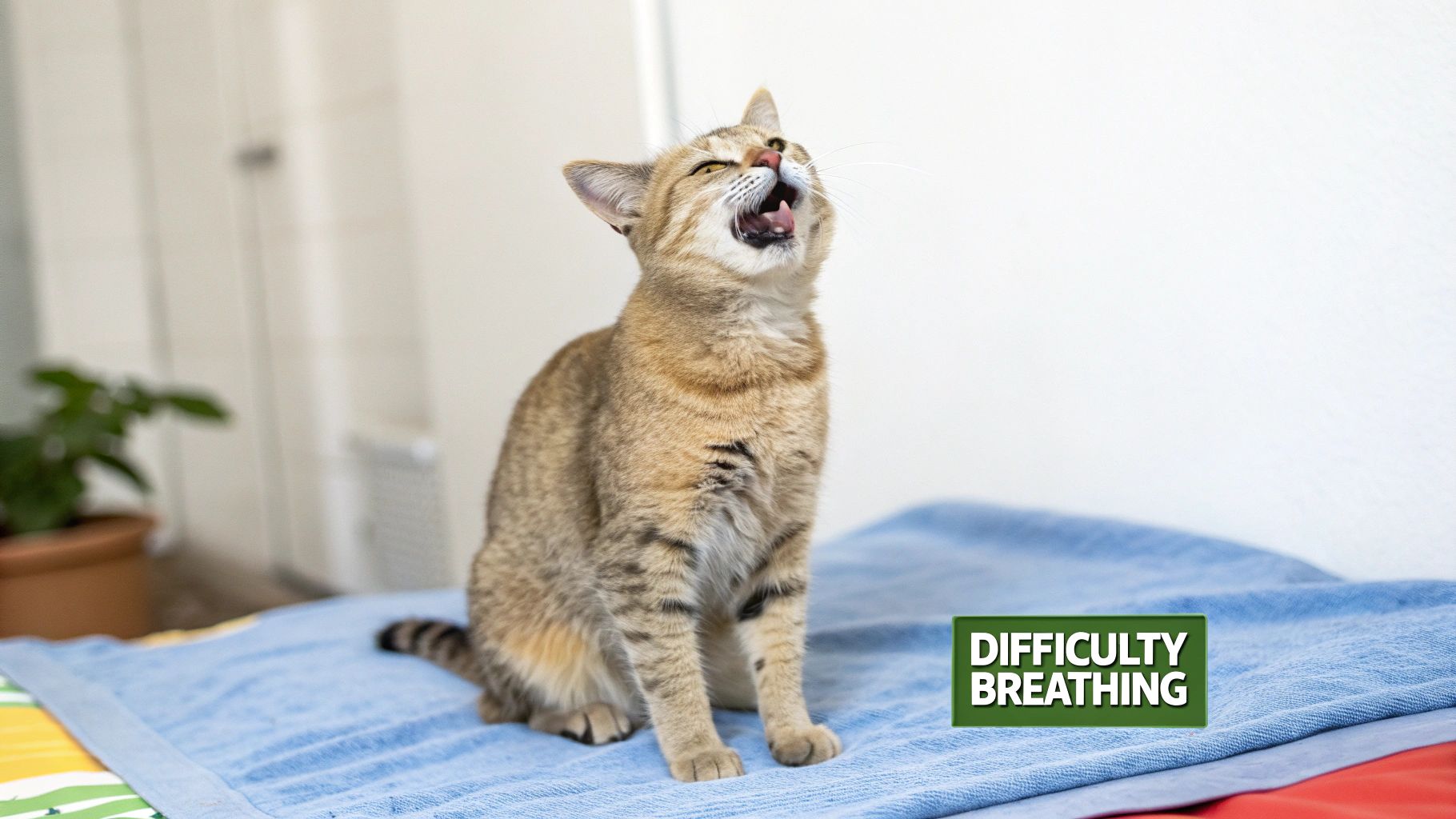
Difficulty breathing, or dyspnea, is one of the most serious signs of heart disease in cats. When a cat’s heart can’t pump blood efficiently, fluid can back up into the lungs (congestive heart failure), making it hard to get enough oxygen.
This distress can show up in several ways. Your cat might breathe with their mouth open (panting), use their stomach muscles to breathe, or stretch their neck out. You may also notice a faster breathing rate, even when they are resting. This is a critical sign that demands immediate attention.
What to Watch For
- Rapid Breathing: A resting breathing rate over 35 breaths per minute is a major concern.
- Open-Mouth Breathing: Cats don't pant like dogs. This is almost always a sign of distress.
- Labored Breathing: Look for exaggerated chest and stomach movements with each breath.
- Unusual Postures: Cats in distress may crouch with their elbows pointed away from their body.
- Blue-Tinged Gums (Cyanosis): A bluish color to the gums or tongue is a life-threatening emergency.
When Is It Urgent vs. Emergency?
- Urgent: A consistently high resting respiratory rate (35-40 breaths per minute) that is new for your cat.
- Emergency: Any open-mouth breathing, labored breathing, or blue-tinged gums is a medical emergency. Go to a vet immediately.
What to Do Before Arriving at the Vet
- Stay Calm: Your cat can sense your stress. Speak in a quiet, soothing voice.
- Minimize Handling: Avoid forcing them into a carrier if it causes a struggle. A laundry basket with a towel over the top can work in a pinch.
- Ensure Ventilation: Keep the car cool with good airflow.
Text us at 718-301-4030. If symptoms are severe or after hours, go directly to a 24/7 emergency hospital.
2. Lethargy and Decreased Activity
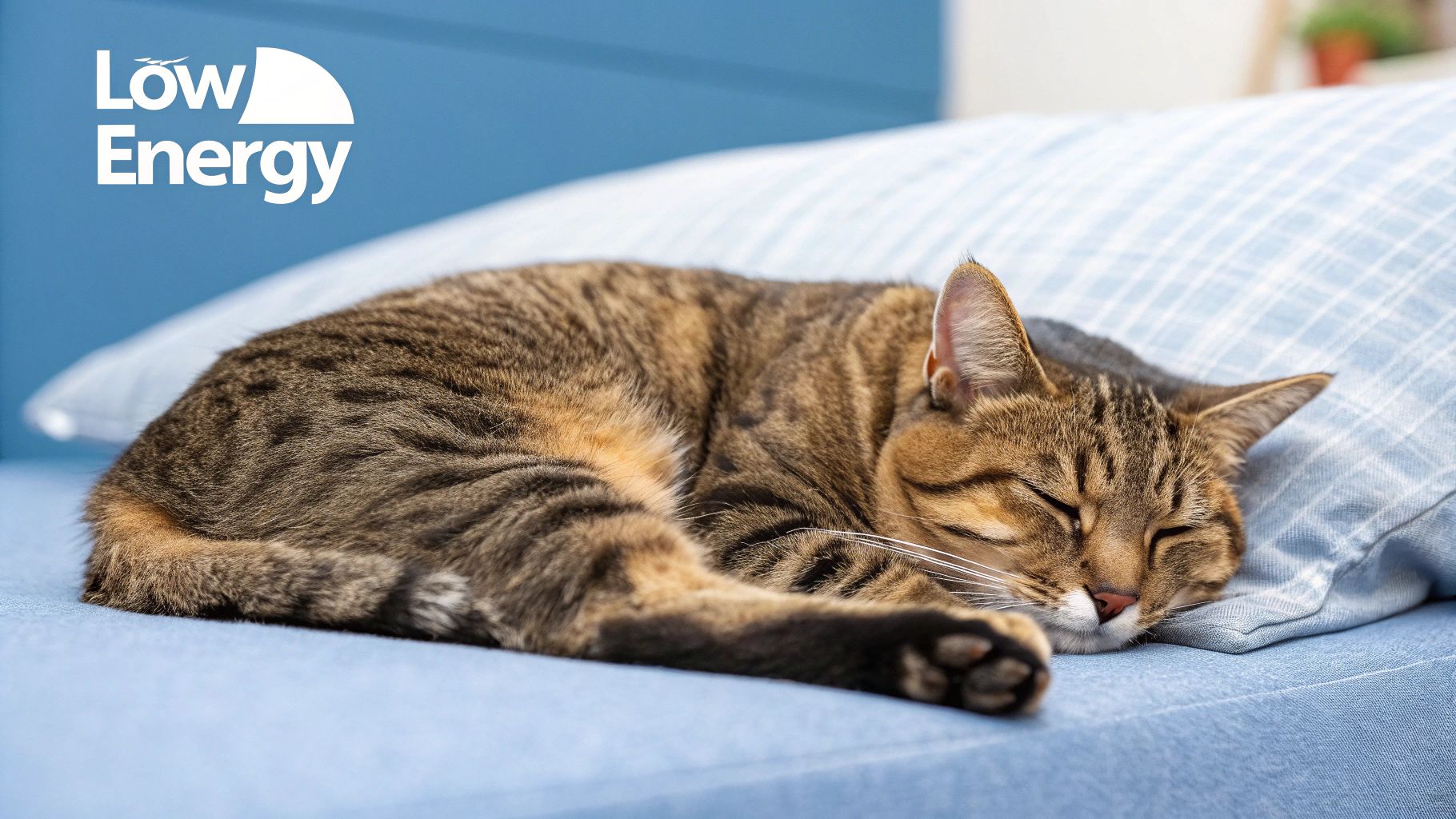
A drop in your cat’s activity level is a common but easily missed sign of heart disease. As a cat's heart becomes less efficient, they conserve energy by playing less and sleeping more. This can be mistaken for normal aging.
Because this symptom is subtle, discussing your cat's energy level during a wellness exam is key. A veterinarian can help distinguish between normal aging and fatigue linked to a heart condition. Regular check-ups are essential for early detection.
What to Watch For
- Less Interest in Play: A cat who once loved chasing toys may now just watch.
- Hiding or Withdrawing: Cats with low energy may isolate themselves more often.
- Changes in Jumping: Hesitating or no longer jumping onto furniture they previously used.
- Sleeping More: An increase in total sleep time or deeper sleep can be a sign.
- Less Grooming: A lack of energy can lead to a dull or matted coat.
When Is It Urgent vs. Emergency?
- Urgent: A gradual decrease in activity or a sudden drop in energy over one or two days warrants a vet visit.
- Emergency: Lethargy is an emergency if your cat cannot be roused, refuses to eat or drink, or shows signs of breathing difficulty.
What to Do Before Arriving at the Vet
- Keep a Log: Note changes in your cat’s activity and sleep patterns to share with the vet.
- Provide Comfort: Ensure easy access to food, water, and their litter box.
- Handle Gently: Let them rest and handle them calmly to minimize stress.
Text us at 718-301-4030. If symptoms are severe or after hours, go directly to a 24/7 emergency hospital.
3. Heart Murmur
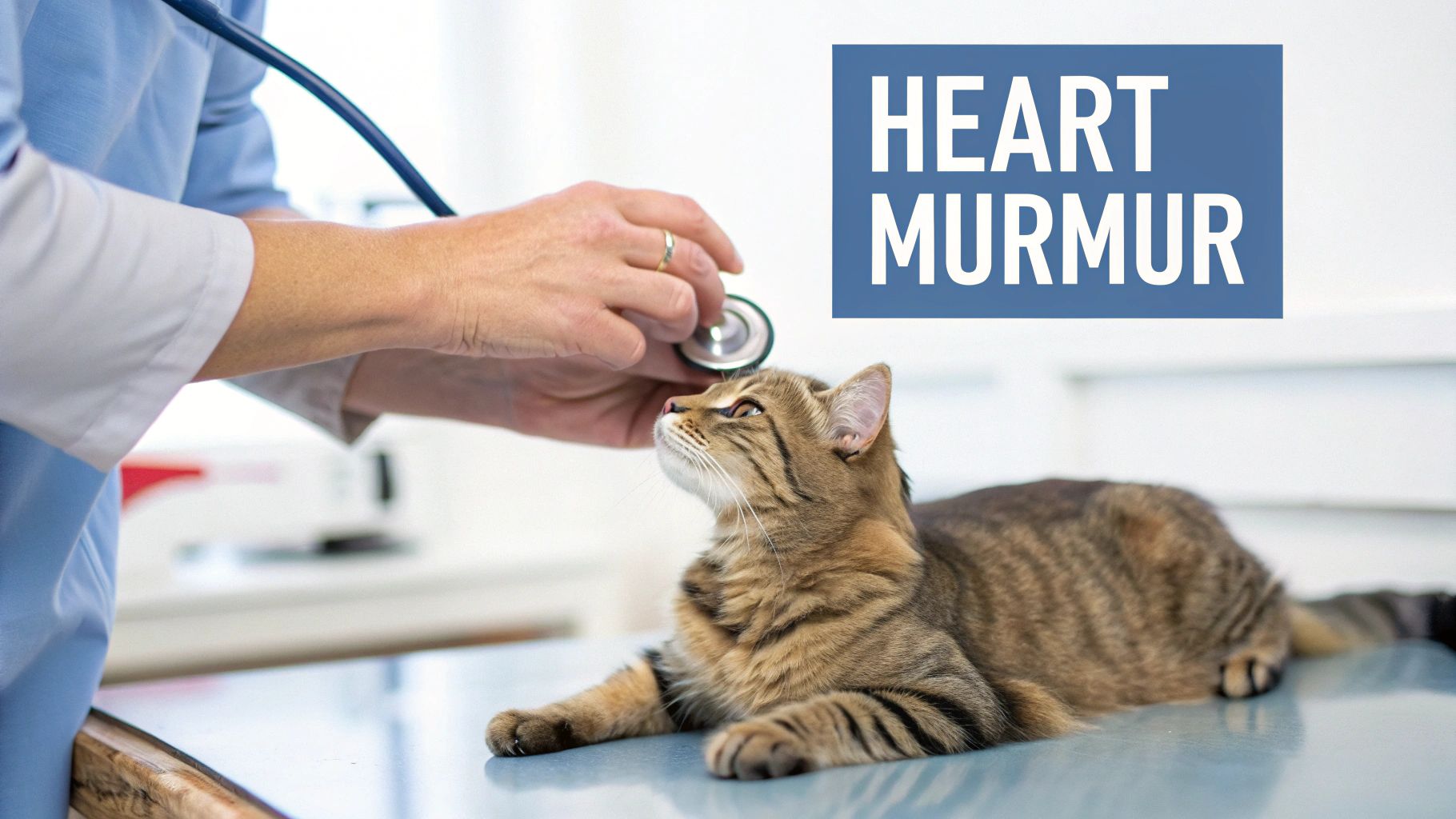
A heart murmur is an abnormal "whooshing" sound a veterinarian hears with a stethoscope. It’s caused by turbulent blood flow in the heart. While sometimes harmless, a murmur is often one of the earliest detectable signs of heart disease in cats.
A heart murmur found during a routine exam may be the first clue that a heart problem exists. This allows your veterinarian to recommend further tests to check the heart's structure and function, which is critical for managing your cat's health.
What to Watch For
A heart murmur is not something you can see or hear at home. It can only be found by a vet during a physical exam. Your role is to ensure your cat gets regular check-ups.
- Routine Detection: A murmur is usually found during an annual or semi-annual wellness visit.
- Grading the Murmur: Your vet will grade the murmur on a scale of I to VI (softest to loudest).
- Changes Over Time: A new murmur or a change in an existing one requires further investigation.
When Is It Urgent vs. Emergency?
- Urgent: The discovery of a heart murmur itself is not an emergency but requires follow-up diagnostics.
- Emergency: A murmur found alongside labored breathing, collapse, or hind-limb paralysis is a life-threatening emergency.
What to Do Before Arriving at the Vet
- Prioritize Calm: Keep your voice and movements calm to avoid adding to your cat’s stress.
- Handle Minimally: Gently place your cat in a well-ventilated carrier.
- Call Ahead: Let the emergency hospital know you are on your way so they can prepare.
Text us at 718-301-4030. If symptoms are severe or after hours, go directly to a 24/7 emergency hospital.
4. Fainting or Collapse (Syncope)
A sudden collapse or fainting spell (syncope) is an alarming sign. It happens when the heart fails to pump enough oxygenated blood to the brain, causing a brief loss of consciousness. These episodes are usually short but indicate a serious cardiac problem.
A cat experiencing syncope will go limp and become unresponsive before quickly coming to, often appearing disoriented. These events can happen without warning and are a clear signal that the heart is struggling.
What to Watch For
- Sudden Collapse: The cat abruptly falls to its side and becomes limp.
- Loss of Consciousness: The cat will be unresponsive for a short period, usually less than a minute.
- Rapid Recovery: The cat usually regains consciousness and may seem confused or anxious afterward.
When Is It Urgent vs. Emergency?
- Urgent: This symptom is never just "urgent."
- Emergency: Any suspected fainting spell or collapse is a medical emergency. Do not wait for a second episode to occur.
What to Do Before Arriving at the Vet
- Ensure Safety: If your cat collapses, gently move them away from stairs or furniture to prevent injury.
- Provide a Quiet Space: As they recover, keep them in a calm, quiet area.
- Note the Details: Try to remember what happened before, during, and after the episode. This information is vital for the veterinarian.
Text us at 718-301-4030. If symptoms are severe or after hours, go directly to a 24/7 emergency hospital.
5. Coughing
While common in dogs with heart disease, coughing is a much rarer sign in cats. When it does occur due to heart issues, it’s typically from advanced conditions like congestive heart failure. However, coughing in cats is more often linked to respiratory issues like asthma or bronchitis.
A true cough is a forceful exhalation from the lungs, often with the cat in a crouched position with its neck extended. It's different from the retching that happens when trying to bring up a hairball.
What to Watch For
- Sound of the Cough: A heart-related cough is often dry and hacking.
- Associated Signs: Note if the cough is accompanied by other potential signs of heart disease in cats, such as lethargy or rapid breathing.
- Coughing vs. Retching: Try to get a video of the episode to show your vet.
When Is It Urgent vs. Emergency?
- Urgent: Persistent coughing warrants a veterinary visit.
- Emergency: Coughing becomes an emergency if it is paired with difficulty breathing, open-mouth breathing, or collapse.
What to Do Before Arriving at the Vet
- Stay Calm: Keep the environment quiet to avoid worsening their stress.
- Ensure Easy Airflow: Use a well-ventilated carrier.
- Avoid Airway Irritants: Ensure your home and car are free from smoke or strong perfumes.
Text us at 718-301-4030. If symptoms are severe or after hours, go directly to a 24/7 emergency hospital.
6. Arrhythmia (Irregular Heartbeat)
An arrhythmia is an irregular heartbeat. You can't see this sign, but your veterinarian can detect it with a stethoscope. It’s a subtle but important clue pointing towards underlying heart disease.
When a cat's heart muscle is damaged, the electrical signals that coordinate each beat can become disorganized. This can lead to a heart that beats too fast, too slow, or erratically. Some arrhythmias can lead to poor blood flow or fainting spells.
What to Watch For
Since you can't hear an arrhythmia, you must watch for its physical effects:
- Fainting or Collapse (Syncope): A sudden, brief loss of consciousness is a serious sign.
- Episodes of Weakness: Your cat may suddenly seem very weak or wobbly.
- Lethargy: A cat with a persistent arrhythmia may lack energy.
When Is It Urgent vs. Emergency?
- Urgent: The detection of an arrhythmia during an exam requires follow-up, such as an ECG.
- Emergency: Any episode of fainting or collapse is a medical emergency.
What to Do Before Arriving at the Vet
- Prevent Injury: During a fainting spell, keep your cat in a safe space away from stairs.
- Handle Gently: Move them slowly and calmly to a carrier once they have recovered.
- Note the Details: Report what happened before, during, and after the episode to the veterinarian.
Text us at 718-301-4030. If symptoms are severe or after hours, go directly to a 24/7 emergency hospital.
7. Abdominal Swelling (Ascites)
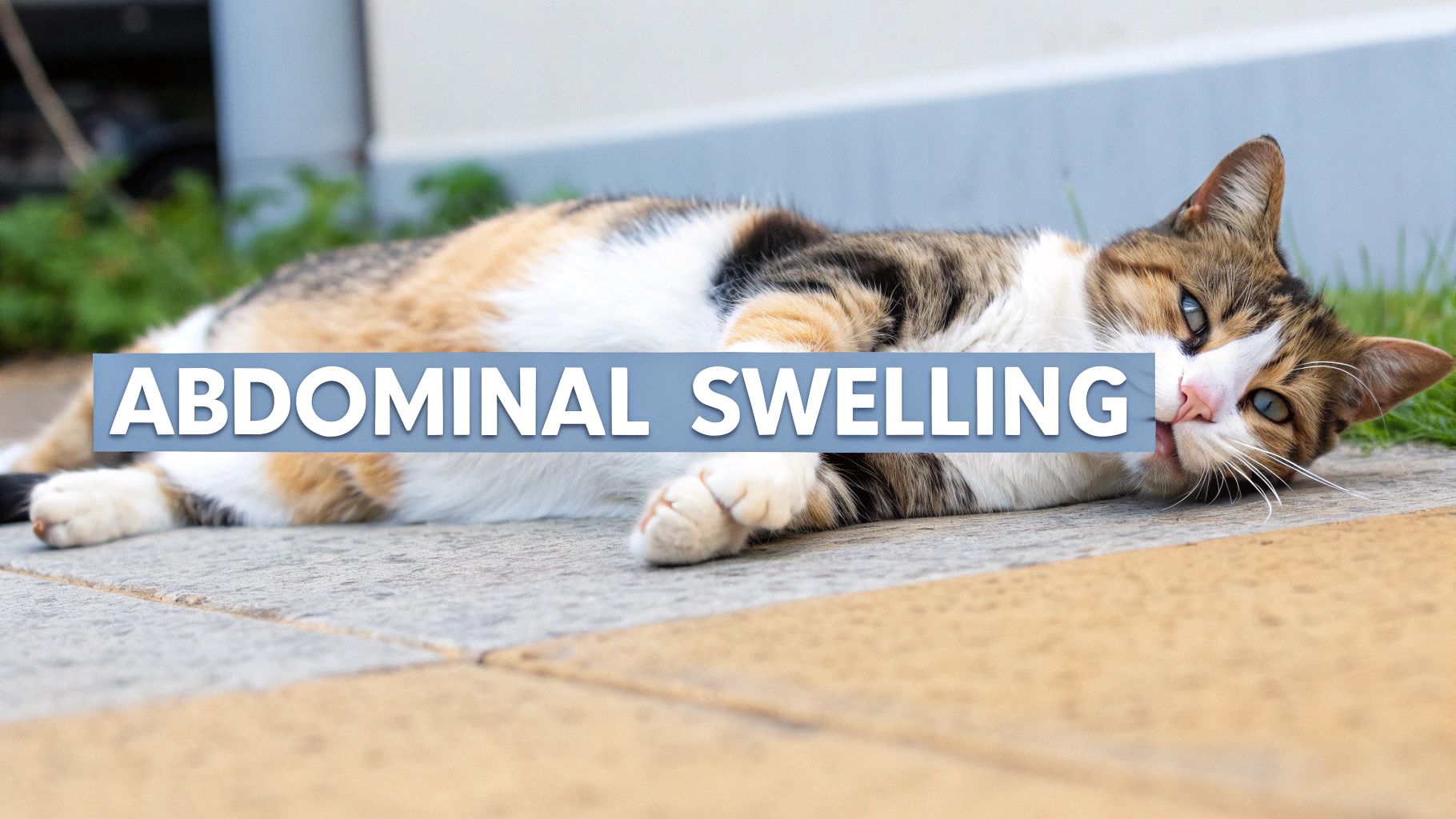
A swollen or bloated belly can be a sign of advanced heart disease. It’s often caused by ascites, which is fluid buildup in the abdomen. When the right side of the heart isn’t pumping well, pressure builds in the veins, forcing fluid to leak out.
This swelling is persistent and can make your cat uncomfortable. It’s a clear indicator of congestive heart failure, which requires prompt veterinary care.
What to Watch For
- Noticeable Abdominal Swelling: Your cat’s belly may look round and feel taut.
- Gradual Weight Gain: Weight gain without a change in diet could be fluid retention.
- Difficulty Moving: The extra fluid can make your cat reluctant to jump or play.
- Changes in Breathing: The pressure from the abdomen can push on the diaphragm, making breathing more difficult.
When Is It Urgent vs. Emergency?
- Urgent: A slowly developing belly warrants a vet visit.
- Emergency: If abdominal swelling appears suddenly or is accompanied by difficulty breathing, extreme lethargy, or collapse, it is a medical emergency.
What to Do Before Arriving at the Vet
- Handle Gently: Lift your cat carefully, supporting their chest and abdomen.
- Provide a Comfortable Carrier: Use a spacious, top-loading carrier.
- Stay Calm: Your calm demeanor can help reduce your cat’s stress.
Text us at 718-301-4030. If symptoms are severe or after hours, go directly to a 24/7 emergency hospital.
FAQ: Feline Heart Disease
Q1: Is heart disease common in cats?
Yes, heart disease, especially hypertrophic cardiomyopathy (HCM), is one of the most common cardiac conditions diagnosed in cats. It can affect cats of any age but is often identified in middle-aged cats.
Q2: Can I prevent heart disease in my cat?
Most forms of feline heart disease are genetic, so prevention isn't really possible. The best approach is early detection through regular veterinary wellness exams, which can help manage the condition and maintain your cat's quality of life.
Q3: What happens during a vet visit if heart disease is suspected?
Your vet will perform a physical exam and listen to your cat's heart and lungs. If a murmur or arrhythmia is found, they may recommend further tests like chest X-rays, an electrocardiogram (ECG), blood tests, or an echocardiogram (an ultrasound of the heart), which is the best way to diagnose the specific type of heart disease.
Q4: Is it safe to give my cat aspirin for a heart condition?
No. Never give your cat any human medications, including aspirin, unless explicitly instructed by your veterinarian. Aspirin can be toxic to cats and cause severe complications. All medications must be prescribed by a vet who has examined your pet.
Your Next Steps for a Healthy Heart
Navigating your cat's health can feel complex, but understanding the signs of heart disease in cats is a powerful first step. Your role as a vigilant pet owner in Queens is the single most important factor in early detection.
Key Takeaways for Proactive Pet Parents
- Trust Your Instincts: You know your cat best. If you feel something is "off," it's worth a professional evaluation.
- Prioritize Regular Wellness Exams: Many signs, like a heart murmur, are silent and can only be detected by a vet. These checkups are your best tool for early intervention.
- Know the Red Flags: Open-mouth breathing, blue-tinged gums, or collapse are life-threatening emergencies.
- Monitor at Home: Learning how to check your cat’s sleeping respiratory rate is a simple way to track their health. A rate consistently above 35 breaths per minute while at rest is a signal to call your vet.
Turning Knowledge into Action
Being informed is one thing; acting is what makes a difference. Early diagnosis of feline heart conditions dramatically improves the prognosis, allowing for management that can enhance your cat's quality of life for years to come. Your commitment to observation, combined with our diagnostic expertise, creates a safety net for your beloved pet.
At Union Vet NY, we are equipped to assess, diagnose, and manage feline heart conditions. Partner with our compassionate team to create a health plan for your cat. For more information on our veterinary services in Queens, NY or to schedule an appointment with our veterinary team, visit Union Vet NY.
Text us at 718-301-4030. If symptoms are severe or after hours, go directly to a 24/7 emergency hospital.
