

Queens Pet Guide: When to Take Your Cat to the Emergency Vet
Figuring out if your cat's health issue is a true "drop everything and go" emergency can be stressful. For pet owners in Queens, from Oakland Gardens to Bayside, knowing the signs can help you act calmly and quickly.
As a rule of thumb, the most critical signs demanding an immediate trip to an emergency hospital are difficulty breathing, seizures, major trauma or bleeding, and the inability to urinate. If you see any of these, it’s time to go right away.
Text us at 718-301-4030. If symptoms are severe or after hours, go directly to a 24/7 emergency hospital.
Knowing When Your Cat Needs Immediate Help: Urgent vs. Emergency
When your cat is sick, it's hard to think clearly. The first step is to take a breath and assess the situation. The key is understanding the difference between a problem that is urgent and one that is a life-threatening emergency.
- An urgent situation means your cat needs to see a vet soon, typically within 24 hours.
- An emergency means your cat's life may be at risk, and you need to get to a veterinary hospital immediately.
Cats are masters at hiding illness, so subtle changes in behavior are often your first clue. Knowing the major warning signs ahead of time helps you make a fast, clear-headed decision for your pet in Fresh Meadows, Glen Oaks, or anywhere in our community.
Urgent Care vs Emergency Go-Now Signs in Cats
This chart is designed to help our neighbors in Queens quickly gauge how serious a symptom might be.
| Symptom Category | Urgent Care (Visit Within 24 Hours) | Emergency (Go to Vet Immediately) |
|---|---|---|
| Breathing | Mild, occasional coughing or sneezing | Open-mouth breathing, gasping, wheezing, blue-tinged gums |
| Gastrointestinal | A single episode of vomiting or diarrhea; eating less | Repeated vomiting (can't keep water down), bloody diarrhea, retching with nothing coming up |
| Urinary | Urinating outside the litter box (new behavior) | Straining to urinate with little or no urine produced, vocalizing in pain in the litter box (especially male cats) |
| Neurological | Mild disorientation, slight wobble | Seizures, sudden collapse, paralysis, unresponsiveness, head tilt, loss of balance |
| Injury/Trauma | Minor limp, small cut that has stopped bleeding | Hit by a car, fall from a height, deep wounds, uncontrolled bleeding, broken bones |
| General | Hiding more than usual, decreased appetite for a day | Extreme lethargy, pale gums, swollen/painful abdomen, suspected toxin ingestion (lilies, antifreeze, human meds) |
This chart is a guide. You know your cat best. If their behavior seems drastically "off" or you're worried, it's always best to get professional advice.
What to Do Before Arriving
If your cat is showing concerning symptoms, getting professional guidance is the best first step.
- Assess Symptoms: Look closely. Is your cat gasping for air, collapsed, seizing, or straining to pee? These are go-now emergencies.
- Stay Calm: Your cat can sense your stress. Speak in a quiet, calm voice and handle them gently to avoid making things worse.
- Contact a Professional: A quick text or call can provide critical next steps.
Text us at 718-301-4030. If symptoms are severe or after hours, go directly to a 24/7 emergency hospital.
Critical Symptoms That Are Always an Emergency
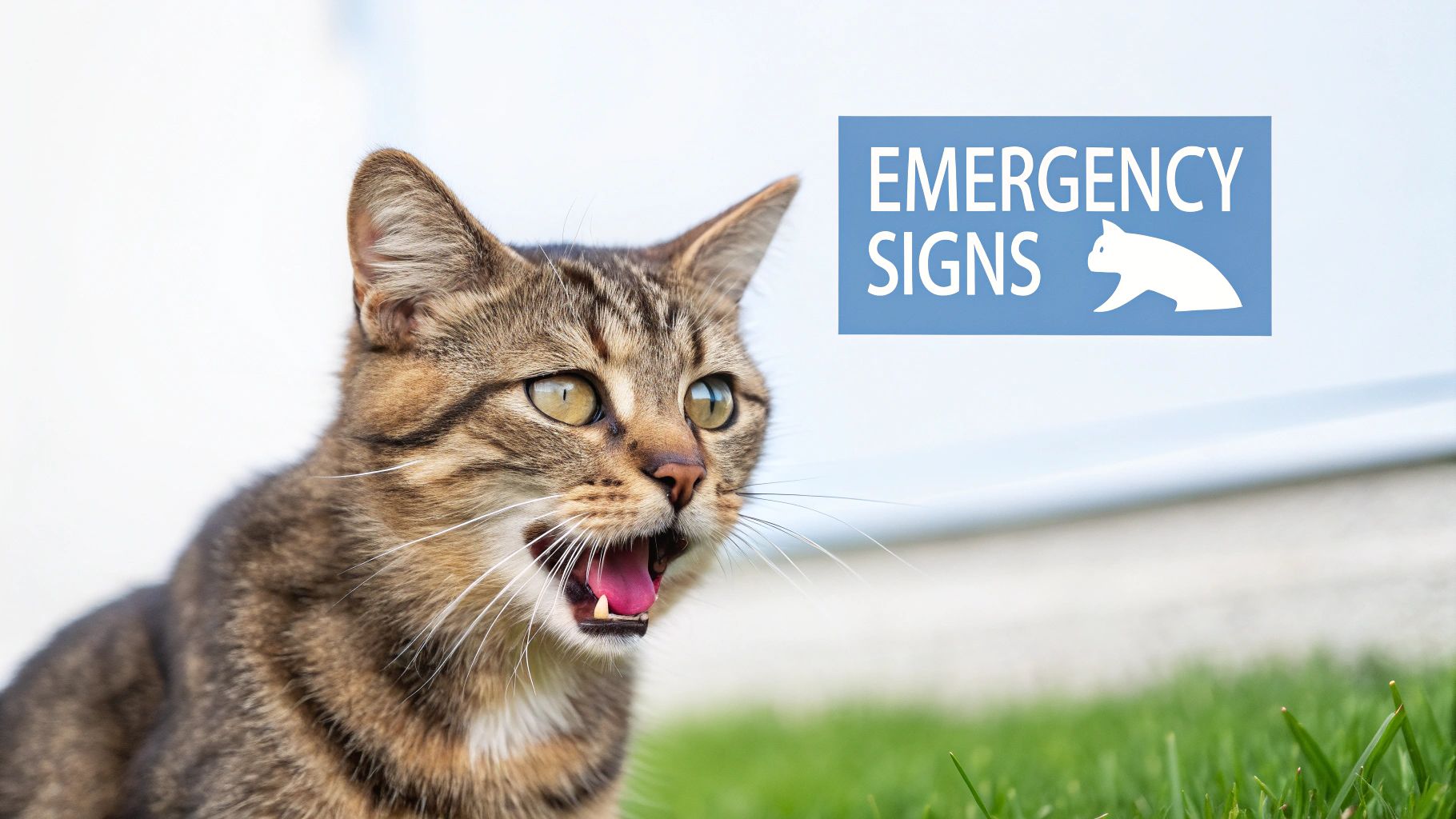
Some signs are red flags that your cat's life is in danger. When you see these, you must act immediately. For cat owners in Little Neck, Hollis, and Queens Village, knowing these symptoms can make all the difference.
Difficulty Breathing
This is always an emergency. A cat struggling to breathe needs immediate veterinary oxygen and support.
Look for these clear signs:
- Open-mouth breathing or panting: Cats should not pant like dogs. This signals major distress.
- Gasping, wheezing, or coughing: Any strange, strained breathing sound is a serious problem.
- Blue-tinged gums or tongue: This means they are not getting enough oxygen.
- Stretching their neck out to try and open their airway.
- Rapid belly movements with each breath.
If you see any of these signs, get to a vet immediately.
Seizures or Sudden Collapse
A seizure can look like violent shaking, twitching, or a complete loss of consciousness. A sudden collapse where your cat can't get up is also a critical event. These symptoms can point to serious issues like poisoning, heart disease, or epilepsy. Even if the seizure is short, your cat needs to be seen right away.
Inability to Urinate
This is a painful and life-threatening emergency, especially for male cats. A urinary blockage prevents urine from leaving the body, causing toxins to build up. This can lead to kidney failure and death within 24 to 48 hours if not treated.
Key signs include:
- Straining in the litter box with little or no urine coming out.
- Crying out in pain while trying to urinate.
- Going in and out of the litter box repeatedly.
This is not a "wait and see" situation.
Major Trauma or Uncontrolled Bleeding
If your cat was hit by a car, fell from a height, or was attacked by another animal, they need a vet right away, even if they look okay. They could have serious internal injuries.
Any bleeding that doesn't stop within five minutes is an emergency. Apply firm, steady pressure to the wound with a clean cloth on your way to the vet.
Suspected Toxin Ingestion
If you think your cat ate something poisonous, act fast. Many common household items are toxic to cats.
Common feline toxins include:
- Plants: Lilies are extremely dangerous and can cause fatal kidney failure.
- Human Medications: Pain relievers like Tylenol and Advil are highly poisonous to cats.
- Chemicals: Antifreeze, rat poison, and household cleaners are deadly.
If you see your cat eat something toxic, don't wait for symptoms. Head straight to the vet and bring the packaging or a piece of the substance with you. Knowing when to take cat to emergency vet is about what you saw, not just the symptoms.
For more information on what qualifies as a true emergency, you can review our emergency vet services in Queens NY.
Text us at 718-301-4030. If symptoms are severe or after hours, go directly to a 24/7 emergency hospital.
Preparing for the Emergency Vet Visit

In a panic, it's hard to think straight. Taking a few moments to prepare can make a huge difference. Try to stay calm—your cat can sense your stress. Before you leave home, take a deep breath. A clear head helps you handle your cat safely and communicate with the vet team.
Your Pre-Arrival Checklist
- Call Ahead: If possible, call the emergency hospital to let them know you're on your way. This gives the team a heads-up to prepare. Briefly explain your cat’s symptoms and your estimated arrival time.
- Gather Important Items: Bring any medications your cat is taking (in their bottles), a list of known allergies, and any recent medical records.
- Secure Your Cat: Always use a secure carrier. A scared or painful cat might try to run or scratch. A carrier keeps everyone safe.
A critical reminder: Never give your cat human medications unless explicitly stated as “only if your veterinarian advises.” Drugs like Tylenol or Advil are toxic to cats.
To make future visits smoother, you can upload your cat's medical records to our system ahead of time.
Text us at 718-301-4030. If symptoms are severe or after hours, go directly to a 24/7 emergency hospital.
How to Safely Transport Your Sick Cat
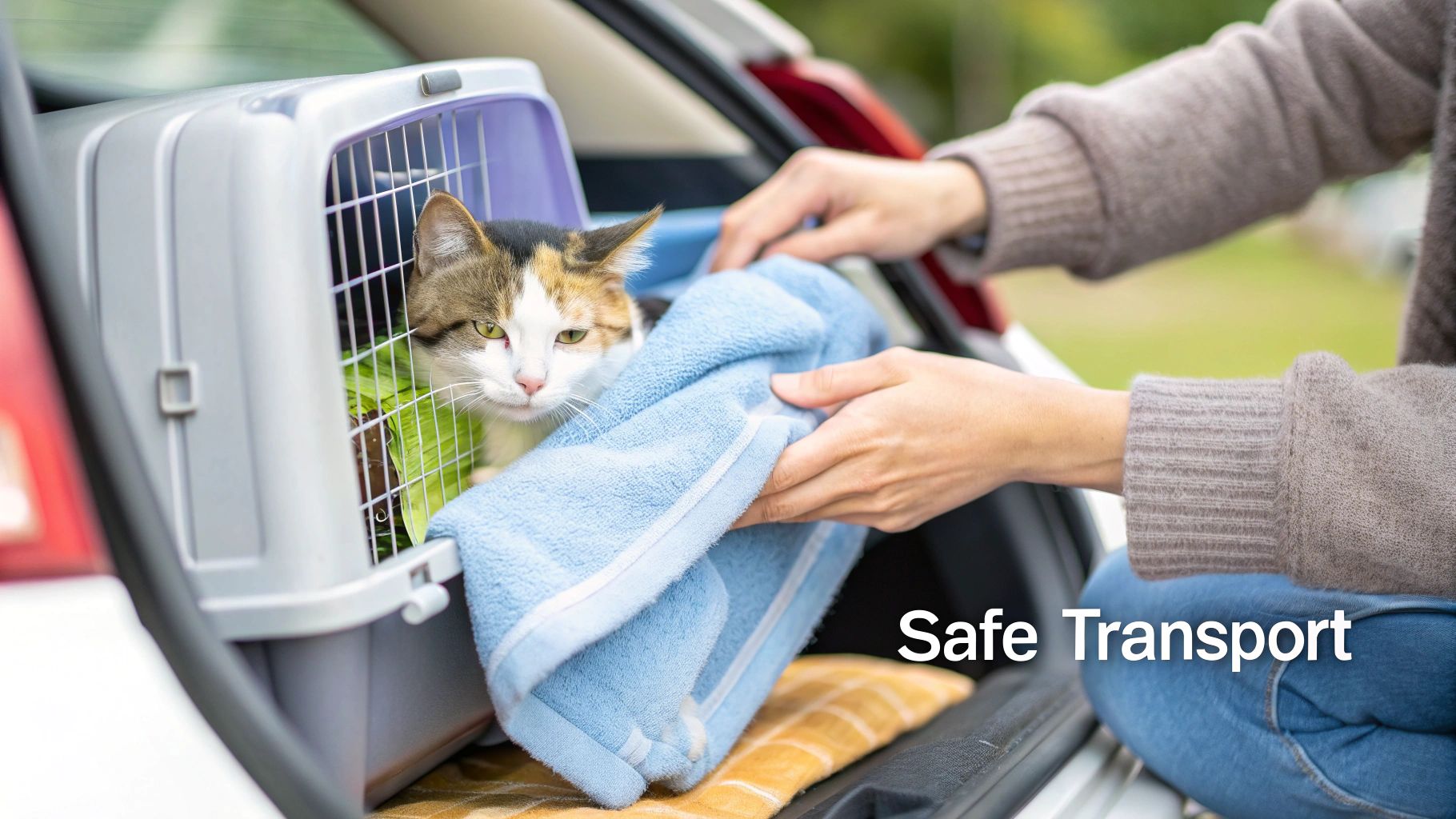
Getting your sick or injured cat to the vet is the next challenge. For pet owners across Queens, from Bayside to Hollis, handling this trip safely can prevent more stress or injury.
Using the Right Carrier
A sturdy, hard-sided carrier offers the most protection in an emergency. To get a stressed cat inside, try using a top-loading door if your carrier has one. Gently lowering your cat in from above is less frightening for them.
Once inside, place a soft towel that smells like home in the carrier for comfort.
Securing the Carrier in Your Car
Never leave a carrier loose on a car seat. A sudden stop can send it flying. The safest spot is on the floor behind a front seat. You can also place it on the seat and secure it with a seatbelt.
- Keep the car quiet.
- Speak in a calm, reassuring voice.
- Drive smoothly.
Following these steps will help you get your cat to the vet safely so they can receive the care they need.
Text us at 718-301-4030. If symptoms are severe or after hours, go directly to a 24/7 emergency hospital.
Frequently Asked Questions (FAQ)
Here are answers to some common questions we hear from cat owners in Queens.
What should I do if my cat ate something toxic?
If you suspect your cat ate something poisonous, act quickly.
- Safely move your cat away from the substance.
- Call a poison hotline immediately, like the ASPCA Animal Poison Control Center (888-426-4435).
- Head to the vet. Bring the product packaging or a piece of the plant with you. This is critical for identifying the toxin and starting the right treatment.
With poisoning, every minute counts. Do not wait for symptoms to appear. And remember, do not try to make your cat vomit at home.
How do I know if my cat is in pain?
Cats are experts at hiding pain. Look for subtle behavioral changes:
- Hiding: A social cat suddenly seeking solitude.
- Litter Box Changes: Urinating outside the box may be a sign of pain.
- Poor Grooming: A messy or matted coat can signal they don't feel well.
- Personality Shifts: A friendly cat becoming withdrawn or aggressive.
- Purring: Cats sometimes purr to soothe themselves when in pain.
Trust your gut. If you notice a major change in your cat’s routine, pain could be the reason.
Is it an emergency if my cat hasn't eaten?
A cat refusing food for more than 24 hours needs a vet visit, especially if they are also lethargic or vomiting. When cats stop eating, they can quickly develop a dangerous liver condition called hepatic lipidosis (fatty liver disease). Acting early is key to preventing this serious illness.
At Union Vet, we're here to support you and your cat. We believe an informed owner is the best partner in a pet's health.
Text us at 718-301-4030. If symptoms are severe or after hours, go directly to a 24/7 emergency hospital. Learn more about our veterinary services in Queens by visiting us at https://unionvetny.com.
Article created using Outrank
