

Your Guide to the Kennel Cough Vaccine for Dogs in Queens, NY
The kennel cough vaccine is a crucial tool for preventing canine infectious tracheobronchitis, a very contagious respiratory illness in dogs. It works by teaching your dog’s immune system how to fight off the main bacterial culprit, Bordetella bronchiseptica. This greatly cuts down the risk of infection and makes symptoms much milder if your dog does get exposed.
For pet owners in Queens, from Oakland Gardens to Bayside, understanding this vaccine helps you protect your furry family member.
Recognizing the Symptoms of Kennel Cough
If you've ever heard a dog let out a loud, hacking cough that sounds like a goose honking, you've likely heard kennel cough. The official name is canine infectious tracheobronchitis, and it’s an inflammation of the upper airways. Think of it as a bad chest cold for dogs—one that spreads easily wherever they socialize.
The illness can pop up suddenly, often a few days after your dog has been around other pups at a dog park in Fresh Meadows, a grooming salon in Glen Oaks, or even on a walk in Little Neck.
Here are the key symptoms to watch for:
- A strong, honking cough: This is the most distinct sign. Many owners say it sounds like something is stuck in their dog's throat.
- Sneezing and a runny nose: You might notice clear or slightly cloudy discharge.
- Gagging or retching: Dogs often gag after a coughing fit, sometimes bringing up white foam.
- Mild eye discharge: Similar to a human cold, their eyes may be a little watery.
- Low energy: Most dogs with mild cases remain active, but some may seem tired.
The global canine vaccines market, valued at USD 1.87 billion in 2024, highlights how vital preventative care is. You can see more about this trend by checking out these insights into the canine vaccines market.
When to Seek Veterinary Care: Urgent vs. Emergency
Knowing when to call your vet is key. While many cases of kennel cough are mild, some dogs need medical help to prevent complications.
When it’s an URGENT issue (Call us for an appointment):
- The cough is persistent and you suspect it’s kennel cough.
- Symptoms are mild but haven’t improved after a few days.
- Your dog is a puppy, a senior, or has a pre-existing health condition like asthma or a heart murmur.
When it's an EMERGENCY (Go to a 24/7 hospital immediately):
- Difficulty breathing: Your dog is gasping, taking rapid, shallow breaths, or stretching their neck out to breathe.
- Pale or blue-tinged gums: Healthy gums are pink. White, grey, or bluish gums are a sign of low oxygen.
- Extreme weakness or lethargy: Your dog won't get up, is unresponsive, or collapses.
- High fever or complete loss of appetite.
These severe signs may indicate pneumonia, a serious complication.
What to Do Before You Arrive
If your dog needs to be seen, please follow these steps:
- Call ahead. Let the clinic know you are coming with a dog that has a cough. This allows the staff to prepare an isolation area to protect other pets in the clinic, especially vulnerable puppies and sick patients.
- Stay calm. Your dog can sense your stress. Use a soothing voice to help keep them calm.
- Transport safely. Use a crate or have another person in the car to help secure your dog and keep them comfortable.
Text us at 718-301-4030. If symptoms are severe or after hours, go directly to a 24/7 emergency hospital.
Choosing the Right Kennel Cough Vaccine for Your Dog
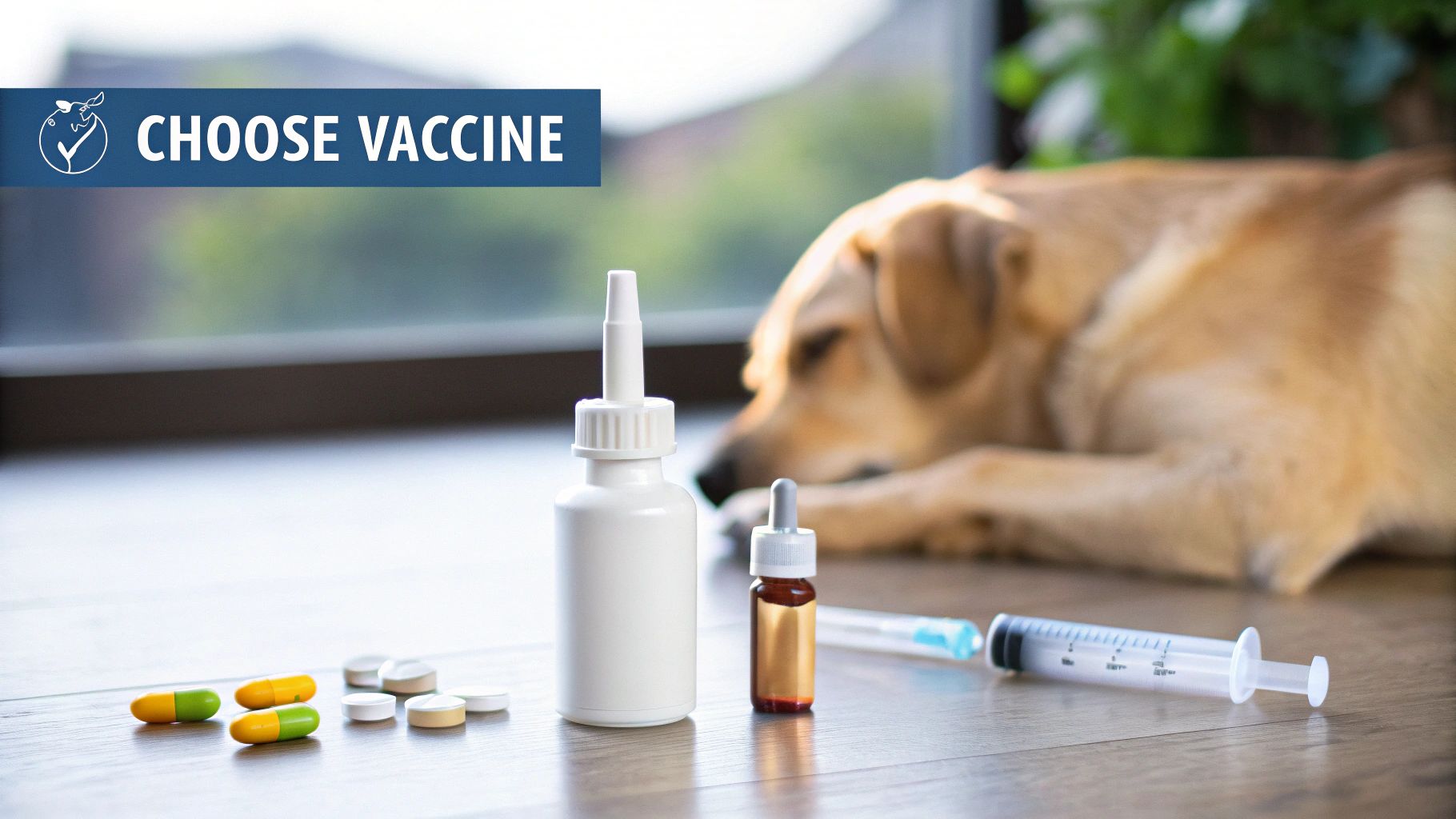
When it comes to the kennel cough vaccine, there’s no one-size-fits-all answer. For dog owners in Oakland Gardens, Bayside, and the surrounding Queens neighborhoods, knowing your options is the first step to getting your dog the right protection. We have three main ways to give the vaccine, and each has its own advantages.
Your vet will recommend the best route based on your dog’s health, personality, and how quickly we need the protection to kick in. The goal is always the same: keeping that harsh, hacking cough at bay.
The Three Types of Bordetella Vaccines
The biggest difference between the vaccines is simply how they’re given. This can affect how quickly your dog’s immune system gets to work and can be a big deal for dogs who get anxious about needles.
- Intranasal Vaccine: This is given as drops or a gentle squirt into your dog’s nose. It’s a popular choice because it starts building immunity right where the infection tries to take hold—in the respiratory tract.
- Oral Vaccine: This is a liquid vaccine that we give right in your dog’s mouth, tucked between the cheek and gum. It’s a great needle-free option for dogs who aren't fans of nose drops.
- Injectable Vaccine: This is the traditional shot given under the skin, just like your dog’s other routine vaccines. It’s straightforward, but it can take a little longer to offer full immunity compared to the other two.
As more dogs in dense urban areas like Queens are socializing, we’re seeing better vaccine technology. In fact, the global market for oral Bordetella vaccines was valued at USD 138.8 million in 2022 and is projected to hit USD 261.7 million by 2033. This isn't surprising, as data shows these vaccines can provide protection in as little as 72 hours and reduce the severity of the illness by up to 80%—a huge plus for social dogs.
Comparing Your Options
Let's break down the key differences between the kennel cough vaccines. This table gives you a quick look at the pros and cons to help you figure out which one might be the best match for your dog.
Comparing Kennel Cough Vaccine Types
| Feature | Injectable Vaccine | Intranasal Vaccine | Oral Vaccine |
|---|---|---|---|
| Administration | A shot under the skin | Drops squirted into the nose | Liquid given in the mouth |
| Speed of Immunity | Slower (requires boosters) | Faster (as quick as 3-5 days) | Faster (as quick as 3 days) |
| Immunity Location | Systemic (body-wide) | Local (in the respiratory tract) | Local (in the oral cavity/throat) |
| Common Side Effects | Soreness, mild lethargy | Sneezing, runny nose | Minimal to none |
| Best For | Routine annual protection | Urgent protection needed | Dogs who dislike shots or nose drops |
The intranasal and oral vaccines are often our go-to for dogs who need fast protection before a trip to the groomer in Fresh Meadows or a stay at a boarding facility in Glen Oaks. Their ability to create a local immune response is a major advantage.
Think of it this way: the intranasal and oral vaccines are like posting security guards right at the front door (the nose and mouth). The injectable vaccine trains guards to patrol the entire house. Both work, but the guards at the door can stop an intruder much faster.
Ultimately, this is a decision we’ll make together. A dog’s vaccine plan is just one piece of their total wellness puzzle. Just like we talk about your dog's lifestyle for the Bordetella vaccine, we do the same for other diseases. To see how we approach preventative care, take a look at our guide on the Lepto vaccine in dogs. We'll discuss your dog’s daily life—whether they’re a homebody in Hollis or a social butterfly at the local dog park—to choose the vaccine that offers the safest, most effective defense.
Text us at 718-301-4030. If symptoms are severe or after hours, go directly to a 24/7 emergency hospital.
When Your Dog's Cough Becomes an Emergency
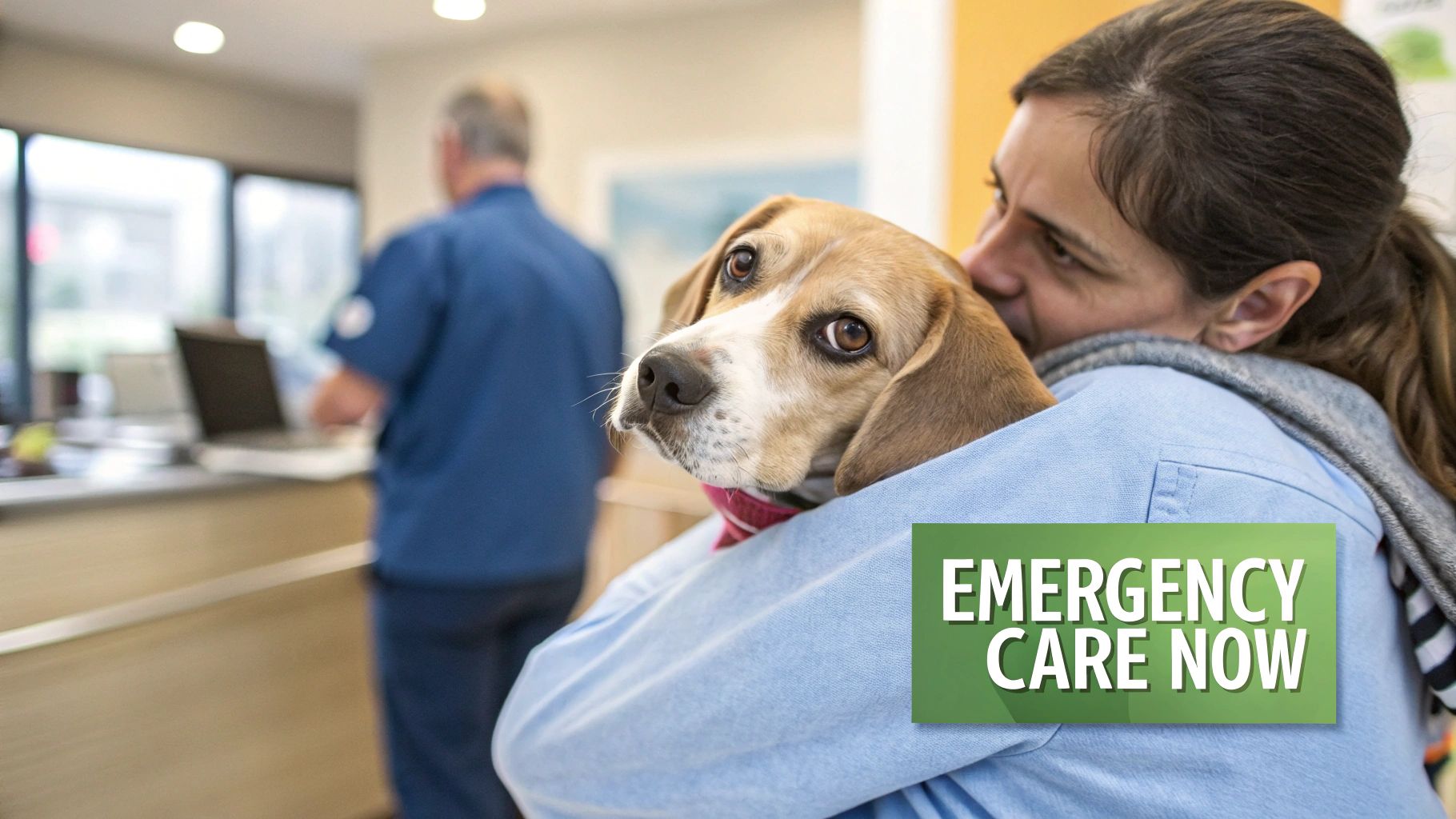
It's one of the most stressful sounds for a dog owner: that dry, hacking, "honking" cough. While most cases of kennel cough are thankfully mild and clear up on their own, you need to know when it’s crossing the line into something more serious.
Think of it like a human cold. For most healthy adult dogs, kennel cough is annoying but not life-threatening. They'll cough but still want to eat and play. But for puppies, senior dogs, or pets with other health issues, that "simple cold" can quickly spiral into pneumonia.
Urgent Care Versus a True Emergency
Knowing the difference here is key. An urgent situation means your dog needs to be seen soon, but their life isn't in immediate danger. An emergency means you need to get to a vet now.
A good rule of thumb? If your dog has a nagging cough but is otherwise acting like themselves, book an appointment. If their behavior changes drastically or they're struggling to breathe, that’s a signal to head to an emergency hospital right away.
Red Flags That Signal an Emergency
If you spot any of the following signs, your dog needs immediate veterinary attention. These symptoms mean the infection has likely gotten much worse and could be life-threatening. Don't wait.
- Difficulty Breathing: This isn't just panting. Look for labored breathing, gasping, or your dog stretching their neck out to get more air.
- Pale or Blue Gums: Lift your dog's lip. Healthy gums are pink. If they look pale, white, grey, or bluish, it's a sign of low oxygen—a true medical emergency.
- Extreme Lethargy or Weakness: Is your dog suddenly unwilling to get up, unable to stand, or just totally unresponsive? Get help immediately.
- Complete Loss of Appetite: A dog who refuses all food and water for more than a day, especially with a cough, is telling you something is very wrong.
- High Fever: You might notice shivering, weakness, or very warm ears and nose. These can all point to a high fever that needs to be addressed by a vet.
An uncomplicated case of kennel cough almost never causes severe symptoms like trouble breathing or extreme weakness. When you see those signs, it's a strong indicator of a secondary complication like pneumonia, which requires aggressive medical care.
What to Do Before You Arrive
In a high-stress moment, a few simple steps can make a huge difference for your dog and the vet team.
- Call Ahead: If you can, call the emergency hospital while you're on your way. This gives the staff a heads-up so they can prepare oxygen or other equipment for your arrival.
- Stay Calm: Your dog feeds off your energy. Speak in a calm, soothing voice and handle them gently to keep their stress levels down.
- Transport Safely: A crate is best, but if you don't have one, use a harness or have someone else in the car help keep your dog secure and comfortable.
Your quick, calm action is one of the most important things you can do for them.
Text us at 718-301-4030. If symptoms are severe or after hours, go directly to a 24/7 emergency hospital.
Understanding Your Dog's Vaccination Schedule
When it comes to keeping your dog protected from kennel cough, consistency is everything. Think of it less like a one-time event and more like a subscription—their immunity needs regular updates to stay strong. This holds true for both puppies building their immune systems from scratch and adult dogs who need to maintain their defenses.
We always tailor a vaccination schedule to your specific dog. Their age, overall health, and just how much they hang out with other dogs—whether at a park in Bayside or a groomer in Fresh Meadows—all play a role.
The Crucial Puppy Vaccination Series
Puppies need a series of shots to build a solid immune foundation. We typically start the kennel cough vaccine series as early as 8 weeks of age, especially if they’ll be socializing with other dogs soon.
This isn't a one-and-done vaccine. The first series usually involves a booster every 2-4 weeks until they hit about 16 weeks old. This multi-step approach is critical. It helps your puppy’s immune system overcome the temporary immunity passed down from their mother’s milk so they can build their own lasting protection.
Think of the puppy series like building a brick wall. Each vaccine is another layer of bricks, making the wall stronger and more capable of fending off infection. A single layer isn't enough; you need the full series to create a solid barrier.
Finishing this entire series is a non-negotiable step before your puppy joins daycare, starts puppy classes, or visits popular dog spots in Queens Village and Little Neck.
Maintaining Protection for Adult Dogs
For adult dogs, it's all about the boosters. The protection from a kennel cough vaccine doesn't last forever, so staying on schedule is the only way to prevent gaps in their defense.
Most adult dogs need a kennel cough booster every year. However, if your dog lives a more social lifestyle—frequently visiting boarding facilities, dog parks, or grooming salons—we often recommend a booster every six months. This ensures they have peak immunity when they need it the most.
The data backs this up. Kennel cough is a highly contagious respiratory disease, but it's now largely managed through prevention, with the Bordetella vaccine as a key player. In fact, studies show that vaccinated dogs can see up to a 90% reduction in clinical signs if they're exposed, which dramatically lowers their risk of getting seriously ill. You can discover more insights on the Bordetella vaccines market to see just how effective widespread vaccination has been.
A regular wellness exam is the perfect time to review and update their schedule. We can also chat about other important vaccines at the same time. For a bigger picture, you can learn more about what vaccines dogs need in our detailed guide. Keeping your dog's vaccinations current is one of the simplest and most effective ways to protect their long-term health.
Text us at 718-301-4030. If symptoms are severe or after hours, go directly to a 24/7 emergency hospital.
Frequently Asked Questions About Kennel Cough
Here are clear, calm answers to the most common questions we hear from pet owners in Queens.
Does the vaccine guarantee my dog won't get kennel cough?
No vaccine offers 100% protection. The kennel cough vaccine is highly effective against the main bacterial cause, Bordetella bronchiseptica. However, kennel cough can be caused by a mix of bacteria and viruses. A vaccinated dog is far less likely to get sick, and if they do, the illness is almost always much milder and shorter.
What are the side effects of the kennel cough vaccine?
Most dogs have no side effects. If they do occur, they are usually mild and last only a day or two.
- Nasal/Oral vaccines: Mild sneezing or a runny nose.
- Injectable vaccine: Soreness at the injection site or mild tiredness.
Serious reactions are very rare.
How soon before boarding should my dog get the vaccine?
Most boarding facilities, groomers, and dog daycares require the kennel cough vaccine to be given at least two weeks before your visit. This window gives your dog's immune system time to build protection. Always check the specific policy of your facility in advance.
My dog has a cough. Can I give them human cough medicine?
No. Never give your dog human medications unless only if your veterinarian advises. Many human cough suppressants contain ingredients like xylitol or dextromethorphan that are toxic to dogs. Contact your vet for safe and effective treatment options.
What should I do if my vaccinated dog starts coughing?
It’s always best to have them checked by a vet. While the vaccine makes a severe infection unlikely, a cough can be a sign of other illnesses, from a different respiratory bug to allergies or even a heart condition. As a precaution, keep your dog away from other pets until you have a diagnosis.
At Union Vet NY, we're here to help you navigate your pet's health with confidence.
Text us at 718-301-4030. If symptoms are severe or after hours, go directly to a 24/7 emergency hospital.
Learn more or book an appointment by visiting us at https://unionvetny.com.
