

What Vaccines Do Dogs Need: A Queens Guide to Pet Health
Figuring out which vaccines your dog needs can feel overwhelming, but it boils down to a simple idea. Your dog needs a set of essential core vaccines to protect against the most serious diseases, and may need some non-core lifestyle vaccines depending on their daily routine. It's all about tailoring protection to their specific life here in Queens.
Core vs. Non-Core Vaccines at a Glance
To make this easier, here’s a quick summary of the two main vaccine categories we consider for dogs in our Oakland Gardens clinic.
| Vaccine Type | Protects Against | Who Needs It? |
|---|---|---|
| Core | Widespread, severe, and often fatal diseases like Rabies, Distemper, Parvovirus, and Adenovirus. | Every single dog, no exceptions. These are the non-negotiables. |
| Non-Core | Diseases dogs are exposed to based on their lifestyle, like Bordetella (kennel cough), Leptospirosis, and Lyme disease. | Dogs who go to dog parks, groomers, boarding facilities, or spend time in wooded areas common around Queens and Nassau. |
Think of core vaccines as the foundation of your dog's health, while non-core vaccines are added layers of protection based on their unique risks.
Why Dog Vaccinations Are Your Pet’s Best Defense
As a pet owner in Queens—whether you're in Oakland Gardens, Bayside, or Fresh Meadows—choosing the right vaccines is one of the most powerful things you can do for your dog’s health. This isn't just about checking a box; it's about giving them a shield against diseases that are often invisible but always a threat.
This proactive mindset is catching on. The global market for dog vaccines is expected to hit USD 3.52 billion by 2032, which really shows how much families like ours value preventing serious illnesses.
Core vs. Non-Core Vaccines: A Simple Analogy
Let's break it down with a comparison.
Core Vaccines are like seatbelts. Every dog needs them, period. It doesn’t matter if they're a tiny Yorkie or a big German Shepherd. These protect against widespread, dangerous diseases like Rabies and Distemper. They're absolutely essential.
Non-Core Vaccines are like snow tires. You don't need them if you never drive in the snow, but they're critical if you do. These are for dogs with specific risks based on their environment and activities.
A dog who loves the Bayside dog park or goes to a groomer in Queens Village has totally different exposure risks than a dog who mostly hangs out at home in Little Neck. This is why a one-size-fits-all approach just doesn't work.
Building a Custom Plan for Your Queens Pet
Your dog’s life in our community is unique. Maybe they're splashing through puddles at Alley Pond Park, sniffing every dog they meet on walks in Glen Oaks, or just chilling in your Hollis apartment. All of that matters when we build their vaccination plan.
Our goal is to create a plan that provides solid protection without over-vaccinating. It's a partnership between you and your vet to match the right vaccines to your dog's actual life, making sure they’re ready for whatever adventure comes their way.
By understanding the difference between essential protection and lifestyle-based safeguards, you’re in the driver's seat. Ready to create a plan that makes sense for your pet? We can help you get started when you book an appointment with our team.
Text us at 718-301-4030. If symptoms are severe or after hours, go directly to a 24/7 emergency hospital.
The Essential Core Vaccines Every Dog Needs
When it comes to your dog's health, core vaccines are the absolute non-negotiables. Think of them like the seatbelts and airbags in your car—they are the fundamental protection every single dog needs, whether they're a tiny Yorkie living in Oakland Gardens or a big German Shepherd playing in Bayside.
These vaccines are your dog's shield against some of the most severe, widespread, and often fatal diseases out there.
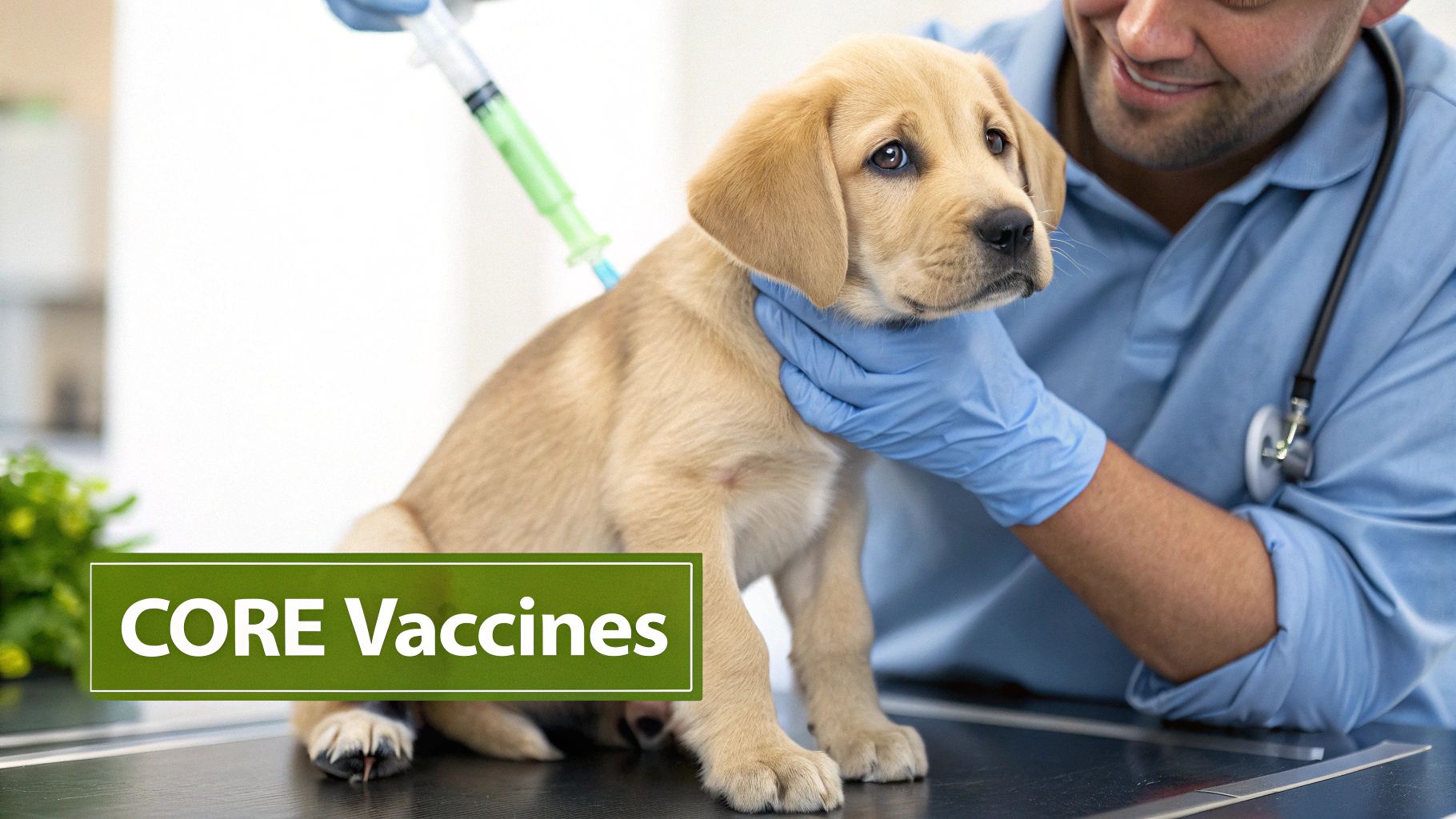
Knowing what these shots protect against helps you see them not as just another vet visit, but as the cornerstone of a long, healthy life for your best friend. We focus on two primary core vaccines: the DAPP combination vaccine and the Rabies vaccine.
Your Dog’s First Line of Defense: The DAPP Vaccine
The DAPP vaccine (sometimes called DHPP) is a powerhouse combo shot that acts as your dog’s frontline defense against four dangerous and highly contagious viruses. Each letter stands for a specific disease it fights.
Here’s a breakdown of what the DAPP vaccine handles:
- D is for Distemper: A serious virus that attacks a dog’s respiratory, gastrointestinal, and nervous systems. Symptoms include fever and runny eyes, but it can progress to seizures and paralysis. It is often fatal.
- A is for Adenovirus: This protects against two strains. Type-1 causes infectious canine hepatitis (a serious liver disease), while Type-2 is a key player in respiratory illness, better known as "kennel cough."
- P is for Parainfluenza: Another virus that causes respiratory infections and contributes to that harsh, hacking cough associated with kennel cough.
- P is for Parvovirus: A tough, highly contagious virus that is especially deadly for puppies. It attacks the GI tract, causing severe vomiting, bloody diarrhea, and life-threatening dehydration. Parvo can be fatal within 48 to 72 hours of symptoms appearing.
Because these viruses are so common in our environment, every single dog needs this protection—even those who mostly stay indoors. Parvovirus, for instance, can be tracked right into your home on the bottom of your shoes after a walk through a park in Fresh Meadows or Queens Village.
The DAPP vaccine is given as a series to puppies to build up strong immunity, and then as a booster to adult dogs. This schedule ensures they have a solid shield against these common threats throughout their lives.
The Rabies Vaccine: A Legal and Lifesaving Requirement
While DAPP is a medical essential, the Rabies vaccine is in a class of its own—it's also the law. New York State law requires that all dogs receive a rabies vaccination. This isn't just a suggestion; it's a mandatory public health measure.
Rabies is a virus that attacks the brain and central nervous system. It’s passed through the saliva of an infected animal, usually from a bite. Here in Queens, the most common carriers are wildlife like raccoons, skunks, and bats, which we see all the time in neighborhoods from Glen Oaks to Little Neck.
Once symptoms of rabies show up, the disease is 100% fatal for both pets and people. There is no cure. The only way to fight it is to prevent it with a vaccine.
This shot does more than protect your dog. It creates a critical barrier that keeps your family, your neighbors, and our whole community safe. It is, without a doubt, one of the most important shots your dog will ever get. Keeping your dog current on their rabies vaccine is a fundamental part of responsible pet ownership in New York.
For any questions about your dog’s core vaccines or to get them on a safe schedule, we’re here to help.
Text us at 718-301-4030. If symptoms are severe or after hours, go directly to a 24/7 emergency hospital.
Lifestyle Vaccines for Your Queens Dog
Core vaccines are the foundation, but your dog’s life in Queens has its own unique risks. That’s where lifestyle (or non-core) vaccines come in. Think of them as extra protection tailored to your dog’s specific day-to-day activities.
A dog who’s mostly a homebody in Oakland Gardens faces different challenges than a socialite at the Fresh Meadows dog park or one who gets groomed in Bayside. We'll look at your dog's social life and environment to decide which of these highly recommended vaccines make sense.
Kennel Cough Vaccine for Social Dogs
If your dog ever hangs out with other dogs, the Bordetella vaccine is highly recommended. It protects against kennel cough, a highly contagious respiratory infection that spreads like a cold in a classroom.
This vaccine is important if your dog goes to:
- Doggy Daycare or Boarding: Most facilities in Queens Village, Hollis, and beyond require it because dogs are in such close contact.
- Grooming Salons: Even a quick trim means exposure to other pets.
- Dog Parks: Sharing toys, water bowls, or just sniffing other dogs is all it takes to spread the infection.
- Training Classes: Group settings are a prime spot for kennel cough to make the rounds.
The main symptom of kennel cough is a harsh, honking cough that sounds like a goose. While it's usually not an emergency, it is miserable for your dog and can sometimes lead to more serious issues like pneumonia.
Leptospirosis Vaccine for Urban Explorers
You might think leptospirosis is just a problem for country dogs, but it's a real concern right here in Queens. This serious bacterial disease is spread through the urine of infected wildlife—like the raccoons, squirrels, and rats we see everywhere from Glen Oaks to Little Neck.
The bacteria love damp spots. Your dog can get sick from:
- Drinking from puddles on sidewalks or in parks.
- Swimming in local ponds.
- Sniffing or licking wet soil or grass where an infected animal has been.
Leptospirosis is zoonotic, meaning it can spread from animals to people. Vaccinating your dog protects them from potential kidney or liver failure, and it helps keep your family safe, too.
Symptoms can be vague at first—fever, tiredness, vomiting—but the disease can be severe. Given the risk in our urban green spaces, this vaccine is a smart choice for nearly every dog in Queens.
Lyme Disease Vaccine for Outdoor Adventurers
Ticks are a problem all year round in our area, and they can carry Lyme disease. If you and your dog love hiking through Alley Pond Park or even just running through tall grass, their risk of a tick bite goes way up.
The Lyme vaccine gives your dog an important layer of defense against the bacteria transmitted by infected deer ticks.
Consider this vaccine if your dog:
- Walks or hikes in wooded or grassy areas often.
- Has a yard that backs up to a park or green space.
- Travels to places with lots of ticks, like Long Island or upstate New York.
Lyme disease in dogs can cause fever, shifting lameness, swollen joints, and low energy. The vaccine, paired with a good year-round tick preventative, is the best way to keep them protected.
Figuring out the right lifestyle vaccines is a conversation. We’ll talk through your dog’s daily routine to build a vaccination plan that fits their life perfectly.
Text us at 718-301-4030. If symptoms are severe or after hours, go directly to a 24/7 emergency hospital.
Mapping Your Dog's Vaccination Timeline
A dog’s vaccination schedule isn’t just a random series of shots—it’s a carefully planned timeline designed to build a strong immune system from puppyhood and keep it that way for life. It’s all about giving them the right protection at exactly the right time.
Let's walk through what a typical schedule looks like. Think of it as a roadmap that shows how each vaccine plays a critical part in your dog's long-term health and happiness.
The Critical Puppy Vaccine Series
Puppies get some temporary immunity from their mom’s milk, but that protection starts to wear off fast. That’s why we start their vaccine series early, usually between 6 to 8 weeks of age. It’s like building a fortress, brick by brick—each booster adds another layer of defense.
The initial series involves boosters every 3 to 4 weeks until they're about 16 weeks old. This schedule is critical. It’s designed to close the "immunity gap," which is that vulnerable window when mom's antibodies are gone but their own immune system isn't quite ready to fight off nasty diseases like Parvo on its own.
Following the complete puppy series is essential. A single shot isn't enough to provide full immunity. Each booster strengthens the immune response, creating a durable shield that will protect them as they grow.
Curious about what's involved in those first few vet visits? You can get a better idea by checking out our guide on how much puppy shots cost.
Adult Dog Vaccination Schedule
Once your dog has completed their puppy series, we shift from building immunity to maintaining it. After their one-year boosters, many core vaccines like DAPP and Rabies are effective for three years.
This is a modern, evidence-based approach that gives them solid, long-lasting protection without over-vaccinating. For our adult dogs here in Queens, a typical schedule might include:
- DAPP Vaccine: We give a booster one year after the puppy series wraps up, then it's effective for three years.
- Rabies Vaccine: The first shot is good for one year. After that, boosters are typically needed every three years to comply with New York State law.
- Non-Core Vaccines: Lifestyle vaccines for things like Bordetella (kennel cough), Leptospirosis, and Lyme are usually boosted annually. The protection just doesn't last as long, and we'll recommend them based on your dog's adventures in places like Alley Pond Park or local doggy daycares.
Adjusting Vaccines for Senior Dogs
As dogs get older, their immune systems can weaken, leaving them more open to getting sick. While we might adjust their vaccination schedule, keeping them protected against core diseases is just as important as ever.
We always do a thorough health check before giving any vaccine. For most senior dogs, sticking with the three-year core vaccine schedule is the safest bet. Our goal is to keep their defenses up while making sure their overall health and comfort come first.
Every dog's timeline is unique. We'll work with you to create a personalized schedule that fits your pet's age, health, and lifestyle perfectly.
Typical Dog Vaccination Timeline
| Dog's Age | Recommended Vaccines and Boosters |
|---|---|
| 6-8 weeks | First DAPP shot (Distemper, Adenovirus, Parainfluenza, Parvovirus) |
| 10-12 weeks | DAPP booster #2. May include first shots for Leptospirosis, Lyme, Bordetella based on risk. |
| 14-16 weeks | DAPP booster #3. Rabies vaccine (often given between 12-16 weeks). May include boosters for non-core vaccines. |
| 1 year | First adult boosters for DAPP, Rabies, and any non-core vaccines. |
| Adult (1-7 years) | Rabies & DAPP every 3 years. Non-core vaccines (Lepto, Lyme, Bordetella) typically boosted annually. |
| Senior (7+ years) | Continue with the 3-year core vaccine schedule and annual non-core boosters as recommended after a health assessment. |
This table is a great starting point, but your dog's lifestyle and health are what truly shape their vaccination needs. We'll fine-tune this schedule together at every visit.
Text us at 718-301-4030. If symptoms are severe or after hours, go directly to a 24/7 emergency hospital.
Vaccine Safety and What to Expect After the Visit
It's completely normal to have questions about vaccine safety. As a pet owner in Queens, you want what's best for your dog, and we get that. The good news is that modern veterinary vaccines are incredibly safe, and the protection they give against serious diseases far outweighs the very small risk of a bad reaction.
Think of it like putting a life vest on your kid for a boat ride. You don't expect the boat to capsize, but having that protection brings immense peace of mind. Vaccines are your dog’s life vest against invisible threats.
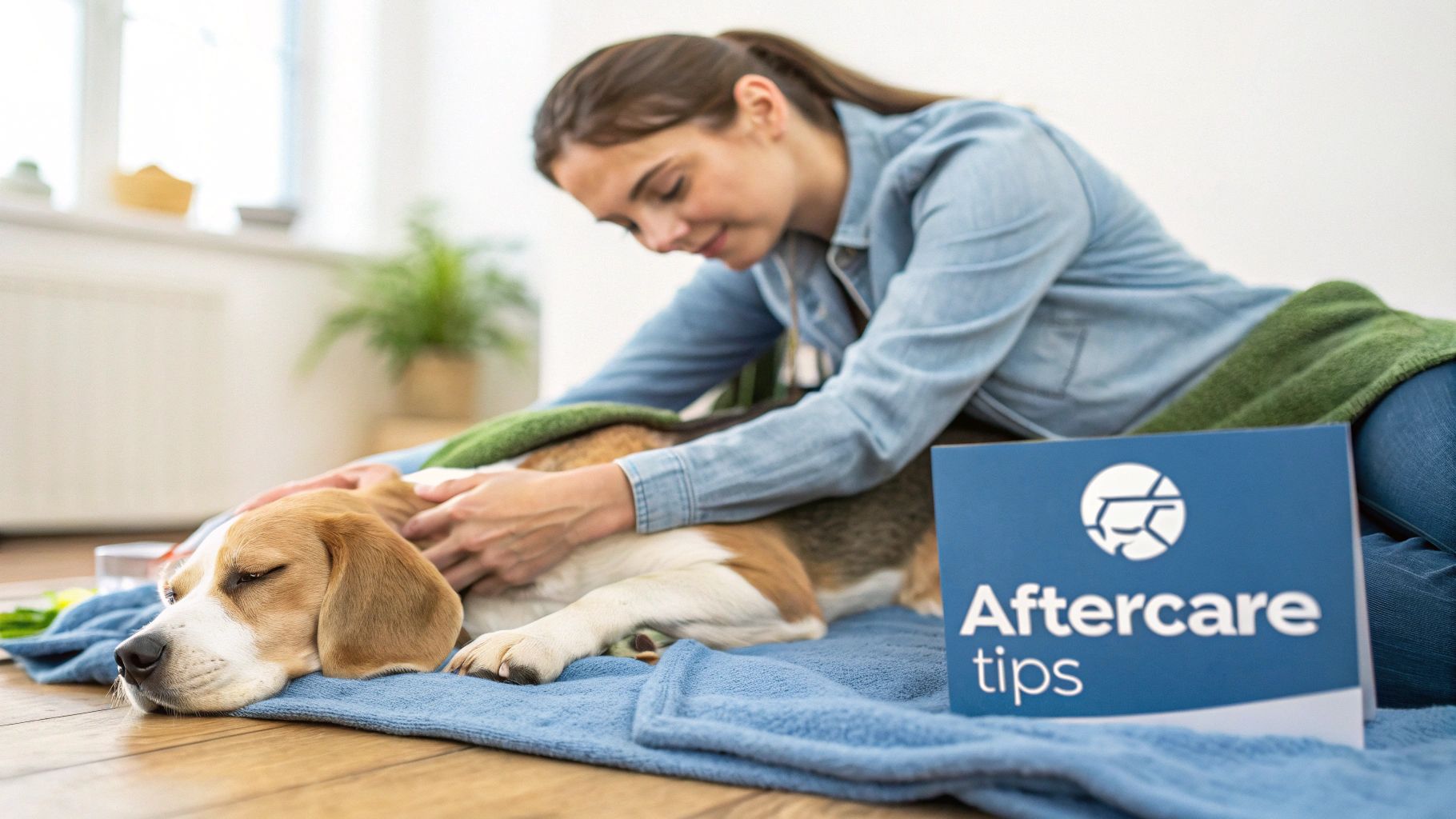
Common and Mild Reactions
After getting their shots, it’s common for dogs to feel a little "off" for a day or so. This is a normal sign that their immune system is firing up and learning how to fight off the real disease. It's a lot like how people feel a bit tired after a flu shot.
These mild reactions usually show up within a few hours and are gone on their own within 24 to 48 hours.
Here's what you might see:
- A little sleepy or less playful: Your dog might just want to curl up and nap.
- Soreness at the injection spot: They might be a bit tender if you touch the area where they got the shot.
- Mild fever: A slight, temporary fever is a classic sign the immune system is doing its job.
- Not as hungry: They might turn their nose up at dinner for a day.
These things are normal and no cause for alarm. The best thing you can do is let them rest in a comfy spot and keep an eye on them. You can skip the big run at Alley Pond Park for a day or two.
When a Reaction Is Urgent vs. an Emergency
While very rare, a serious allergic reaction is possible. Knowing what's a mild, normal response versus a true emergency is key. Serious reactions usually happen fast—often within minutes to a few hours of the vaccination.
Urgent (Contact Us):
- Mild facial swelling or hives that are not getting worse.
- A single episode of vomiting or diarrhea after vaccination.
- Soreness that lasts more than a day or two.
Emergency (Go to a 24/7 Hospital Immediately):
- Rapid facial swelling: Any puffiness around their eyes, muzzle, or face that is getting worse.
- Widespread hives: Bumps or welts popping up all over their body.
- Persistent vomiting or diarrhea: More than one or two isolated incidents.
- Trouble breathing: Any wheezing, coughing, or heavy, labored breaths.
- Collapse or severe weakness: If your dog can't stand up or suddenly passes out.
These can be signs of a potential anaphylactic reaction, which is a life-threatening emergency. Acting fast is what ensures a good outcome.
What to Do Before Arriving
If you see any of the emergency signs, call your vet or the nearest 24/7 animal hospital right away to let them know you're coming. This gives the team a heads-up so they can be ready for you. For a more in-depth look at what counts as a true pet emergency, check out our guide on when to take your dog to an emergency vet.
Short FAQ on Vaccine Safety
Is it safe to give my dog multiple vaccines at once?
Yes, for most healthy dogs, it is safe. We follow established veterinary guidelines to make sure we’re protecting them effectively without overwhelming their system.
My dog had a mild reaction last time. Should they be vaccinated again?
Definitely let us know! If there's a history of reactions, we can take extra precautions. This might mean pre-treating with an antihistamine (only if your veterinarian advises) or breaking up the vaccines into separate visits.
Text us at 718-301-4030. If symptoms are severe or after hours, go directly to a 24/7 emergency hospital.
Common Questions About Dog Vaccinations
We get asked these questions all the time by caring dog owners from all over Queens, from Bayside to Hollis. Here are some straightforward answers to help you feel confident about your dog’s vaccine plan.
Do Indoor Dogs Still Need Vaccines?
Yes, absolutely. Core vaccines like Rabies and DAPP are non-negotiable for every single dog, regardless of their lifestyle.
It's shockingly easy for dangerous viruses like Parvo to be tracked into your home on the bottom of your shoes. And even the most dedicated couch potato could slip out an open door when you least expect it. Core vaccines are the essential safety net against the most common and severe threats out there.
Is It Safe to Vaccinate My Older Dog?
For the vast majority of senior dogs, the answer is a definite yes. As a dog ages, their immune system can weaken, which actually makes them more vulnerable to getting sick.
Before we do anything, your veterinarian will always perform a thorough health check-up to create the safest possible plan. We might adjust their schedule, but keeping their protection up-to-date against core diseases is a vital part of making sure their golden years are happy and healthy.
What Is a Titer Test and Should My Dog Get One?
A titer test is a simple blood test that checks for the level of antibodies in your dog’s system. It’s a useful tool that tells us if they're still protected from a previous vaccine, which can help us avoid giving a booster that isn’t needed. This is especially helpful for dogs with certain health conditions or a past history of vaccine reactions.
However, a titer test cannot replace legally required vaccines like Rabies in New York. We can chat about whether a titer test makes sense for your specific dog during their wellness exam.
How Much Do Dog Vaccinations Cost in Queens?
The cost depends on which specific vaccines your dog needs. Core vaccines are usually included in our standard wellness and puppy packages. Non-core vaccines are priced individually based on what your dog’s day-to-day life looks like.
We believe in being upfront about costs. We will always review the recommended plan and any associated fees with you before we move forward, so there are no surprises.
At Union Vet NY, our team is here to answer all your questions and build the perfect vaccination schedule for your pet's life in Queens.
Text us at 718-301-4030. If symptoms are severe or after hours, go directly to a 24/7 emergency hospital.
