

How Much Are Puppy Shots: Costs, Schedules, and Tips in Queens
Bringing a new puppy home to Queens is one of life’s greatest joys. It also comes with new responsibilities, and one of the first is planning for their healthcare, starting with vaccinations. So, how much are puppy shots, really?
In Queens, you can expect the total first-year cost for all essential puppy shots to be somewhere between $150 and $400. This range covers the initial series of core vaccines your puppy needs. Depending on your puppy's lifestyle in neighborhoods like Bayside or Hollis, we might recommend additional non-core vaccines.
Your Guide to Puppy Shot Costs in Queens

Understanding your puppy’s vaccination schedule and costs is a key part of being a new pet parent. Planning ahead helps you provide for their wellness without financial surprises.
The final cost depends on which shots are essential for every puppy versus those recommended based on specific activities and risks in our local Queens environment.
For pet parents here in Oakland Gardens and surrounding areas, that first round of shots is a critical investment. Core vaccines like the DHPP combo (protecting against distemper, hepatitis, parvo, and parainfluenza) usually cost $20 to $60 per dose. Since puppies need about three boosters, that alone can total $60 to $180.
The mandatory rabies shot adds another $15 to $40. In total, you’re looking at a baseline of around $100 to $220 for the absolute must-haves. For a deeper dive, you can explore some great in-depth veterinary guides online.
Core vs. Non-Core Vaccine Costs
To give you a clearer picture, let’s break down the costs for non-negotiable versus lifestyle-based vaccines. Core vaccines are the foundation of your puppy’s immune system. Non-core vaccines are options we recommend if your pup will be social—frequenting dog parks in Fresh Meadows, visiting groomers, or staying at boarding facilities.
Core vaccines are like standard safety features in a car—non-negotiable. Non-core vaccines are like adding snow tires—critical if your dog plays with lots of other dogs or has specific lifestyle risks.
Here’s a simple way to look at it:
- Core Vaccines: This group includes Distemper, Hepatitis (Adenovirus), Parainfluenza, and Parvovirus (often combined in the DHPP shot), plus Rabies. These are vital for every puppy.
- Non-Core Vaccines: These may include Bordetella (for kennel cough), Leptospirosis, or Lyme disease. We’ll discuss your puppy's routine to decide if any are a good idea.
This distinction is the biggest reason for price variations. A puppy who is mostly an indoor companion will have a different (and likely less expensive) vaccination plan than a social pup.
Text us at 718-301-4030. If symptoms are severe or after hours, go directly to a 24/7 emergency hospital.
Why Vaccinations Are a Smart Financial Decision
It’s easy to focus on the upfront cost of puppy shots. A better way to see it is as an investment in your puppy's future. Think of it as an essential 'immune system training program' that sets your puppy up for a long, healthy life here in Queens.
This proactive approach is becoming the standard. The global market for canine vaccines is expected to grow from $2.05 billion in 2025 to $4.23 billion by 2035. With over 65 million households in the U.S. owning a dog, it’s clear that pet parents are choosing prevention. You can see the full breakdown in this market research on canine vaccines.
The High Cost of a Preventable Illness
Let's compare the cost of prevention to the cost of treatment. A full series of puppy shots is a predictable, manageable expense. Treating a preventable illness like Canine Parvovirus, however, is an emotional and financial emergency.
Parvo is a highly contagious virus that attacks a puppy's intestinal tract. Treatment often requires days of intensive hospital care with IV fluids, medications, and round-the-clock monitoring. This care can easily cost thousands of dollars, with no guarantee of survival.
An investment in a complete vaccine series—costing a few hundred dollars—is powerful protection against an emergency vet bill that could reach $2,000 to $8,000, or more. It’s one of the smartest moves you can make.
Vaccines as a Community Shield
Vaccinating your puppy doesn't just protect them; it helps shield other dogs in our Queens communities, from Glen Oaks to Queens Village. This concept is often called "herd immunity."
Here’s why it’s important:
- Protecting the Vulnerable: Some dogs can't be vaccinated because they are too young, too old, or have a compromised immune system. They rely on the vaccinated dogs around them.
- Stopping Outbreaks: When most dogs in an area are vaccinated, dangerous viruses can't spread easily. This makes our local parks, groomers, and sidewalks safer for every pet.
Keeping your puppy’s shots up-to-date is a simple act that prevents devastating outbreaks.
Text us at 718-301-4030. If symptoms are severe or after hours, go directly to a 24/7 emergency hospital.
Understanding What Shapes Your Vet Bill

The answer to "how much are puppy shots?" is: it depends. The final total is a combination of several factors. Understanding them helps you see exactly where your money is going.
One of the biggest variables is the type of clinic. A full-service veterinary hospital in Queens offers a different experience than a mobile, low-cost clinic. While both give shots, a dedicated hospital focuses on building a complete, long-term health profile for your puppy.
It's More Than Just the Shot
A key part of your bill is the physical exam fee. This isn't just a quick look. It's a comprehensive, nose-to-tail health assessment to make sure your puppy is healthy enough for a vaccine. This is a critical safety check.
During this exam, we look for:
- Congenital Issues: Early signs of conditions your puppy might have been born with.
- Parasites: A standard check for fleas, ticks, and ear mites.
- Overall Wellness: We listen to their heart and lungs and assess their general development.
This exam is the foundation of good preventive care and is almost always part of the total cost of the visit.
Location and Bundled Services
Where you live matters. Veterinary costs in Queens neighborhoods like Bayside or Little Neck will naturally differ from a small rural town due to local operating expenses.
Many clinics, including ours, offer puppy wellness packages. These plans are a great way to manage first-year costs. They bundle essential services—like vaccines, deworming, and exams—at a discounted rate. This makes budgeting easier and can save you money. You can see the different options in our guide to veterinary services.
Investing in your puppy's routine shots is one of the smartest financial moves. The U.S. companion animal vaccine market is projected to hit $5.40 billion by 2031, showing how much pet owners prioritize preventive care. In a dense area like Queens, staying on schedule is more important than ever.
Knowing what goes into the bill helps you make the best choices for your puppy’s health and your wallet.
Text us at 718-301-4030. If symptoms are severe or after hours, go directly to a 24/7 emergency hospital.
Your Puppy's First-Year Vaccination Timeline
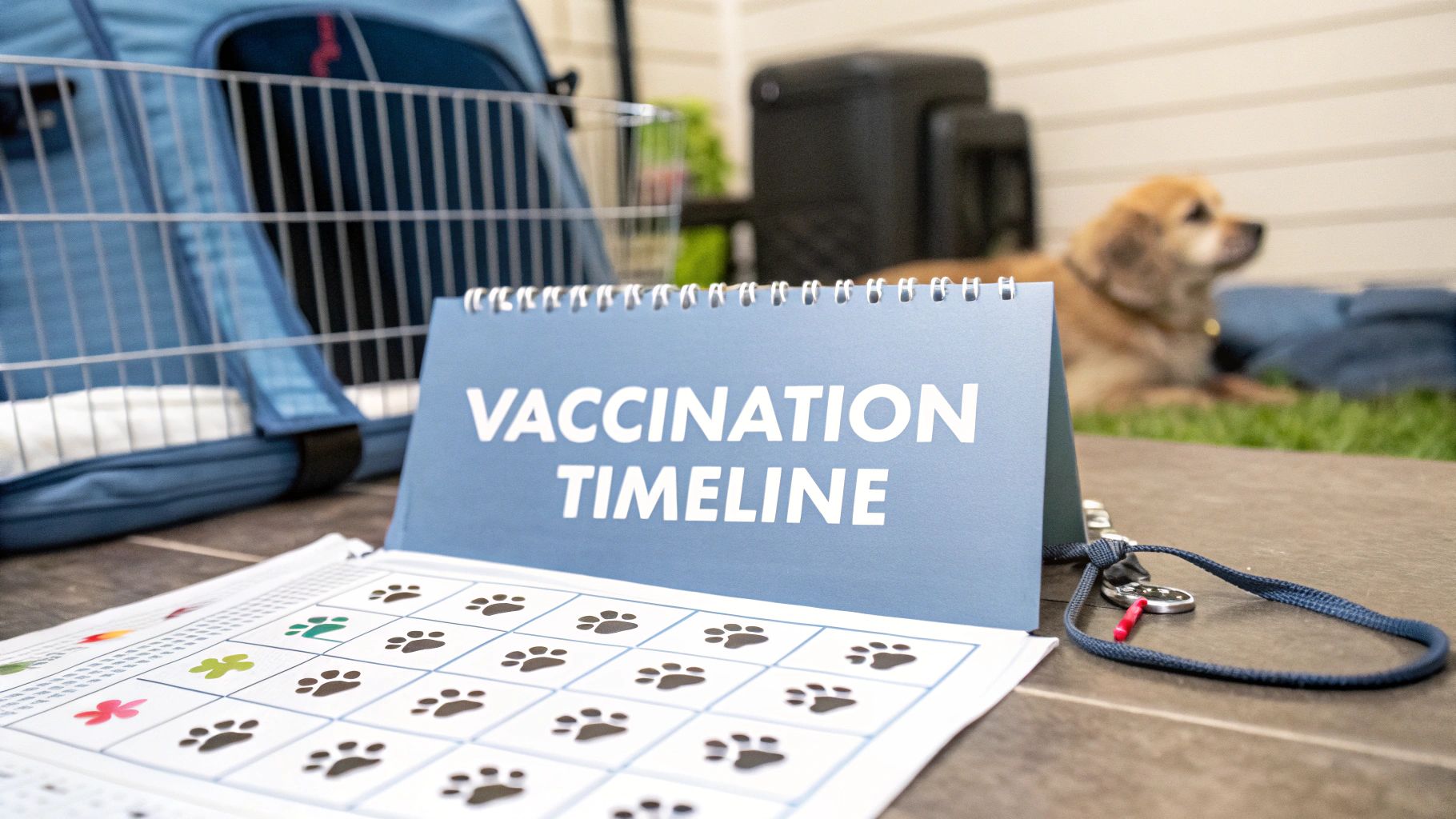
Knowing when your puppy needs their shots is as critical as knowing the cost. The first-year vaccine schedule is a carefully planned roadmap to build a strong immune system.
Puppies get some early immunity from their mother, but this protection starts to fade around 6 to 8 weeks old. We step in with a series of shots, timed to build their own defenses during this vulnerable window.
A Typical Vaccination Schedule For A Growing Pup
To build immunity, core vaccines are given in a series, typically every 3-4 weeks, until your puppy is about 16-20 weeks old. Sticking to this schedule is the best thing you can do to get them ready to safely explore the world.
Below is a general timeline to help you see how it all comes together.
Sample Puppy Vaccination Timeline
This timeline outlines the typical schedule for a puppy's core and potential non-core vaccinations.
| Puppy's Age | Core Vaccines Administered | Common Non-Core Vaccines to Discuss | Notes for Pet Owners |
|---|---|---|---|
| 6–8 Weeks | First DHPP (Distemper, Hepatitis, Parainfluenza, Parvovirus) shot. | None typically needed at this visit. | This is their first major protection against serious diseases. |
| 10–12 Weeks | Second DHPP booster. | Leptospirosis, Lyme Disease, or Canine Influenza, depending on lifestyle. | We'll discuss their exposure to parks, wildlife, and other dogs. |
| 14–16 Weeks | Third DHPP booster. | Bordetella (kennel cough) if they'll be around other dogs soon. | This is key for puppies heading to daycare, puppy classes, or the groomer. |
| 16–20 Weeks | Final DHPP booster & first Rabies vaccine (required by law). | Booster for any non-core vaccines started earlier. | The Rabies shot is a legal requirement and protects both pets and people. |
Remember, this is a sample schedule. We will tailor the final plan to your puppy's specific health and lifestyle needs.
Finishing the entire vaccine series on schedule is non-negotiable for your puppy’s safety. A single shot doesn't provide full immunity. Each booster is a critical step that strengthens their immune response.
Why Timing Is Everything
Completing the full series on time gives your puppy the green light for a safe social life. It's their ticket to safely visiting dog parks in Fresh Meadows, meeting other dogs on walks around Glen Oaks, or joining a training class.
If you skip a booster or fall behind schedule, you risk leaving them vulnerable when they need protection most.
Text us at 718-301-4030. If symptoms are severe or after hours, go directly to a 24/7 emergency hospital.
Practical Ways to Manage Puppy Shot Costs
Making sure your new puppy gets the best start in life shouldn't be a source of financial stress. For pet owners in Queens, from Oakland Gardens to Fresh Meadows, there are smart ways to handle the cost of puppy shots without cutting corners.
One of the best ways to manage costs is to look for a veterinary wellness plan or puppy package. These plans bundle all the essential first-year services for a flat, often discounted, fee. This makes your budget predictable and usually saves you money.
Consider Your Clinic Options
The type of vet clinic you choose also plays a big part in the cost. Low-cost vaccine clinics, often run by shelters, focus only on giving shots. They can seem budget-friendly but typically don't include a comprehensive physical exam or help you build a relationship with a veterinarian.
A full-service animal hospital offers a more complete approach. Your visit includes a thorough health check-up, which is vital for catching potential issues early. This relationship means your vet gets to know your puppy’s specific needs, giving you personalized advice for their life here in Queens.
A low-cost clinic might look cheaper for a single shot, but a full-service vet visit provides greater long-term value through preventive care and early diagnosis. It’s the difference between a task and a true healthcare partnership.
Be an Informed Pet Owner
Knowledge is your best tool for managing costs. Don't hesitate to have an open conversation with your veterinarian about the plan for your puppy's shots. Asking a few key questions can clear up confusion about costs.
- Ask About Vaccine Options: Inquire if there are different brands of vaccines at different price points.
- Clarify What’s Included: Understand what the exam fee covers. Is it just the shot, or a full check-up?
- Discuss Non-Core Vaccines: Talk about your puppy's lifestyle. Will they go to daycare or spend time in wooded areas? This helps determine which non-core vaccines are necessary.
By taking these proactive steps, you become a financially savvy and responsible pet owner from day one.
Text us at 718-301-4030. If symptoms are severe or after hours, go directly to a 24/7 emergency hospital.
Time to Book That First Vet Visit

Now that you have a better handle on the costs and schedule, it’s time to book that first wellness visit. We work to make a puppy’s first time at the vet a low-stress, positive experience.
This first appointment is more than just shots. It's a top-to-tail health check and our first chance to get to know your new family member.
What to Bring for a Smooth First Visit
To help us get everything right from day one, please bring a few things with you.
- Health Records: Any paperwork you received from the breeder, shelter, or rescue.
- A Stool Sample: A fresh sample is the best way for us to check for common intestinal parasites.
- Your Questions: Write them down! Whether it’s about feeding, potty training, or puppy behavior, we want to hear it.
This initial exam is the foundation for your puppy's lifelong health. It lets us establish a baseline, tackle your questions, and map out a personalized vaccine plan for their life in Oakland Gardens, Bayside, or surrounding neighborhoods.
Booking is easy. You can find out more and schedule your puppy's first appointment online.
Text us at 718-301-4030. If symptoms are severe or after hours, go directly to a 24/7 emergency hospital.
FAQ: Your Questions About Puppy Shots Answered
Bringing a puppy home to Queens comes with many questions. Here are clear answers to the most common ones we hear.
Are there side effects to puppy shots?
Most puppies do just fine. It's normal for them to be a little sleepy or have mild soreness at the injection site, similar to how a person feels after a flu shot. It’s a sign their immune system is working.
Urgent (Contact Us):
- Mild, persistent vomiting or diarrhea
- Lethargy lasting more than 24 hours
- A small, firm lump at the injection site that doesn't go away after a week
Emergency (Go to a 24/7 Hospital):
- Swelling of the face, muzzle, or eyes
- Hives or widespread rash
- Difficulty breathing or wheezing
- Collapse or severe weakness
If you see minor signs, give them a cozy spot to rest. For anything concerning, follow the guidance above. Knowing the difference between urgent and emergency symptoms is critical. Our guide on when to take your dog to an emergency vet can help you prepare.
Why do puppies need so many shots?
Puppies get initial immunity from their mother's milk, but this protection fades between 6 and 16 weeks of age. This creates a window where they become vulnerable.
We give a series of shots every 3-4 weeks to bridge this gap. Each booster helps their immune system build a stronger, more lasting defense so they are ready to fight off diseases on their own.
When is it safe to go to the park?
Patience is key. A single shot isn't enough to protect them from serious illnesses that can linger in public spaces like dog parks in Bayside or Fresh Meadows.
You should wait until their entire vaccine series is complete. Vets generally consider a puppy fully protected about one to two weeks after their final round of core vaccines, which is usually around 16-18 weeks of age.
What’s the deal with core vs. non-core vaccines?
Core vaccines are non-negotiable. We recommend them for every puppy because they protect against highly contagious and often deadly diseases like parvovirus and rabies.
Non-core (or 'lifestyle') vaccines are recommended based on your puppy's specific risks. If your puppy will be at the groomer, daycare, or dog park, we'll strongly recommend the Bordetella vaccine to protect against kennel cough. We’ll talk about your puppy's life to determine exactly what they need.
