

A Queens Pet Owner’s Guide to Tranquilizers for Cats
Let’s be honest: the mere thought of getting your cat into a carrier can be enough to make you postpone a vet visit. The yowling, the hiding, the struggle—it's stressful for you and downright terrifying for your cat. For many pet owners in Queens, from Oakland Gardens to Bayside, this ordeal is all too familiar.
But what if it didn't have to be that way?
Modern veterinary medicine offers a safe, compassionate way to help. When we talk about tranquilizers for cats, like Gabapentin or Trazodone, we're not talking about "knocking them out." We're talking about prescription medications that gently calm their nervous system, turning down the volume on their panic so they can get the care they need without trauma.
A Queens Pet Owner’s Guide to Feline Tranquilizers
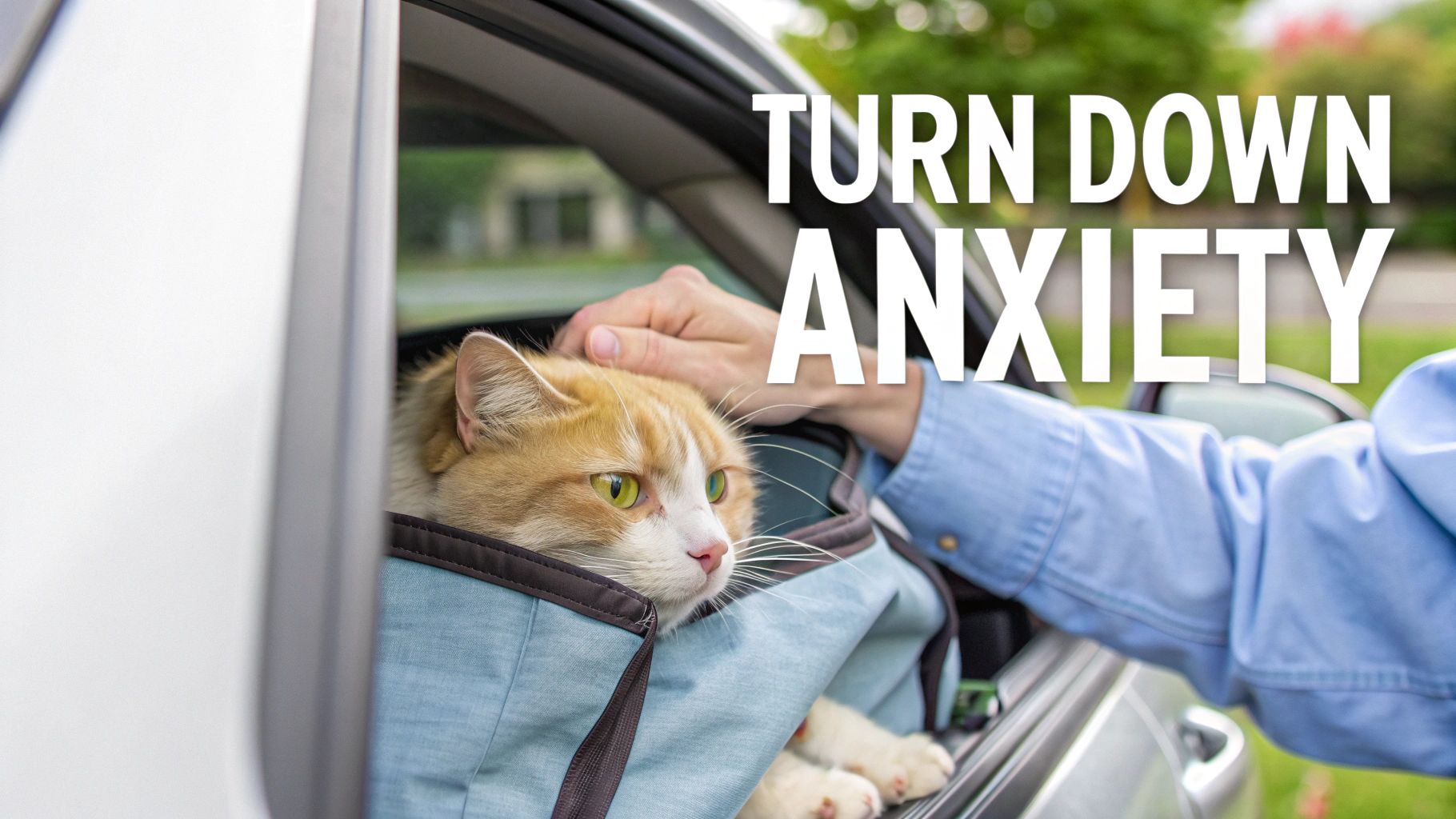
The term "tranquilizer" can sound a little scary, but it's just a tool we use to protect your cat's well-being. When prescribed by a vet, these medications are a game-changer, turning a dreaded event into a manageable one.
Understanding the Different Levels of Calming
Not all calming medications are created equal. As veterinarians, we choose a specific type based on your cat’s unique personality, health, and the reason for the visit. The goal is always the same: use the lightest touch possible to keep them safe and relaxed.
Here’s a quick breakdown of what we mean:
- Anti-Anxiety Medications: Think of these as taking the edge off. They're perfect for stressful but non-procedural events, like a car ride to Fresh Meadows or coping with loud construction next door. They reduce fear without making your cat overly sleepy.
- Sedatives (Tranquilizers): This is the next step up. We use sedatives when your cat needs to be very still for things like X-rays or minor procedures that don't require full anesthesia. They create a state of deep relaxation and drowsiness.
- General Anesthesia: This is a controlled state of unconsciousness used for surgery. It ensures your cat feels no pain and stays completely still, which is critical for their safety during an operation.
Knowing these differences helps show that our approach isn't one-size-fits-all. It’s part of a spectrum of care designed to protect your cat's physical and emotional health.
By reducing severe stress, we not only make essential care possible but also prevent your cat from developing long-term phobias associated with their carrier, car rides, or our clinic. This focus on a low-stress experience is central to quality veterinary medicine.
Ultimately, for cat owners in Glen Oaks and Little Neck, this means vet visits can become positive, productive experiences instead of battles. Our goal is to work with you to find the calmest, safest approach for your best friend.
Text us at 718-301-4030. If symptoms are severe or after hours, go directly to a 24/7 emergency hospital.
Common Scenarios Requiring Feline Sedation
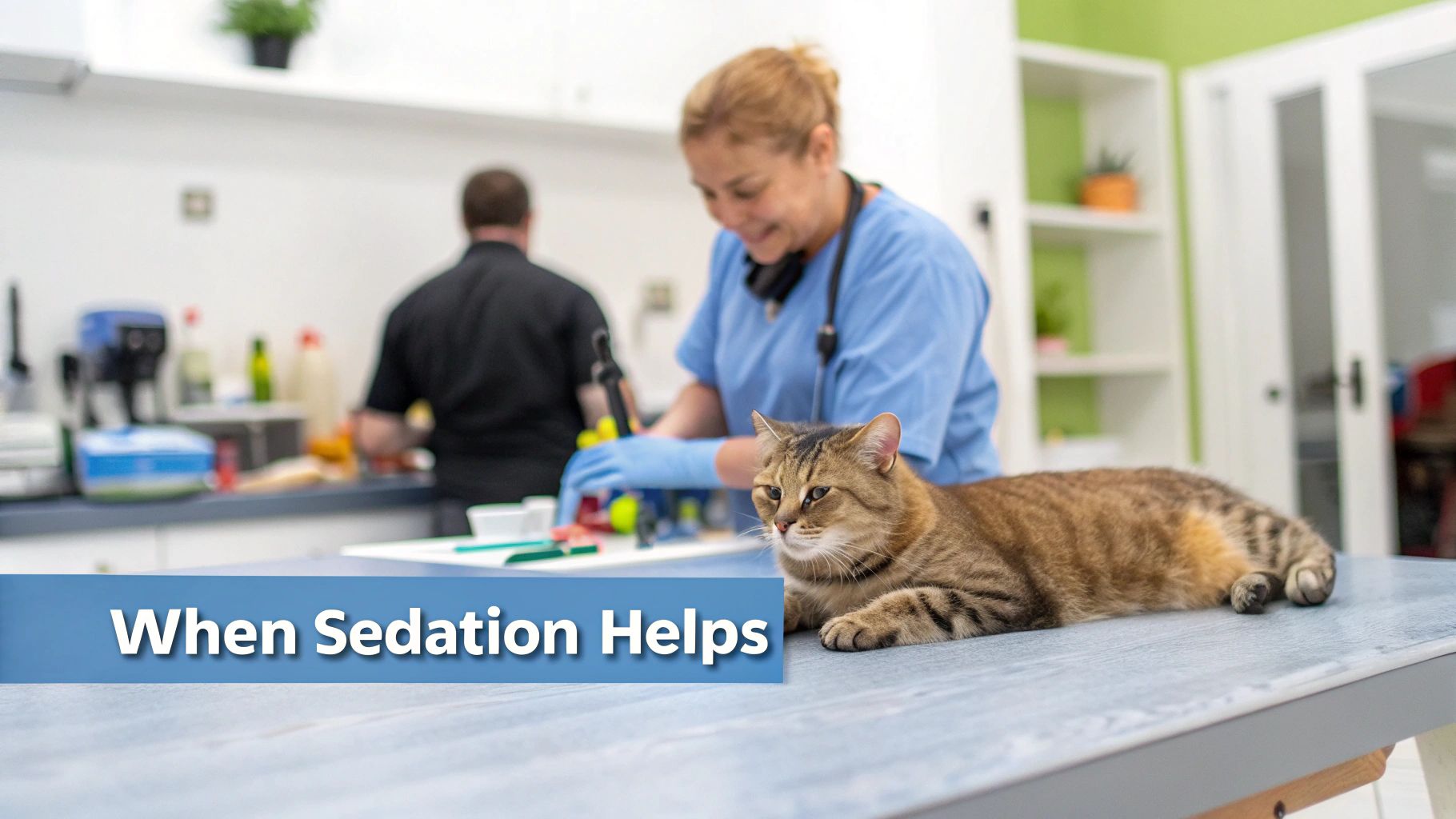
Many cat owners in Queens, from Hollis to Queens Village, know the feeling. The moment the carrier comes out, the panic begins, turning an essential vet visit into a traumatic event for everyone involved. But what if there was a way to get your cat the care they need without all that stress? This is where tranquilizers for cats become an act of kindness.
Sedation isn't just for our convenience—it's about your cat's health and safety. It lets us perform thorough, accurate exams and procedures that would be impossible on a terrified, struggling animal. By creating a calm state, we can prevent potential injuries to both your cat and our staff, which ultimately means a higher standard of care.
When Veterinary Visits Become Overwhelming
The number one reason we prescribe a sedative is for the routine vet visit. For a cat with severe anxiety, the trip from home to our clinic in Oakland Gardens is deeply distressing. That fear doesn't just vanish at the door; it often gets worse.
Studies show a pretty shocking gap: only about 40% of cats get annual check-ups, while 82% of dogs do. A huge reason for this is the intense fear cats experience during travel and vet visits. This highlights just how critical effective, cat-specific medications are for managing acute anxiety. You can find more details on this topic from animal health industry reports.
A mildly sedated cat allows us to perform a complete physical exam, draw blood, or give vaccines without a fight. This is so much less stressful for them than being physically held down, which can create a negative association with veterinary care that lasts a lifetime.
Essential Diagnostic Procedures
Think about trying to take a clear photo of a toddler who won't sit still—it's nearly impossible. The same idea applies to veterinary diagnostics. Procedures like X-rays and ultrasounds need your cat to be perfectly still for us to get accurate results.
- Radiographs (X-rays): The slightest wiggle can blur an X-ray, making it tough to diagnose things like fractures, intestinal blockages, or lung problems. Sedation helps us get a perfect picture on the first try.
- Ultrasounds: This procedure requires your cat to lie still for a while as a probe is moved across their body. A tranquilizer makes this process comfortable and stress-free.
- Blood Pressure Readings: An anxious cat’s blood pressure will shoot up, giving us an inaccurate reading. A calm state lets us get a true baseline to assess their heart health.
Grooming for Health and Comfort
For long-haired cats or those who can’t groom themselves well, mats can form fast. These tight knots of fur aren't just ugly; they can be incredibly painful, pulling on the skin and even leading to nasty infections.
Trying to shave out severe mats on an anxious cat without sedation is both dangerous and traumatic. Sedation allows a groomer or vet tech to safely and painlessly remove the mats, giving your cat immediate relief. It turns a scary experience into a quiet nap.
Using a prescribed sedative for necessary grooming or medical care isn't a failure—it's a responsible choice. It puts your cat's emotional well-being and physical safety first, allowing essential care to be delivered with compassion.
Stressful Travel and Household Changes
Sometimes, sedation is needed for life outside the clinic. A long car ride from Bayside to a new home or the stress of a cross-country flight can be completely overwhelming for a nervous cat. In these cases, a vet-prescribed tranquilizer can make the journey tolerable and prevent hours of distress.
Ultimately, the decision to use a sedative is a conversation between you and your vet. We always consider your cat’s unique personality and health to create a plan that works best for them.
Text us at 718-301-4030. If symptoms are severe or after hours, go directly to a 24/7 emergency hospital.
How Common Cat Tranquilizers Actually Work
When we recommend a tranquilizer for your cat, it’s not about finding a simple “off switch.” The world of feline sedatives is much more nuanced. Think of it as a set of specific tools, each designed to help your cat feel calm and safe in different situations.
Your cat’s nervous system is like a busy switchboard. During stressful moments—like a car ride or a vet visit—that switchboard can light up with panic signals. Our job is to gently turn down the volume on those specific signals without shutting down the whole system. Let’s look at how a few of the most common medications work.
Gabapentin: The "Dimmer Switch" for Anxiety
One of the most trusted medications we use for cats in Queens neighborhoods like Oakland Gardens and Bayside is Gabapentin. It wasn't originally made for anxiety—it started as a nerve pain and anti-seizure drug for people—but veterinarians quickly realized it has a fantastic calming effect on cats.
Imagine your cat's brain has a 'fear signal' that gets cranked up to full blast during stressful events. Gabapentin acts like a dimmer switch, gently lowering the intensity of those nerve signals. It doesn’t knock them out; it just quiets the overwhelming "noise" of anxiety.
This makes it our go-to for pre-visit anxiety, helping take the edge off a car ride and exam. You can learn more about its uses in our comprehensive guide to gabapentin in cats.
Trazodone: Rebalancing "Feel-Good" Brain Chemistry
For cats who need a bit more help than Gabapentin can offer, Trazodone is another great option. It works on a completely different system: brain chemistry.
Trazodone is what’s known as a serotonin modulator. Serotonin is often called the “feel-good” chemical because it helps regulate mood and promote a sense of well-being. By making more serotonin available in the brain, Trazodone helps counteract the body's panic response. It’s a game-changer for cats with more significant situational anxiety.
Alpha-2 Agonists: The Reversible Sedation Option
Sometimes we need a deeper, more reliable state of calm for procedures like taking an X-ray or cleaning a wound. That’s when we often reach for drugs called alpha-2 agonists, like Dexmedetomidine.
These are powerful, targeted medications that create a predictable state of sedation and even provide some pain relief.
The single biggest advantage of alpha-2 agonists? They are completely reversible. After the procedure, we can give an injection of an antagonist (a reversal agent) that wakes your cat up smoothly and quickly.
This gives us an incredible amount of control and a huge safety margin, which is why these drugs are so valuable in modern veterinary medicine. While older drugs are still used, the future really belongs to reversible sedatives that offer this level of safety for our feline patients.
A Quick Comparison of Common Feline Sedatives
To help you understand why your vet might choose one medication over another, here’s a simple breakdown. The right choice always depends on your cat’s health, temperament, and the reason they need help relaxing.
| Medication | Primary Use | How It Works (Simple Terms) | Key Considerations |
|---|---|---|---|
| Gabapentin | Mild to moderate pre-visit anxiety | Dims the brain's "anxiety signals" | Very mild side effects; great for taking the edge off stress. |
| Trazodone | Moderate to significant situational anxiety | Increases "feel-good" serotonin in the brain | Best for cats needing more help relaxing than Gabapentin provides. |
| Dexmedetomidine | Procedural sedation (X-rays, minor surgery) | Targets receptors to create a deep, predictable calm | Reversible with another injection, offering excellent safety and control. |
It is absolutely critical to remember this: never give your cat any human medications unless only if your veterinarian advises. Cats process drugs very differently from people, and a dose that’s safe for you could be toxic to them.
Our team always performs a thorough health screening to select the safest, most effective tranquilizer for your individual cat. Your pet’s well-being is always our top priority.
Text us at 718-301-4030. If symptoms are severe or after hours, go directly to a 24/7 emergency hospital.
Ensuring Your Cat’s Safety: What to Watch For After Sedation
The thought of sedating your cat can be nerve-wracking—we get it. As a cat owner anywhere from Oakland Gardens to Hollis, their safety is your top priority. It's ours, too. Understanding what to expect helps you know what’s normal and what requires immediate attention.
Common Symptoms vs. Urgent & Emergency Signs
After a sedative, your cat will probably be sleepy and a bit wobbly on their paws. This is completely normal and shows the medication is working. The key is knowing the difference between this expected drowsiness and a sign that something is wrong.
Expected & Normal Symptoms:
- Drowsiness/Lethargy: Your cat will most likely curl up and sleep for several hours.
- Wobbliness or Unsteadiness (Ataxia): They might stumble or seem uncoordinated. Keep them in a safe, quiet spot on the floor.
- Mild Upset Stomach: Some cats may have a temporarily decreased appetite.
Urgent Signs (Contact a Vet):
- Lasting Drowsiness: If they are still very groggy and uncoordinated 12-24 hours later.
- Persistent Vomiting: A single episode might not be a concern, but repeated vomiting is.
- Refusing Food: If they show no interest in food after 12 hours.
Emergency Signs (Go to a 24/7 Hospital Immediately):
- Difficulty Breathing: Look for shallow or rapid breaths, heavy panting, or wheezing.
- Pale Gums: Healthy gums are pink. If they look white, blue, or gray, it's a medical emergency.
- Extreme Lethargy or Collapse: If you cannot rouse your cat or they are unable to stand, get help immediately.
Our guide on when to take a cat to the emergency vet has more info on spotting urgent symptoms.
What to Do Before Arriving at the Clinic
If you believe your cat is having an emergency reaction:
- Call Ahead: If possible, call the emergency hospital to let them know you are on your way. This allows them to prepare.
- Stay Calm: Your cat can sense your stress. Speak in a calm, reassuring voice.
- Handle Gently: Move your cat carefully into their carrier. If they are having trouble breathing, do not put pressure on their chest or neck.
- Drive Safely: Get to the nearest 24/7 veterinary hospital as quickly and safely as possible.
Text us at 718-301-4030. If symptoms are severe or after hours, go directly to a 24/7 emergency hospital.
Non-Medicated Calming Strategies to Try at Home
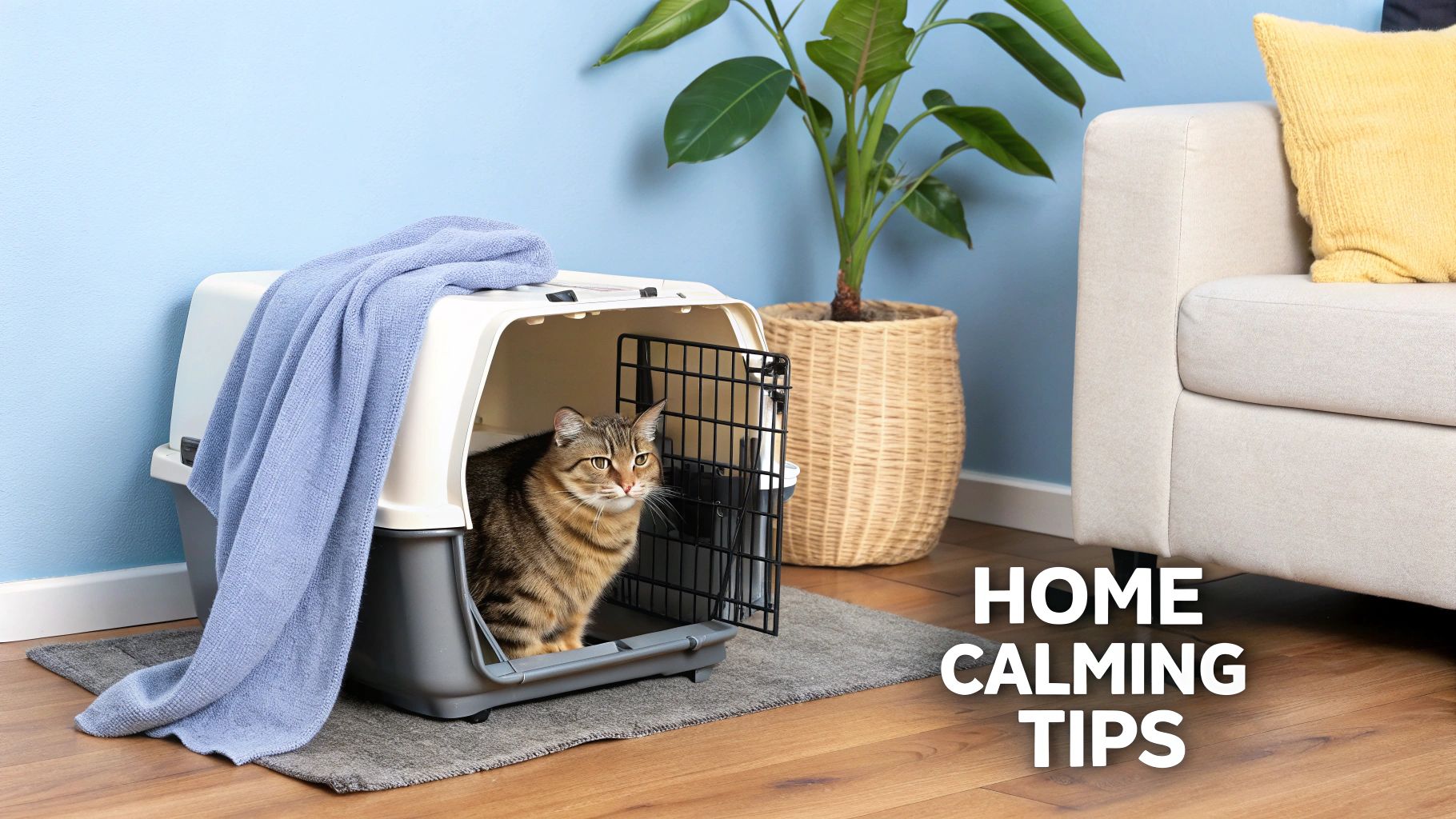
While medications are absolutely essential for certain high-stress events, they’re just one piece of the puzzle. For cat owners in Queens, from Bayside to Hollis, building a calm foundation at home can make a huge difference.
These drug-free strategies can lower your cat's baseline anxiety, which often makes stressful things like vet visits far more manageable. Sometimes, these approaches can even help us use a lower dose of medication because your cat is starting from a much less fearful place. You’re setting them up for success.
More and more, we see owners looking for ways to support their pet’s total well-being. With over 66 million households in the U.S. now owning pets—and cats in about 30% of them—the need for good calming solutions has never been higher. This has also driven demand for animal sedatives, with North America leading the market. You can read more about these trends in the animal sedatives market on gminsights.com.
Create a Carrier Sanctuary
Let's be honest: for most cats, the carrier means something bad is about to happen. But we can flip that script. With a little patience, you can turn the carrier from a scary box into a safe, normal part of their environment.
Here’s how to start:
- Leave It Out: Don't hide the carrier. Put it in a room where your cat likes to relax, and take the door completely off for now.
- Make It Inviting: Line it with a soft blanket that smells like home. Toss in a favorite toy or a little catnip.
- Use Positive Reinforcement: Casually drop a few high-value treats (like freeze-dried chicken) inside and around the carrier throughout the day. Never force your cat in—let them explore on their own terms.
- Feed Meals Nearby: Start by putting their food bowl a few feet away, then gradually move it closer until they’re comfortable eating right next to the opening, or even just inside it.
Harness the Power of Pheromones
Cats use natural chemical signals called pheromones to communicate. We can use synthetic versions of the "friendly" pheromone to send a message to your cat's brain that their space is safe and secure.
Feliway is the brand most people know. It mimics the pheromone a cat leaves behind when they rub their face on something, which is their way of marking territory as "safe." Using a Feliway diffuser or spray can really help take the edge off general anxiety.
A great tip is to spray the inside of the carrier about 15-20 minutes before you need your cat to go in. This gives the alcohol in the spray time to evaporate, leaving only the calming pheromones behind.
Establish Calming Routines
Cats are creatures of habit—they feel safest when life is predictable. You can use this to your advantage by creating a calm routine before a known stressor, like a car ride.
A few hours before you have to leave, engage your cat in a low-key play session with a favorite wand toy. Afterward, give them a small, special meal. This simple routine helps redirect their focus and creates a positive association before the carrier even makes an appearance.
Text us at 718-301-4030. If symptoms are severe or after hours, go directly to a 24/7 emergency hospital.
FAQ: Your Questions About Cat Tranquilizers Answered
As vets in Queens, we get a lot of questions from caring cat owners in neighborhoods like Oakland Gardens and Fresh Meadows. When it comes to sedatives, we know you need clear, trustworthy answers. This FAQ covers the biggest concerns we hear.
Are tranquilizers safe for my senior cat?
Yes, they can be very safe when done correctly. For senior cats, a thorough physical exam and pre-sedation bloodwork are essential. This helps us check their liver and kidney function to choose the safest possible medication and dose. Often, a carefully managed sedation is far less stressful on an older cat's body than the intense fear of a procedure.
How do I give my cat a pill before our visit?
The trick is to hide it in a small amount of something delicious. Open the capsule (if your vet says it's okay) and mix the powder with a tiny spoonful of tuna, wet food, or a lickable treat like Churu. Use just enough to hide the taste so they eat the whole dose. Never crush a coated pill unless specifically told to do so.
Can I use over-the-counter calming aids instead?
Over-the-counter supplements can be helpful for mild, day-to-day anxiety. However, for the high-level stress of a vet visit or travel, they are typically not strong enough. Prescription tranquilizers are often the most effective and compassionate choice for these situations. You can learn more about pet medication safety on our blog.
Can I use human medications for my cat?
No. Do not give your cat any human medications unless only if your veterinarian advises. Cats metabolize drugs very differently than people, and many common human drugs are toxic to them. Always follow your veterinarian's specific prescription and dosage instructions.
At Union Vet NY, we are dedicated to providing compassionate, low-stress care for your cat. If you have more questions or need to schedule a consultation, we’re here to help.
Text us at 718-301-4030. If symptoms are severe or after hours, go directly to a 24/7 emergency hospital.
