

Gabapentin in Cats: A Guide for Pet Owners in Queens, NY
If your veterinarian has mentioned gabapentin for your cat, you might feel a bit uncertain. That's completely normal. This medication is one of the most trusted and frequently used tools in modern feline medicine, and this guide will help you understand why.
Simply put, gabapentin helps calm your cat's overactive nervous system. Think of it as turning down the volume on the signals that cause anxiety, pain, or even seizures. It has an excellent safety record when prescribed and monitored by a vet.
What Is Gabapentin and Why Your Vet Recommends It
When pet owners from Fresh Meadows or Glen Oaks visit our Queens clinic, one of the most common questions is about gabapentin. It was originally developed for people, but veterinarians quickly realized how helpful it is for cats. Its main job is to slow down overexcited nerve signals in the brain and spinal cord.
Imagine your cat’s nervous system is a busy highway. Sometimes, the traffic—the nerve signals—gets too heavy and causes a jam. That "jam" can feel like sharp pain or overwhelming anxiety. Gabapentin acts like a traffic controller, gently slowing things down to restore calm.
Its Versatile Role in Feline Health
Gabapentin isn't a cure-all, but it's remarkably versatile. We rely on it to make our feline patients more comfortable in a few key situations.
Gabapentin's Primary Uses in Feline Care
| Primary Use | How It Helps Your Cat | Common Scenarios for Queens Pet Owners |
|---|---|---|
| Anxiety and Stress Reduction | Gently sedates and calms the nervous system, making stressful events more manageable. | Vet visits, car rides to our clinic, grooming appointments, or having guests over in your Bayside home. |
| Pain Management | Particularly effective for chronic, nerve-related pain that other medications may not address. | Arthritis pain in older cats, recovery from surgery, or discomfort from an injury. |
| Seizure Control | Helps reduce the frequency and intensity of seizures as part of a broader treatment plan. | Cats diagnosed with epilepsy or other seizure disorders. |
Understanding these uses helps you see how one medication can address different aspects of your cat's well-being.
One of its most important uses is for "pre-visit sedation." A landmark 2017 study showed that giving cats a specific dose of gabapentin about 90 minutes before a vet visit significantly reduced their stress. This research guides our practice at Union Vet NY.
For our patients from Little Neck and Queens Village, we often use a specially compounded liquid form. It allows for precise dosing and is much easier to give than a pill, especially when a cat is already on edge.
Our goal is to provide the best care, which begins with a trusting relationship. Finding the right vet is the first step. If you're looking for guidance, check out our guide on how to choose a veterinarian.
Text us at 718-301-4030. If symptoms are severe or after hours, go directly to a 24/7 emergency hospital.
Easing Your Cat's Anxiety and Stress
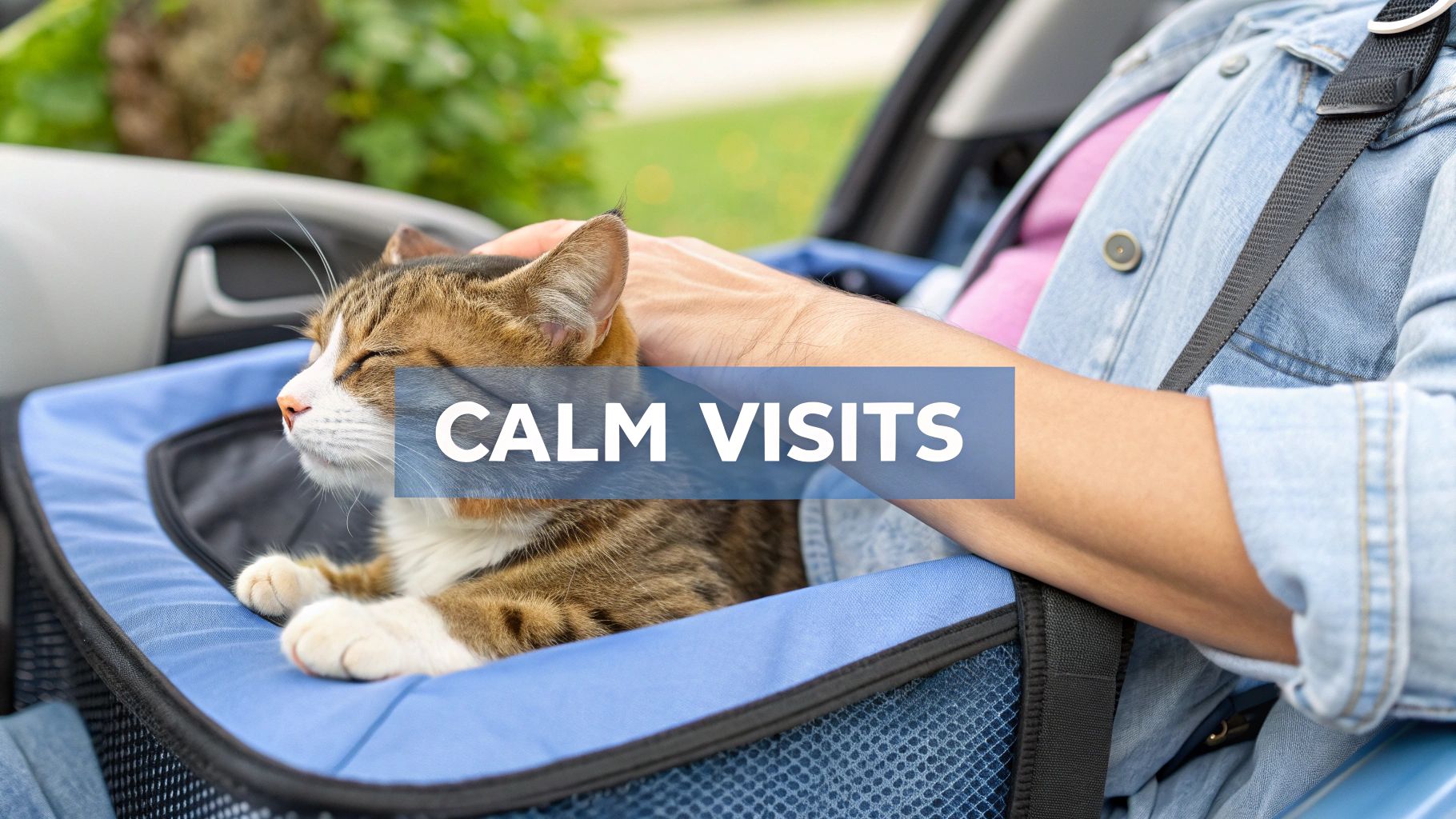
For many cat owners in Queens, the simple act of putting their cat in a carrier is a challenge. Events we see as routine—a car ride to our clinic in Oakland Gardens or a vet exam—can be terrifying for cats. This is where gabapentin can make a real difference.
Gabapentin works by calming the overactive nerve signals that trigger fear and panic. It’s less about heavy sedation and more about quieting the brain's "fight-or-flight" response, helping your cat feel more secure.
The Pre-Visit Protocol for a Calmer Cat
The most common reason we prescribe gabapentin is to make vet visits less stressful. A calmer cat allows us to perform a safer and more thorough examination. This one step can transform a dreaded event into a smooth experience for you and your pet.
We typically recommend giving the prescribed dose about 90 minutes to two hours before you leave for your appointment. This timing gives the medication enough time to take full effect. This means that by the time you're driving through Bayside, your cat is already feeling more relaxed.
Practical Tips for Giving Gabapentin
Giving medication to a cat can feel like an impossible task. If you're struggling, you are not alone. Here are a few practical steps our clients from Little Neck to Queens Village have found helpful:
- Mix It with a High-Value Treat: For liquid gabapentin or the powder from a capsule, try mixing it into a tiny amount of something your cat loves, like a lickable puree or the juice from a can of tuna.
- Keep the Vibe Calm: Cats are perceptive. If you’re stressed, they'll be stressed. Approach medication time calmly and use a soft voice.
- Try "Pill Pockets": These are soft, moldable treats designed to hide pills and can be a lifesaver for cats who spit out pills hidden in their food.
- Ask About Compounded Flavors: We can often have gabapentin specially made into a flavored liquid, like chicken or tuna, which can make it more tempting for your cat.
Never try to force medication, as that will only create fear and make it harder next time. If you're having trouble, please contact us for help.
Text us at 718-301-4030. If symptoms are severe or after hours, go directly to a 24/7 emergency hospital.
Managing Your Cat's Chronic and Acute Pain
Seeing your cat in pain is difficult. Whether it’s discomfort after surgery or the ache of a chronic condition, relief is our first priority. Gabapentin is a trusted tool for feline pain management because of how it works.
It's particularly good at tackling neuropathic pain. This is like a "glitch" in the nervous system. Conditions like arthritis or nerve damage can cause nerves to send nonstop pain signals to the brain. Gabapentin helps quiet these signals, which is why it often works when other painkillers fall short.
Acute Pain After Surgery
When your cat has a procedure at our Queens clinic, their comfort during recovery is critical. Post-surgical pain is a normal part of healing, but it must be managed well.
We often use gabapentin as part of a multi-medication approach to pain. This gives us better pain control with fewer side effects. Gabapentin helps your cat rest comfortably, which is essential for proper healing. We provide clear instructions on post-surgery care for dogs and cats, so you feel confident helping them recover.
Chronic Pain from Conditions Like Arthritis
Chronic pain can significantly reduce a cat’s quality of life. Arthritis is one of the most common causes, especially in older cats. Cats are masters at hiding their pain, so the signs can be subtle.
Be on the lookout for:
- Hesitating before jumping onto furniture.
- Taking the stairs one at a time or avoiding them.
- Grooming less, leading to a matted coat.
- Becoming grumpy or hissing when petted in a certain spot.
- Urinating outside the litter box because it's painful to climb in.
Gabapentin is excellent for managing this type of persistent pain. It helps interrupt the cycle of chronic pain signals, letting older cats from Hollis to Queens Village move more easily.
Finding the Right Dose for Your Cat
Figuring out the right dose of gabapentin depends on your cat’s condition, weight, and individual response. Our philosophy is to "start low and go slow."
We’ll begin with a conservative dose and then adjust it based on how your cat is doing at home. This must always be done with our guidance to keep your cat safe. Your observations are priceless. By watching your cat’s movement and mood, you become our most important partner in creating the perfect pain management plan.
Text us at 718-301-4030. If symptoms are severe or after hours, go directly to a 24/7 emergency hospital.
Safe Dosing and Potential Side Effects
Your cat's safety is our priority, and that starts with the right gabapentin dose. This is not a one-size-fits-all medication. We carefully determine the exact amount your cat needs based on their weight and specific condition.
For our feline patients in Oakland Gardens and Bayside, we often recommend a compounded liquid form of gabapentin. The liquid allows for precise measurements, which is easier and more accurate than splitting pills.
The Importance of Professional Guidance
Giving gabapentin exactly as prescribed is key. If your cat is on it for chronic pain, it's crucial to give the medication at the same times each day. This keeps a steady level of the drug in their system for consistent relief.
Never adjust the dose or stop the medication suddenly without talking to us first. If your cat has been taking gabapentin for a while, stopping abruptly can lead to withdrawal. We will always provide a safe, gradual tapering plan if it’s time to discontinue the medication.
Common Side Effects to Monitor
Gabapentin is very safe, but knowing what to expect can help you feel more confident. The most common side effects are mild and usually fade as your cat's body adjusts.
The most common effect you might notice is some mild sleepiness or wobbliness, which veterinarians call ataxia. Your cat might seem drowsy or a bit clumsy for a few hours after their dose. This is normal, especially when they first start the medication. If you are concerned, keep your cat in a safe space where they can't fall from a height.
Text us at 718-301-4030. If symptoms are severe or after hours, go directly to a 24/7 emergency hospital.
Urgent vs. Emergency: Knowing When to Seek Help
Knowing whether your cat's reaction is a minor side effect or a true emergency can be stressful. An urgent issue needs a vet's attention soon, but your cat is stable. An emergency is a life-threatening situation that needs immediate care.
When to Contact Us (Urgent Care)
These are issues to text us about during our normal hours. Your cat is stable, but something doesn't feel right.
- Symptoms:
- Lingering Wobbliness: Your cat still seems clumsy or "drunk" more than 12-24 hours after a dose.
- Ongoing Lethargy: They are sleepier than usual for a few days but can be easily woken for meals or attention.
- Minor Tummy Trouble: A single episode of vomiting or diarrhea, but they are acting normally otherwise.
When to Go to an Emergency Hospital (Emergency)
These signs are life-threatening and require immediate care at a 24/7 facility, day or night.
- Symptoms:
- Severe Lethargy or Collapse: Your cat is completely unresponsive, feels limp, or you can't wake them up.
- Seizure Activity: This is critical, especially if your cat isn't taking gabapentin for a known seizure disorder.
- Difficulty Breathing: Look for open-mouth breathing, wheezing, or gasping. This is always an emergency.
- Loss of Consciousness: Your cat faints or seems completely unaware of their surroundings.
What to Do Before You Arrive
In a crisis, a few simple steps can make a huge difference.
- Call Ahead: If possible, call the emergency hospital to let them know you're on your way so they can prepare.
- Bring the Meds: Grab the gabapentin bottle and any other medications your cat takes. The exact dosage information is vital.
- Note the Last Dose: Try to remember the exact time you gave the last dose of gabapentin.
- Transport Safely: Place your cat in their carrier to keep them secure on the drive over.
Your intuition as a pet owner is a powerful tool. If you feel something is seriously wrong, it's always better to seek emergency care. For more details, read our guide on when to take your cat to an emergency vet.
Text us at 718-301-4030. If symptoms are severe or after hours, go directly to a 24/7 emergency hospital.
FAQ: Common Questions About Gabapentin for Cats
We've put together answers to the most common questions we hear from cat owners across Queens, from Bayside to Hollis.
Can I give my cat my own gabapentin prescription?
No. Human liquid versions of gabapentin often contain xylitol, an artificial sweetener that is extremely toxic to pets. Always use the specific formulation prescribed by your veterinarian. Only if your veterinarian advises, should any human medication be used.How long does it take for gabapentin to work for anxiety?
For calming anxiety before a vet visit, gabapentin usually starts working within 1 to 2 hours. This is why we advise giving the dose about two hours before you plan to leave for your appointment at our Oakland Gardens clinic.Is gabapentin addictive for cats?
Gabapentin is not addictive like narcotics. However, a cat's body can get used to it over a long period. That's why you should never stop the medication suddenly without our guidance, as it could cause withdrawal symptoms.What should I do if I miss a dose?
If you miss a dose by only a few hours, give it as soon as you remember. If it's almost time for the next scheduled dose, skip the missed one and return to your regular schedule. Never give two doses at once. If your cat takes gabapentin for seizures, call us for specific advice.
We hope this guide has been a helpful resource. Our team is always here to support you and your cat.
At Union Vet NY, we're committed to providing compassionate, expert care for every patient.
Text us at 718-301-4030. If symptoms are severe or after hours, go directly to a 24/7 emergency hospital.
