

8 Signs Your Cat Is in Pain: A Queens, NY Vet Guide
Cats rarely make pain obvious. More often, a Queens pet owner notices that something just feels off. The cat who always jumps onto the bed now pauses and climbs up in stages. The social cat starts hiding under a chair. The quiet cat suddenly cries in the litter box, or the fastidious cat stops grooming the lower back.
That subtlety is why signs your cat is in pain are so easy to miss. Cats hide discomfort as a survival instinct, and that makes even attentive owners second-guess what they’re seeing. Pain doesn’t always look dramatic. It may show up as a new habit, a small movement change, or a mood shift that seems unrelated at first.
This matters even more in older cats. Clinical studies summarized by Zoetis Petcare on signs of cat pain report that osteoarthritis affects 61% of cats over age 6 and 90% of cats over age 12, with 40% showing observable pain signs such as altered jumping, stair climbing, running, or reluctance to chase objects. Many owners assume those changes are just aging. Often, they’re not.
If you live in Oakland Gardens, Bayside, Fresh Meadows, Glen Oaks, Little Neck, Hollis, or Queens Village, the practical question is simple. What should you watch for, and when should you act?
Start with the changes that are new for your cat. Compare today’s behavior to your cat’s normal routine, not to another cat’s personality. A shy cat may get quieter when painful. A vocal cat may get louder. A neat cat may stop grooming. A stubborn cat may stop using a high-sided litter box because squatting hurts.
The sooner you catch the pattern, the easier it is for a veterinarian to localize the problem and help. Below are the signs I tell cat owners to take seriously.
1. Changes in Vocalization Patterns
A change in vocalization is often one of the first things owners notice. The key word is change. If your cat has always been chatty, that alone doesn’t mean pain. If a normally quiet cat starts yowling when jumping, or your cat cries in the litter box, that deserves attention.
Some painful cats get louder. Others do the opposite and stop making their usual sounds. Both patterns matter.
A few examples I’d treat seriously:
- Litter box crying: Vocalizing while urinating or defecating can point to urinary or bowel pain.
- Jump-related yowling: Crying out when landing, climbing, or twisting can fit joint, back, or soft tissue pain.
- Sudden growling when handled: Cats may warn you before they swat if touching a certain area hurts.
- New silence: A cat who stops greeting you, purring normally, or responding as usual may be withdrawn because they don’t feel well.
What to pay attention to
Timing tells you a lot. If the sound happens only during one activity, that helps localize the pain. A cat that cries only while being picked up may have rib, abdominal, neck, or back pain. A cat that vocalizes only at the food bowl may have mouth pain.
Try to document patterns before your visit:
- Record the sound: A short phone video is often more useful than trying to describe it later.
- Note the trigger: Was it during stairs, jumping, eating, urinating, grooming, or being touched?
- Track the timing: Is it worse after rest, late at night, or after active play?
Practical rule: Don’t label a new vocal change as “behavioral” until pain has been ruled out.
Cats also purr when stressed or uncomfortable, so purring alone doesn’t prove comfort. What matters is the whole picture. If the purring is paired with crouching, hiding, a tense body, or reduced activity, I worry more about pain than contentment.
If your cat’s voice has changed and you can’t explain why, schedule an exam. Early pain can be subtle, but it rarely stays that way.
2. Decreased Mobility and Difficulty with Daily Activities
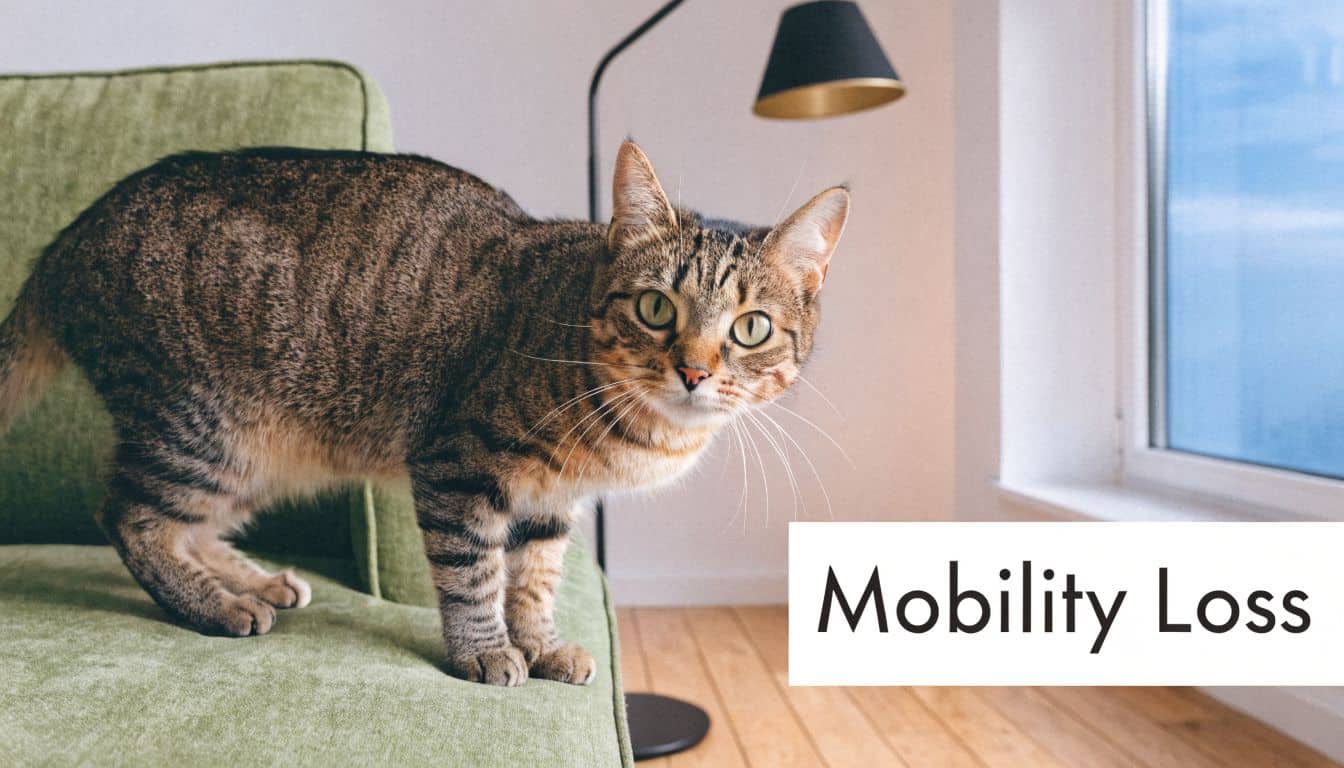
Mobility changes are some of the most important signs your cat is in pain, especially in middle-aged and senior cats. Owners often expect a painful cat to limp. Cats frequently don’t. They compensate, move less, and subtly stop doing what used to be easy.
That’s one reason degenerative joint disease gets missed. According to DVM360’s review of behavioral signs of feline pain, radiographic evidence of degenerative joint disease is present in 61 to 92% of cats, but only about 40% of cats with documented joint disease show observable clinical signs of pain during veterinary examination.
The movement changes owners miss
Many cats with pain don’t stop moving completely. They just move differently.
Watch for:
- Reduced jumping height: Your cat starts choosing lower surfaces or makes several smaller jumps instead of one clean leap.
- Reluctance with stairs: Going up or down becomes slow, hesitant, or avoided.
- Stiffness after rest: Rising from a nap looks slower than usual.
- Changes in scratching behavior: A cat who stops stretching fully at the scratching post may be protecting the shoulders, spine, or hips.
- Trouble with self-care tasks: Reaching the food bowl, getting into the litter box, or grooming the hind end may become harder.
The subtle pattern matters more than one dramatic event. A cat who still reaches the couch but no longer jumps onto the windowsill may be telling you plenty.
What works at home while you arrange care
You can make a painful cat more comfortable without masking the problem.
- Lower the effort: Use a low-entry litter box and keep food, water, and resting spots on one level.
- Add traction: Rugs or yoga mats help cats who slip on smooth floors.
- Use ramps or steps: They reduce repeated impact from jumping.
- Take videos from the side and behind: Gait changes are sometimes easier to see on replay.
What doesn’t work is waiting for a limp. By the time many cats visibly limp, they’ve often been compensating for a while.
If your cat is recovering from surgery, continued stiffness, reluctance to move, or refusal to perform basic daily activities should prompt a recheck. Post-operative pain control sometimes needs adjustment, and occasionally a complication needs to be ruled out.
3. Changes in Eating and Drinking Habits
Pain often changes how a cat eats before it changes how much they eat. Owners usually notice the empty bowl or the full bowl. I also want to know whether the cat approaches food eagerly, sniffs and walks away, drops kibble, chews on one side, or prefers one texture over another.
Those details help separate appetite loss from eating difficulty.
A cat with oral pain may still want food but avoid dry kibble. A cat with abdominal pain may approach the bowl, crouch, then back away. A cat with neck pain may seem interested in food but struggle with the bowl position.
Small clues that matter
Look for patterns like these:
- Texture preference changes: Eating wet food but not dry can suggest mouth pain.
- Messy eating: Dropping food, tilting the head, or chewing oddly can point to dental or oral discomfort.
- Less interest in water or more time at the bowl: Pain involving the mouth, urinary tract, or abdomen may change drinking behavior.
- Reduced appetite after injury or surgery: That may reflect pain, nausea, stress, or a combination.
If you’re unsure whether your cat is eating less, measure it for a couple of days. Guessing is unreliable. So is filling the bowl free-choice and trying to estimate later.
What helps and what can backfire
Helpful steps include:
- Offer easy access: Keep bowls close to where your cat rests.
- Try a shallow dish: Some cats with facial or neck discomfort do better with a lower-rim bowl.
- Write down actual intake: Even a simple note on your phone is useful.
- Bring medication details to the appointment: Appetite changes can relate to both pain and treatment.
Bring a short feeding video if your cat seems uncomfortable while chewing. It can reveal more than a written description.
What usually doesn’t help is repeatedly changing foods at home without a plan. That can muddy the picture, upset the stomach, and make it harder to determine whether pain, nausea, stress, or food preference is the main issue.
If your cat won’t eat, eats much less than usual, or seems painful at the bowl, don’t wait long. Cats can decline quickly when food intake drops.
4. Excessive Grooming or Neglected Grooming
Cats are usually meticulous about coat care, which makes grooming changes especially useful. Pain can push grooming in two opposite directions. Some cats overgroom one sore spot. Others stop grooming because twisting, reaching, or even general movement hurts too much.
Both patterns are significant.
A cat who licks the same hip, flank, or joint over and over may be reacting to pain under the skin, not just a skin problem. A senior cat with a greasy back or matted fur near the hindquarters may not be lazy. They may be physically unable to reach those areas comfortably.
Overgrooming versus undergrooming
The pattern helps narrow the problem.
- Localized licking or chewing: Often raises concern for pain in that specific area, such as a limb, hip, back, or surgical site.
- General coat decline: Greasy fur, dandruff, mats, or an unkempt appearance can happen when a cat feels too sore or too unwell to maintain normal grooming.
- Rear-end neglect: Common in cats with back or hind limb discomfort because turning and reaching becomes difficult.
Cats can also injure their skin by overgrooming, which creates a second problem on top of the original pain. Don’t assume a bald patch is only an allergy issue.
Practical steps before the appointment
Take photos over a few days if the change is gradual. Coat changes are easier to compare visually than by memory.
You can also help safely at home:
- Brush gently if tolerated: This supports cats who can’t reach certain areas.
- Prevent incision licking after surgery: Use the recovery equipment your veterinarian recommended.
- Note the exact area involved: Localized grooming changes can help pinpoint where it hurts.
The important trade-off is this. Gentle brushing can help a neglected coat, but repeated handling of a painful cat can also increase stress and defensiveness. If your cat resists, stop and let the exam do the rest.
A grooming change that appears suddenly, especially with hiding, decreased appetite, or reduced movement, should move pain higher on your list of possibilities.
5. Behavioral Changes and Aggression
A personality change is one of the most important signs your cat is in pain. Cats don’t separate physical discomfort from behavior the way people do. If touching, moving, eating, or using the litter box hurts, their mood often changes first.
That’s why I take “He’s just not acting like himself” seriously.
A friendly cat may hide. A tolerant cat may swat. A cat who always liked being picked up may suddenly resist. These aren’t minor quirks when they’re new. They’re clues.
When behavior becomes a pain signal
Veterinary specialists reached expert consensus on 25 behavioral signs of pain in cats through a Delphi study in PMC. The important takeaway for owners is simple. There isn’t one required sign. Pain can show up through both physical changes and emotional or temperament changes.
That means all of these deserve attention:
- Hiding more than usual
- Irritability when touched
- Swatting, hissing, or biting during handling
- Withdrawal from family interaction
- Restlessness or inability to settle
- A sudden change in tolerance for being picked up
If a cat becomes “mean” overnight, I look for pain before I blame behavior.
What to do safely
Don’t test the painful area over and over. Owners sometimes press the same spot repeatedly to prove where it hurts. That usually makes the cat more defensive and gives you less useful information.
Instead:
- Note the trigger: Picking up, petting the back, touching the belly, grooming, climbing, or entering the carrier.
- Warn the veterinary team in advance: If your cat may react defensively, say so when you schedule.
- Use low-stress handling: Move slowly, keep the room quiet, and avoid forcing contact.
If your cat’s behavior change is paired with collapse, severe distress, repeated vomiting, obvious injury, or another red-flag sign, review when to take your cat to the emergency vet.
A painful cat isn’t being difficult. They’re protecting themselves. Once the source of discomfort is addressed, many cats become recognizably themselves again.
6. Abnormal Posture and Body Position
Posture can tell you a lot before your cat even takes a step. Pain changes how cats hold themselves at rest, how they shift weight, and whether they seem able to relax at all.
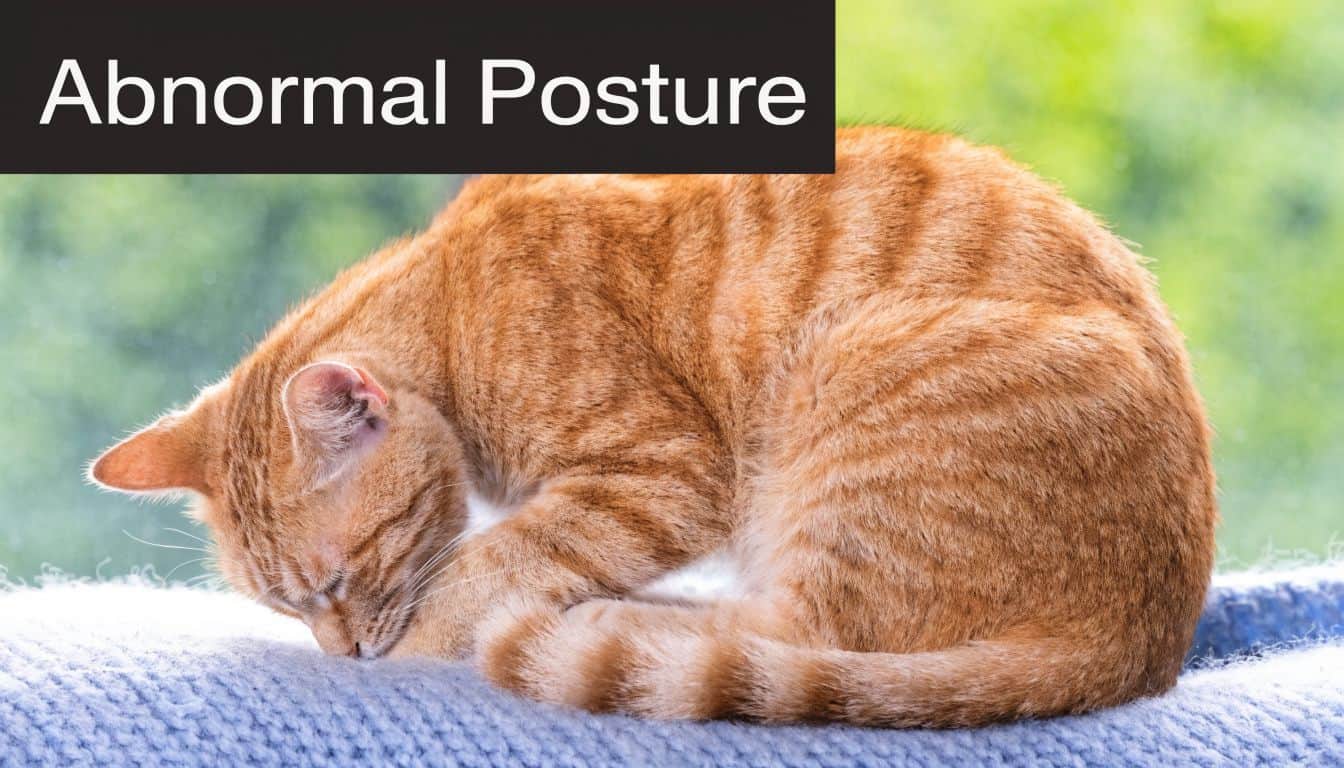
Some painful cats crouch low and tight. Others sit hunched, tuck the abdomen, or hold the head and neck stiffly. A few keep changing position because none of them feels comfortable.
Postures that should get your attention
You know your cat’s normal resting shapes. A new, sustained posture is what matters.
Concerning examples include:
- Hunched posture: Often seen with abdominal discomfort, back pain, or general illness.
- Rigid stillness: Cats in significant pain sometimes stop moving unless they must.
- Guarding one side of the body: They may lean away from contact or protect one limb.
- Head held low with neck stiffness: This can fit neck or upper back pain.
- Repeated shifting without settling: A cat that can’t get comfortable is telling you something.
One posture deserves special attention. The “prayer position,” with the front end lowered and the rear raised, can be associated with severe abdominal pain and should be treated as an emergency.
Home observation that helps your veterinarian
Take a photo if the posture is sustained and your cat isn’t distressed by your presence. A still image often helps because cats may change position at the clinic.
Also note:
- How long the posture lasts
- Whether it happens after eating, using the litter box, or jumping
- Whether your cat struggles to lie down or stand up
What doesn’t help is trying to physically straighten the body or stretch the limbs to “see if it loosens up.” That can worsen pain and stress.
At the clinic, posture gets interpreted alongside the physical exam, history, and diagnostics. In Queens cats with subtle chronic pain, this is often where a small owner observation becomes the clue that points us toward joints, spine, abdomen, or another hidden source.
7. Litter Box Avoidance and Elimination Changes
Litter box problems are often pain problems until proven otherwise. Owners commonly worry that the cat is being stubborn or upset. Sometimes behavior plays a role, but pain belongs high on the list, especially when the change is sudden.
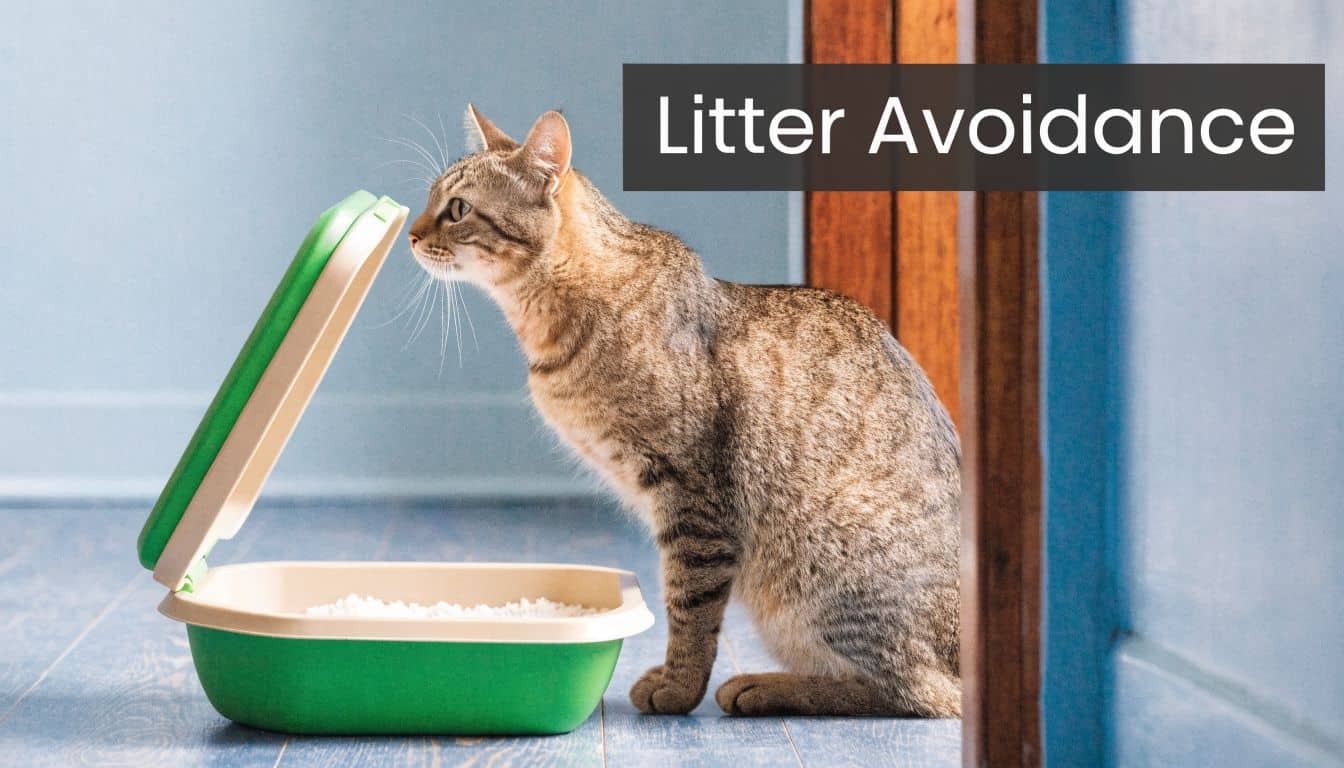
A cat may avoid the litter box because getting in hurts, squatting hurts, urinating hurts, or defecating hurts. Some cats still go to the box but strain, vocalize, or make repeated trips.
Red flags in the box and around it
According to the AVMA’s review of feline pain points, expert consensus identifies 25 behavioral signs sufficient to indicate pain in cats, and common indicators include litter box issues, reduced activity, mood changes, trembling, rapid breathing or heart rate, aggression, and excessive purring. Litter box changes belong in the same serious category as mobility and behavior changes.
Watch for:
- Frequent trips with little produced
- Straining to urinate or defecate
- Crying in the box
- Urinating or defecating next to the box
- Avoiding a high-sided box after years of using it normally
- New accidents in a cat with arthritis, recent surgery, or known urinary history
For urinary concerns, read more about cat urinary tract infection signs and care.
Urgent versus emergency
At this point, owners need a clear threshold.
Urgent means new accidents, discomfort, or repeated trips to the box even if your cat is still producing urine. Emergency means straining with little or no urine coming out, especially in a male cat, or any elimination problem paired with severe distress, collapse, or vomiting.
Straining with no urine is not a “wait until tomorrow” problem.
Helpful steps before the visit:
- Keep the box clean and easy to access
- Use a low-entry box if mobility is part of the issue
- Note whether urine, stool, or both are affected
- Bring a timeline of when the change started
Don’t punish accidents. If pain is the reason, punishment adds stress and can worsen avoidance.
8. Trembling, Muscle Tension, and Physical Rigidity
You go to pick up your cat and something feels off. The body is tense. The legs stay stiff. There is a fine tremor even though the room is warm.
That pattern deserves attention in Queens, especially after a fall, a jump gone wrong, surgery, dental work, or a sudden change in movement at home. Cats often tighten the body to protect a painful area, and owners usually notice it most during handling, rest, or the first few steps after getting up.
Watch for signs like these:
- Trembling that is not explained by cold, fear, or stress
- A firm, guarded abdomen or back
- Flinching when touched in one specific area
- Stiff, careful steps
- Rigid posture after an injury or rough landing
- Muscle tension that stays present instead of easing after a few minutes of movement
Facial expression matters here too. A painful cat often looks tight through the face. The eyes may stay partly closed, the whiskers may pull back, and the head may sit lower than usual. You do not need to score any of that at home to use it well. If the body looks guarded and the face looks strained, treat that combination seriously.
Do not test the area over and over.
Repeated touching, stretching, or trying to “see where it hurts” can make a painful cat harder to examine and more likely to bite or panic in the carrier. A short video of the trembling or stiff walk is more useful than repeated handling.
If your veterinarian has already prescribed medication, give only the dose and timing you were told to use. If you were sent home with guidance on gabapentin for cats before a veterinary visit, follow those instructions closely and call if your cat seems much more sedate, unsteady, or still clearly painful.
Before you leave for care:
- Place your cat in a secure carrier with a thick towel or soft bedding
- Keep activity low and avoid extra jumping
- Carry the carrier level
- Write down when the trembling or rigidity started
- Bring a video if the episode comes and goes
Here is the practical triage point I give Queens owners. Urgent care is appropriate for persistent stiffness, body tension, or trembling in a cat that is alert and breathing normally. Emergency care is the safer choice if rigidity follows trauma, if your cat cries out when trying to move, or if the tremors come with open-mouth breathing, collapse, severe weakness, or a swollen abdomen.
At Union Vet NY, our team can help sort out that difference quickly. We use triage, pain control, and diagnostics such as imaging and hands-on exam findings to determine whether this is a muscle injury, abdominal pain, neurologic trouble, or another painful condition that should not wait.
8-Point Comparison of Cat Pain Signs
| Indicator | Implementation complexity | Resource requirements | Expected outcomes | Ideal use cases | Key advantages |
|---|---|---|---|---|---|
| Changes in Vocalization Patterns | Low, easy for owners to notice but needs baseline | Minimal, owner observation, audio/video, veterinary exam | Early alert to potential pain; helps narrow timing/location | Acute pain episodes, post-operative monitoring, urinary or orthopedic pain | Easily observed; often first noticed sign prompting vet visit |
| Decreased Mobility and Difficulty with Daily Activities | Moderate, requires gait and functional observation over time | Video recording, mobility assessment, orthopedic exam, imaging as needed | Identifies orthopedic or chronic pain; guides multimodal management | Arthritis, post-surgical recovery, lameness, mobility decline in seniors | Strong correlation with musculoskeletal pain; measurable functional impact |
| Changes in Eating and Drinking Habits | Low to moderate, track intake and eating behavior | Food/water monitoring, oral exam, dental x‑rays, lab tests | Detects dental, GI, or urinary-related pain; prompts nutritional interventions | Dental disease, oral pain, internal medicine issues, post-op appetite changes | Quantifiable measure; directly affects nutrition and recovery |
| Excessive Grooming or Neglected Grooming | Low, visible coat and grooming changes | Photographs, dermatologic exam, flea/allergy testing, vet assessment | Localizes pain or reveals inability to groom; detects secondary skin issues | Localized musculoskeletal pain, surgical site licking, dermatologic overlap | Visual localization of discomfort; prompts timely veterinary care |
| Behavioral Changes and Aggression | Moderate, needs knowledge of baseline and careful assessment | Owner reports, behavioral evaluation, safe handling protocols | Reveals significant discomfort; aids targeted examination and safety planning | Sudden aggression, withdrawal, defensive reactions to touch | Quickly alerts caretakers; can help localize painful areas and protect handlers |
| Abnormal Posture and Body Position | Low, distinct, often easily recognized postures | Photos/videos, physical exam, imaging when indicated | Rapid localization of abdominal/spinal/orthopedic pain; urgent triage if needed | Acute abdominal pain, spinal issues, post-operative pain monitoring | Early, specific indicator (e.g., prayer position) that guides exam focus |
| Litter Box Avoidance and Elimination Changes | Moderate, requires daily monitoring and baseline knowledge | Litter monitoring, urine/stool samples, in‑house lab tests, imaging | Identifies urinary/GI/orthopedic causes of pain; may require emergency care | Urinary obstruction, constipation, painful elimination due to arthritis | Strong indicator of organ-specific emergencies; observable and measurable |
| Trembling, Muscle Tension, and Physical Rigidity | Low to moderate, observable but may overlap with stress signs | Observation, palpation, neurologic workup, imaging, monitoring of meds | Indicates acute or severe pain; useful for assessing analgesic effectiveness | Post-operative patients, trauma, neurologic or severe musculoskeletal pain | Clear physical manifestation of significant pain; helpful for treatment evaluation |
Your Next Steps Getting Help for Your Cat in Queens
Recognizing signs your cat is in pain is the first step. The next step is acting early, before a subtle problem becomes a crisis. In Queens, that often means deciding whether your cat needs a same-day urgent visit or immediate emergency care.
Cats are experts at masking discomfort. That’s why “I’m not sure, but something seems wrong” is often enough reason to call. I’d much rather evaluate a cat early for hiding, stiffness, appetite change, or litter box discomfort than see that same cat later when the problem has escalated.
For older cats, this matters even more. Common pain signs overlap with what many owners assume is normal aging. Slowing down, jumping less, avoiding stairs, sleeping more, or letting the coat get greasy may look like senior behavior. Sometimes they are signs of treatable pain. Arthritis and other chronic painful conditions are easy to miss without a hands-on exam, a careful history, and sometimes radiology or lab work.
When it’s urgent and when it’s an emergency
Come to Union Vet NY for urgent evaluation during hours if your cat has:
- New mobility changes: Reluctance to jump, stiffness, limping while still bearing some weight, or trouble with stairs.
- Mild to moderate behavior changes: Hiding, irritability, or a new dislike of handling.
- Appetite or grooming changes: Eating less, chewing oddly, overgrooming one spot, or neglecting coat care.
- Litter box changes without complete blockage signs: Urinating outside the box, discomfort while using the box, or frequent trips while still producing urine.
Go directly to a 24/7 emergency hospital if your cat has:
- Difficulty breathing: Open-mouth breathing, severe respiratory distress, or collapse.
- Seizures or loss of consciousness
- Major trauma: A fall from height, hit by car, or obvious severe injury.
- Uncontrolled bleeding
- Straining to urinate with little or no urine coming out, especially in a male cat
- Repeated vomiting or severe diarrhea
- Obvious fracture, paralysis, or inability to stand
- Prayer position or signs of severe abdominal pain
What to do before you arrive
Start with safety. Pain changes behavior fast, and even a gentle cat may bite or scratch when frightened or touched in a sore area.
Use these steps:
- Contact a veterinarian: Text us at 718-301-4030. If symptoms are severe or after hours, go directly to a 24/7 emergency hospital.
- Move your cat gently: Place them in a secure carrier lined with a towel or soft bedding.
- Limit handling: Don’t keep checking the painful area.
- Gather useful information: Note when the signs started, what changed first, whether your cat is eating, drinking, urinating, and defecating, and whether there was any trauma or possible toxin exposure.
- Bring videos or photos: Short clips of vocalizing, gait changes, posture, or litter box behavior can be very helpful.
Never give human pain medications unless your veterinarian advises it. Medications such as acetaminophen, ibuprofen, and aspirin can be dangerous or toxic to cats.
How Union Vet NY can help
At Union Vet NY, the goal is to identify where the pain is coming from and relieve it safely. That starts with a thorough physical exam and careful history. In many cases, in-house lab testing and radiology help narrow the cause quickly.
Treatment depends on the problem. A cat with joint pain may need a different plan than a cat with dental pain, abdominal pain, urinary discomfort, or post-surgical soreness. That’s why a customized approach works better than guessing at home.
For Queens pet owners, that may include:
- Triage for urgent symptoms
- Low-stress handling for fearful or painful cats
- In-house diagnostics
- Pain management plans
- Surgical care and post-operative follow-up
- Prescription nutrition from Hill’s or Royal Canin when diet supports recovery or chronic care
Frequently asked questions
Q: How do I know if my older cat is slowing down from age or pain?
A: If your cat is stiff after resting, jumps less, avoids stairs, grooms less, or becomes irritable when handled, pain should be considered. Those changes are often treatable and shouldn’t be dismissed as age alone.
Q: My cat is hiding but still eating. Is that still concerning?
A: Yes. Hiding is a common distress sign in cats. A cat can still eat and still be in pain, especially early on.
Q: What if I can’t tell where the pain is coming from?
A: That’s common. Pain may come from joints, teeth, spine, abdomen, urinary tract, or another internal problem. A veterinary exam is what turns a vague pattern into a diagnosis.
Q: Should I try medicine I already have at home?
A: Only if your veterinarian advises it. Cats are very sensitive to medication errors, and many human drugs are unsafe for them.
If you’re in Oakland Gardens, Bayside, Fresh Meadows, Glen Oaks, Little Neck, Hollis, Queens Village, or nearby and your cat seems painful, don’t wait for the signs to become obvious. Text us at 718-301-4030. If symptoms are severe or after hours, go directly to a 24/7 emergency hospital.
If your cat is showing signs of pain, Union Vet NY can help with urgent evaluation, diagnostics, pain management, surgery, and follow-up care for pet owners across Oakland Gardens and surrounding Queens neighborhoods. Text us at 718-301-4030. If symptoms are severe or after hours, go directly to a 24/7 emergency hospital.
