
Dog Temperature Chart: A Guide for Queens Pet Owners
A normal adult dog temperature is 99.5°F to 102.5°F. This dog temperature chart helps Queens pet owners tell the difference between a normal fluctuation and a potential emergency.
If you're checking because your dog seems tired, warm, shaky, or just not like themselves, you're asking the right question. Temperature is one of the clearest vital signs we use to decide whether a dog needs monitoring at home, a same-day veterinary visit, or immediate emergency care.
A reading by itself never tells the whole story. A playful dog with a borderline reading is different from a dog with the same number who is weak, panting hard, vomiting, or unsteady. What matters is the temperature, how you took it, your dog's age and breed, and what other signs you're seeing.
Is Your Dog's Temperature Normal
A lot of pet owners first notice a problem because their dog feels hot to the touch, skips a meal, or acts quiet after a walk, a stressful day, or a night of poor sleep. Skin warmth alone isn't enough to judge fever. Dogs naturally run warmer than people, and the best way to know what's going on is to get an actual reading.
For most adult dogs, the normal range is 99.5°F to 102.5°F. That gives you a useful starting point, but it doesn't replace context. Some dogs run a little higher or lower at baseline, and daily changes can happen with rest, excitement, or recent activity.
If you want a broader sense of what's normal beyond temperature, Union Vet NY has a practical guide to normal vital signs for dogs.
What a temperature can and can't tell you
A temperature reading can help you spot:
- Fever
- Overheating
- Low body temperature
- A pattern that needs veterinary attention
It can't tell you the cause on its own. Infection, inflammation, heat exposure, stress, shock, and other medical problems can all affect body temperature.
Practical rule: If your dog seems unwell and you can safely take a temperature, do it. If you can't do it safely, the symptoms matter more than getting the number at home.
Start with the whole dog
Before you focus on the thermometer, look at your dog closely:
- Energy level: Are they alert, or unusually dull?
- Breathing: Is panting mild, or hard and persistent?
- Mobility: Are they walking normally?
- Comfort: Do they seem restless, shivery, or painful?
- Interest in water and food: Are they drinking, refusing, or vomiting?
Those details often determine how urgent the situation is.
The Essential Dog Temperature Chart
The chart below gives you a practical reference point for what a reading usually means. For age-specific ranges and the fever and emergency thresholds used here, see VCA's guidance on taking your pet's temperature.
Dog Body Temperature Ranges
| Temperature Reading (Fahrenheit) | Condition | What It Means & Next Steps |
|---|---|---|
| Below 99°F | Too low, emergency range | Body temperature is dangerously low. Keep your dog warm and seek immediate veterinary care. |
| 99.5°F to 102.5°F | Normal | This is the normal adult range. If your dog seems ill despite a normal reading, monitor symptoms and contact your veterinarian for guidance. |
| Above 103°F | Fever | This suggests fever and should prompt veterinary consultation, especially if your dog is lethargic, not eating, or showing other signs of illness. |
| Above 105°F | Critical emergency | This is a medical emergency. Go for emergency veterinary care right away. |
Age matters
Puppies and older dogs don't always read exactly like healthy adult dogs.
- Puppies: Their usual range is 100°F to 102.5°F
- Older dogs: Their baseline may be a bit lower, around 99°F to 101.5°F
That doesn't mean a low reading in a senior dog is automatically safe, or a higher reading in a puppy should be ignored. It means the chart should be interpreted with the dog's age in mind.
The reading that worries owners most
A common mistake is assuming anything slightly above the middle of the normal range is dangerous. It isn't. The more useful cutoff is above 103°F, which is where fever starts. At the other end, a reading below the normal range deserves just as much attention, especially if the dog is weak, cold, or mentally dull.
Some dogs have their own normal. A temperature chart is a guide, but your dog's usual baseline is more helpful than any generic number once you've established it.
How to Safely Take Your Dog's Temperature
The most accurate method is a rectal temperature using a dedicated digital pet thermometer. Merck Veterinary Manual identifies rectal measurement as the gold standard, and notes that temperatures above emergency high levels or below 99°F need immediate veterinary attention in the right clinical context. You can review that reference in Merck's table of normal rectal temperature ranges.
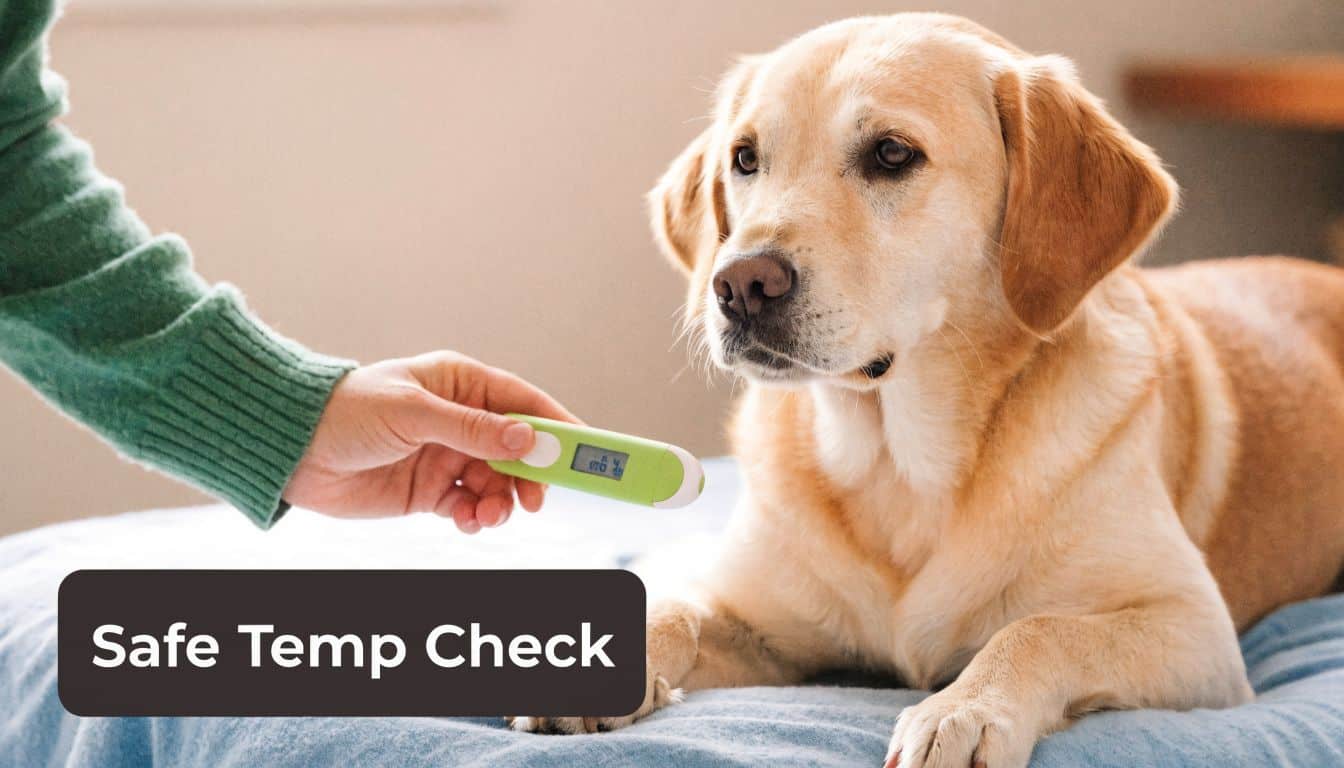
What you'll need
Keep it simple:
- Digital pet thermometer: Use one reserved only for your dog.
- Lubricant: A small amount helps make the process smoother.
- Towel or blanket: Useful for steadying a nervous dog.
- Treats: Helpful for calm handling before and after.
How to do it with the least stress
If your dog is calm, many owners can do this at home. If your dog is struggling, fearful, painful, or likely to bite, stop and seek help instead of forcing it.
- Choose a quiet space. Less noise and movement usually means less resistance.
- Have one person steady the dog if possible. That second set of hands matters.
- Lubricate the thermometer tip.
- Lift the tail gently. Insert the thermometer carefully into the rectum.
- Wait for the thermometer to finish.
- Read and record the number. Write down the time too.
- Clean the thermometer well after use.
What doesn't work well
These approaches cause confusion more often than clarity:
- Guessing by ear or nose warmth: Not reliable.
- Checking only once during heavy panting after exercise: That can mislead you.
- Forcing a frightened dog: You may get an inaccurate reading and make the next attempt harder.
- Using a shared household thermometer without labeling it: Easy to mix up and not ideal for hygiene.
If you can't get a safe reading, don't keep trying. Call for guidance based on symptoms instead.
Causes of a High Temperature in Dogs
A high temperature can come from fever or hyperthermia, and those aren't the same thing. Fever means the body is raising its temperature because of an internal medical problem. Hyperthermia means the dog is overheating because the body can't get rid of heat effectively.

Fever comes from inside
Common reasons a dog may have a fever include:
- Infection: Bacterial, viral, or other infections can push temperature up.
- Inflammation: The body may respond to disease or tissue injury this way.
- Post-procedure or post-vaccine changes: Sometimes dogs feel off afterward and need monitoring.
- Underlying illness: Internal disease can trigger an increased temperature.
Hyperthermia comes from heat load
This is the pattern many Queens owners see in summer, after car travel, hot sidewalks, or poorly timed walks.
- Hot weather exposure
- Exercise in warm conditions
- Poor ventilation
- Humid days
- Hot pavement
During the 2023 heatwave, emergency veterinary clinics across North America reported a 30% increase in heat-related canine emergencies. The same guidance notes that air temperatures above 85°F create high-risk conditions, and pavement can exceed 145°F. Those details come from Halo Collar's review of normal dog temperature and heat risk.
Symptoms that often come with a high temperature
Watch for combinations, not just one sign:
- Lethargy: Unusual tiredness or reluctance to move
- Panting: Especially if it doesn't settle with rest
- Vomiting or diarrhea: Gastrointestinal signs can appear with many causes
- Poor appetite: A dog who won't eat and feels hot needs attention
- Red flag behavior: Confusion, collapse, or worsening weakness
A number on the thermometer helps. The cause still needs a veterinary diagnosis.
Causes of a Low Temperature in Dogs
Low body temperature matters because it can mean your dog is losing heat faster than they can maintain it, or that a serious internal problem is affecting circulation and regulation. This can happen in cold weather, but it also happens in sick dogs indoors.
Some dogs are more vulnerable from the start. Puppies, seniors, very small dogs, thin-coated dogs, and wet dogs can lose body heat quickly.
Common reasons dogs get too cold
- Cold exposure: Outdoor time in cold, wet, or windy conditions can be enough, especially for small or short-haired dogs.
- Shock: Dogs in shock often struggle to maintain normal body temperature. If you're worried about that pattern, review these signs of shock in dogs.
- After anesthesia or sedation: Some dogs have trouble regulating heat during recovery.
- Severe illness: Internal disease can affect circulation and body temperature control.
- Frailty: Puppies and older dogs often have less reserve.
What owners usually notice first
Low temperature doesn't always look dramatic at first. A dog may seem quiet, weak, tucked up, cold to the touch, or less responsive than usual. Some dogs shiver. Others don't.
A low reading with weakness or mental dullness isn't something to watch overnight at home. It needs prompt veterinary assessment.
Keep the dog dry, warm, and handled gently while you arrange care.
Urgent Care Versus a Pet Emergency
Owners often get stuck on one question. Is this something to call about, or should I leave right now? The answer depends on both the temperature and the dog's overall condition.
When to contact a veterinarian for an urgent visit
These situations usually need prompt same-day guidance:
- Fever range without collapse: A temperature above 103°F with lethargy, poor appetite, or mild vomiting
- Concerning symptoms with no safe home reading: Your dog seems ill, but you couldn't safely take the temperature
- Persistent overheating concern after a walk: Panting, restlessness, or weakness that doesn't settle normally
- Repeated abnormal readings: Even if your dog still seems fairly stable
When to go to a 24/7 emergency hospital immediately
These signs move out of urgent care and into emergency care:
- Very high temperature: A reading above 105°F
- Dangerously low temperature: A reading below 99°F
- Neurologic signs: Seizure, severe disorientation, or collapse
- Breathing trouble: Labored breathing or distress
- Rapid decline: Your dog is getting worse, not better, over a short period
- Heatstroke concern: Hot body, heavy panting, weakness, and inability to cool down
If you're unsure, err on the side of emergency care. A delayed decision causes more problems than an overly cautious one.
Flat-faced breeds need a lower threshold for concern
Pugs, Bulldogs, French Bulldogs, and other brachycephalic dogs overheat faster than many owners expect. Rover notes that standard charts advise caution above 75°F, but brachycephalic breeds can overheat 2 to 3 times faster, may have a safe outdoor limit as low as 70°F, and can reach hyperthermia above 104°F in as little as 15 minutes of walking on a warm, humid day. That guidance appears in Rover's article on hot weather safety for dogs.
If you have one of these breeds, don't wait for a dramatic number before acting. Trouble often shows up first as noisy breathing, heavy panting, slowing down, or refusal to continue walking.
If you're trying to decide whether symptoms have crossed the line, this guide on when to take a dog to the emergency vet is a useful reference.
What to Do Before Arriving at the Vet
Once you've decided your dog needs care, focus on safe support, not home treatment experiments. The goal is to stabilize, reduce stress, and get moving.
If your dog seems too hot
- Move indoors: Get your dog out of the heat right away.
- Offer water if they can drink safely: Don't force it.
- Use cool, damp cloths: Paws and ears are reasonable places to start.
- Keep airflow moving: A fan can help comfort while you prepare to leave.
- Stop exercise completely: Don't try a "short walk to loosen them up."
If your dog seems too cold
- Wrap in dry blankets: Warmth matters, but keep it gentle.
- Keep the dog dry: Wet fur makes heat loss worse.
- Use body heat and a warm car: Avoid overheating the dog with intense direct heat.
- Handle carefully: Weak or shocked dogs can worsen with rough movement.
What not to do
- Don't give human medications: Only if your veterinarian advises.
- Don't delay care because the number improved slightly: Symptoms still matter.
- Don't force food: Water and transport are usually the priority.
- Don't keep rechecking over and over: One good reading is more useful than repeated stressful attempts.
If possible, have this information ready before you leave:
- The temperature reading
- When you took it
- Any vomiting, diarrhea, collapse, or breathing changes
- Recent heat exposure, walks, or procedures
Text us at 718-301-4030. If symptoms are severe or after hours, go directly to a 24/7 emergency hospital.
Frequently Asked Questions for Queens Pet Owners

Is one normal number the same for every dog
No. Breed and body size matter more than many owners realize. Heart + Paw notes that while general charts often cite 101°F to 102.5°F as normal, smaller breeds may have baseline temperatures up to 102°F, while some large breeds may be normal as low as 99°F. Their resource on dog temperature basics and personalized baselines is a good example of why an individual baseline matters.
Should I check temperature routinely at home
Usually, no. Most healthy dogs don't need regular home temperature checks unless your veterinarian has asked you to monitor a specific issue. For most owners, the better plan is to know how to take it correctly and use that skill when your dog seems unwell.
Is rectal temperature really necessary
For accuracy, yes. It's the method veterinarians rely on most. Home alternatives may be less stressful for some dogs, but if the number doesn't fit how your dog looks, trust the symptoms and seek advice.
My dog feels hot. Is that enough to call
Sometimes yes, but not because the skin feels warm. Call because of the full picture. Warm body plus lethargy, panting, vomiting, refusal to eat, weakness, or odd behavior is much more meaningful than warmth alone.
Does Queens weather change how cautious I should be
Absolutely. Summer sidewalks, humid afternoons, apartment heat, winter wetness, and short-nosed breeds all change risk. A practical dog temperature chart helps, but local conditions still matter. On hot days, plan walks early or late, keep them short, and stop at the first sign your dog isn't handling it well.
If your dog has a concerning temperature, acting quickly matters. Union Vet NY serves Oakland Gardens, Bayside, Fresh Meadows, Glen Oaks, Little Neck, Hollis, and Queens Village with compassionate veterinary care for sick pets, urgent concerns, and ongoing wellness needs. Text us at 718-301-4030. If symptoms are severe or after hours, go directly to a 24/7 emergency hospital.
