
What Should Kitten Poop Look Like? 2026 Guide
Bringing home a kitten can turn you into a litter box detective fast. One day you're choosing toys and food bowls. The next, you're staring into the box wondering whether that last poop looked normal.
That's not overreacting. It's part of good kitten care.
For new pet owners in Queens, from Bayside and Oakland Gardens to Fresh Meadows, Glen Oaks, Hollis, Little Neck, and Queens Village, the litter box gives you daily clues about how your kitten's stomach, intestines, hydration, and diet are doing. If you've been searching what should kitten poop look like, the short answer is this: healthy poop is usually brown, formed, and easy to scoop. But age, diet, stress, and illness can change what you see.
Your New Kitten and the Litter Box A First-Time Owner Guide
The first week at home is when many owners get worried. A kitten may eat a new food, adjust to a different routine, hear new sounds, and use a new litter box all in the same day. That can make small changes in stool more noticeable.
Watching the litter box closely is helpful. It doesn't mean you're being anxious. It means you're paying attention to one of the clearest signs of your kitten's health.
Why the litter box matters so much
Kittens can change quickly. They're small, they can get dehydrated faster than adult cats, and stomach upset often shows up in the box before you see anything else.
A simple daily check can tell you a lot:
- Color changes can point to bleeding, bile, or irritation
- Texture changes can suggest diarrhea or constipation
- Frequency changes can mean stress, diet issues, or illness
- Extra material like mucus, white specks, or worms can signal a problem
Practical rule: If your kitten seems bright, playful, and hungry, a mild one-time stool change may not be a crisis. If poop changes come with low energy, vomiting, or not eating, take it more seriously.
A good habit for new Queens kitten owners
Scoop at least once a day and pause for a quick look before tossing clumps away. You don't need to memorize every bowel movement. You just want to know your kitten's normal.
If your kitten is also due for early wellness care, this guide on when kittens get first shots can help you line up vaccinations with a general health check.
The Healthy Kitten Poop Chart What to Look For
Veterinarians look at three basic things first. Color, shape, and consistency. According to VCA Animal Hospitals on kitten stool color, ideal kitten stool is chocolate-brown, formed, and segmented, resembling a sausage shape. By 4 to 8 weeks, brown, well-formed stools become the usual pattern as solid foods stabilize digestion. VCA also notes that routine fecal scoring during wellness exams can detect 70% of parasites early.
Healthy Kitten Poop Quick Reference Chart
| Characteristic | What's Normal |
|---|---|
| Color | Chocolate-brown to dark brown |
| Shape | Formed, log-like, or segmented |
| Texture | Firm but not rock hard, pliable, easy to scoop |
| Residue | Leaves little behind in the litter |
| Effort | Passes without obvious straining |
| Contents | No visible blood, mucus, worms, or foreign material |
| Odor | Stool smells unpleasant, but a sudden dramatic change can matter |
That's the healthy target most owners should keep in mind.
What normal looks like by age
A kitten's poop doesn't look the same at every life stage. That confuses a lot of new owners, especially if they're caring for a very young kitten.
- Newborn kittens pass meconium, which is dark and tar-like at first.
- After nursing begins, stool typically changes to a mustard-yellow, pasty appearance in the first days of life.
- Once a kitten starts weaning and eating solids, stool should move toward brown and well formed.
If you adopted a kitten around weaning age, you may notice some day-to-day variation while the digestive tract settles. That doesn't always mean something is wrong. The direction matters. You want to see stool becoming more formed and more consistently brown.
Simple ways to judge normal at home
Many owners get stuck on whether poop should be “soft” or “firm.” A useful way to think about it is this:
- Too soft means it loses shape easily or looks puddled
- Too hard means dry pellets or obvious straining
- Just right means formed stool that holds together when scooped
If you're unsure whether your kitten looks healthy overall, this article on how to tell if a cat is healthy can help you compare stool changes with appetite, behavior, and energy.
Healthy poop should look boring. That's good news in veterinary medicine.
Warning Signs Red Flags in Your Kittens Litter Box
Some stool changes are mild and short-lived. Others need veterinary attention sooner rather than later.
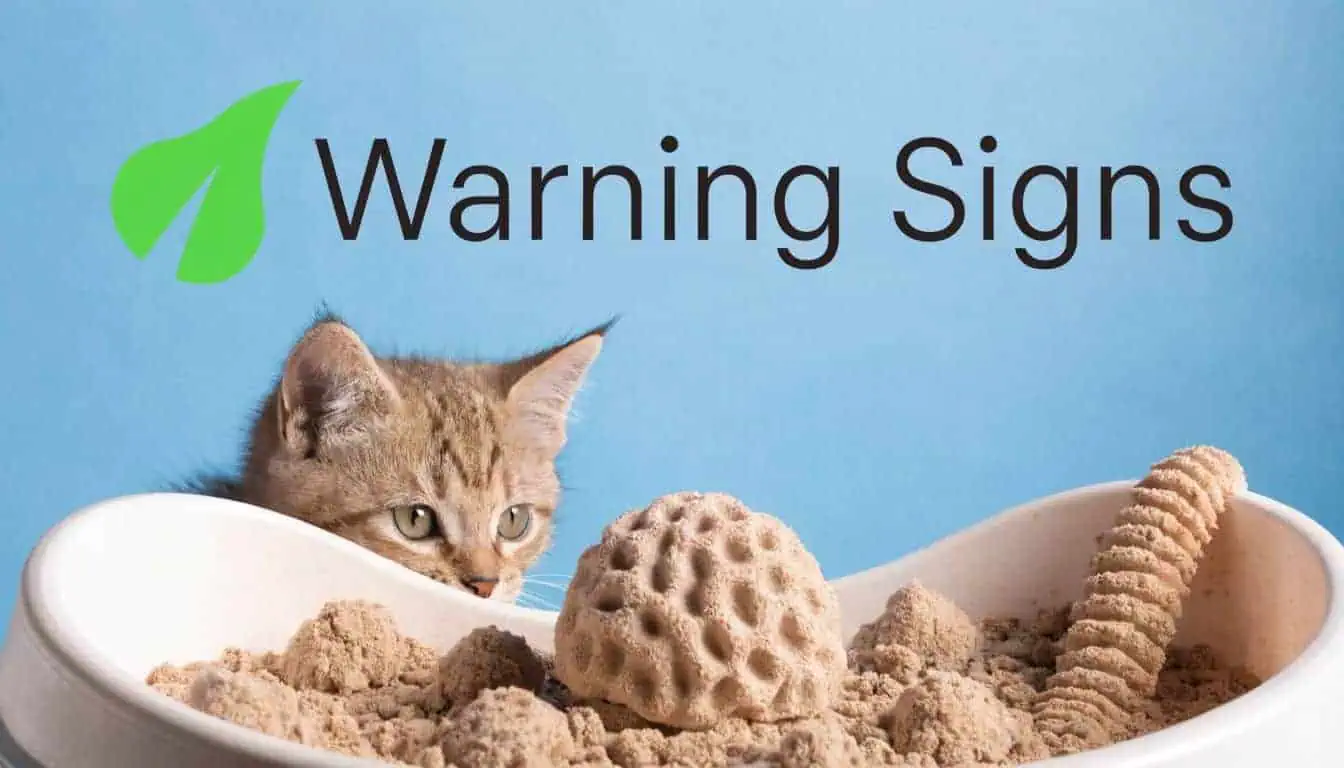
A useful rule is to focus on the pattern, not just one odd stool. Still, a few colors and textures deserve special caution. According to Vetster's guide to normal and abnormal stool in cats, yellow or orange stool can indicate liver issues, black tarry stool may signal digested blood and requires endoscopy in 90% of cases, and white specks are a common sign of tapeworms, which affect up to 22% of US cats.
Color changes that matter
Yellow or orange
This can point to liver or bile-related trouble. If the stool stays this color or your kitten seems unwell, don't ignore it.Green
Green stool can happen when material moves through the gut too quickly. Owners often see this with digestive upset.Black and tarry
This is one of the more serious signs. Black stool can mean digested blood from higher up in the digestive tract.Red streaks
Fresh red blood may come from irritation or inflammation near the lower bowel or rectum. Even if the kitten seems okay, it's worth calling your veterinarian.
Texture changes and extra material
Some changes are easier to miss than color changes.
Watery stool
True diarrhea isn't just soft poop. It's loose enough to lose form or soak into litter.Hard pellets
Small, dry stools suggest constipation or dehydration.Mucus or jelly-like coating
This often means the bowel is irritated.White specks or rice-like pieces
Tapeworm segments are a common concern. Bone fragments from certain diets can also confuse owners, so context matters.Visible worms
If you see worm-like material, save a sample if you can.
Signs owners often overlook
A kitten doesn't need dramatic diarrhea to have a problem. Watch for these litter box clues too:
- Straining
- Crying while pooping
- Frequent trips with little coming out
- Suddenly not pooping in the box after using it well before
- A strong drop in appetite paired with stool changes
If you can describe the color, shape, and whether your kitten strained, you'll give your veterinarian much better information than saying “it looked weird.”
Common Causes of Kitten Poop Problems
When stool changes, most owners want to know one thing. Why did this happen now? Usually the answer falls into one of three buckets. Diet, stress, or a medical problem.
According to Kitten Coalition's guide to understanding kitten poop, weaning kittens between 4 and 8 weeks typically poop 2 to 3 times daily, and a 2025 AVMA study found that 35% of owners misjudge normal frequency. The same source notes that stress and dietary changes in urban areas like Queens can make problems worse.
Diet changes
This is one of the most common reasons for a sudden stool change.
Maybe your kitten switched from one canned food to another. Maybe a family member offered treats. Maybe the kitten chewed on something that wasn't food. Young stomachs can react quickly.
Common diet-related triggers include:
- Fast food changes
- Too many treats
- Rich foods
- Eating litter, plants, or household items
A mild soft stool after a food transition can happen. Persistent diarrhea, repeated vomiting, or a painful belly should not be brushed off as “just the food.”
Stress and environment
Queens kittens go through a lot in their first days home. New apartment, new smells, subway rumble outside, visitors, children, other pets, different feeding times. Stress can affect the gut.
Look for timing. If the stool changed right after adoption, travel, boarding, or a move between neighborhoods, stress may be part of the picture. That doesn't rule out illness, but it can help explain why the change started.
Medical causes
Some stool problems come from issues you can't see from the outside.
These include:
- Parasites
- Bacterial or viral infections
- Inflammation in the intestines
- Constipation
- Bleeding somewhere in the digestive tract
A stool sample is often one of the fastest ways to sort out what's going on.
A helpful history for your vet includes when the stool changed, what food your kitten eats, whether the kitten is indoors only, and whether vomiting or appetite changes started at the same time.
Urgent or Emergency When to See a Vet in Queens
Most owners don't struggle with noticing a problem. They struggle with deciding whether they should monitor, book a visit, or leave right away.
Use this framework to make that call.
Signs of an urgent issue
These symptoms should prompt a same-day or prompt veterinary call, even if your kitten still seems fairly bright:
- Soft stool that keeps happening
- Hard stool with straining
- Mucus in the stool
- Red streaks of blood
- White specks that may be worms
- A noticeable change in pooping pattern
- Pooping outside the box along with digestive signs
- Mild vomiting plus stool changes
If you're trying to decide whether your kitten's symptoms have crossed the line, this page on when to take a cat to the emergency vet can help you compare warning signs.
Signs of a true emergency
Go directly for emergency care if you see any of these:
- Black, tarry stool
- Repeated vomiting
- Severe diarrhea
- Lethargy or weakness
- Refusing food or water
- A painful, bloated, or tense abdomen
- Collapse
- Straining with little or no stool while acting distressed
- Any stool change plus a very young kitten acting quiet or limp
Young kittens can decline fast. If your kitten seems significantly less responsive, colder than usual, or unable to keep anything down, don't wait for the next day.
What to do before you leave home
A little preparation can make the visit smoother.
- Bring a fresh stool sample if you can collect one safely
- Take a photo of the stool if the sample isn't practical
- Write down the food brand and any recent changes
- Note when the problem started
- Tell the clinic about vomiting, appetite, and energy level
- Transport your kitten in a carrier with a towel
Do not give human medications unless your veterinarian specifically tells you to.
If you're unsure, call while you're getting ready. It's better to ask than to guess with a small kitten.
Text us at 718-301-4030. If symptoms are severe or after hours, go directly to a 24/7 emergency hospital.
Frequently Asked Questions About Kitten Poop
Is it normal for my kitten to poop several times a day
Yes, sometimes. Frequency varies with age and diet. Weaning kittens often poop more often than older cats, and what matters most is whether the stool is formed, the kitten is eating, and there's no straining or other signs of illness.
My kitten is on a raw diet. Should the poop look different
Sometimes, yes. According to Rover's article on cat poop changes and raw diets, the popularity of raw diets has risen 40% in urban areas, and healthy raw-fed kittens may have softer, greyer-brown stools with a 15% increase in mucus due to microbiome shifts. That can confuse owners because it may look abnormal even when it's diet-related. Raw diets still need veterinary oversight because bacterial risks and true intestinal disease can look similar.
What happens at a vet visit for diarrhea
Your veterinarian usually starts with a history and physical exam. Expect questions about food, stool appearance, vomiting, appetite, hydration, litter box habits, and timing. A fecal test is often recommended because parasites and other intestinal problems can't be ruled out just by looking.
Why is my kitten pooping outside the litter box
This can be medical, behavioral, or both. A kitten with diarrhea, constipation, pain, or urgency may not make it to the box in time. Stress, a dirty litter box, the wrong litter texture, or a box that's hard to access can also contribute.
Should I save a stool sample
Yes, if you can do it safely and it's fresh. Use a clean container or sealed bag. A photo also helps if the sample falls apart in litter.
Can I wait and see
Sometimes, for a single mild change in an otherwise playful kitten. Don't wait if your kitten is very young, has black stool, keeps vomiting, won't eat, seems weak, or looks painful.
If your kitten's stool has changed and you're not sure what it means, Union Vet NY can help you sort out what's normal, what's urgent, and what needs immediate care. Text us at 718-301-4030. If symptoms are severe or after hours, go directly to a 24/7 emergency hospital.
