
Queens Pet Owner’s Guide: UTI Symptoms in Dogs
As a pet owner in Queens, you know your dog's daily habits better than anyone. So when they’re suddenly having accidents, straining to pee, or just seem uncomfortable, it's their way of telling you something is wrong. Recognizing the signs of a urinary tract infection (UTI) early is key.
A UTI happens when bacteria enter the urinary tract, causing a painful infection. For pet owners in areas like Oakland Gardens, Bayside, and Fresh Meadows, knowing what to look for can help you act quickly.
Text us at 718-301-4030. If symptoms are severe or after hours, go directly to a 24/7 emergency hospital.
Common UTI Symptoms in Your Dog

Watching your dog’s bathroom routine might not be glamorous, but it’s one of the best ways to keep tabs on their health. A UTI is a painful infection that needs veterinary attention.
Here are the most common signs you might see:
- Frequent Urination: Your dog is asking to go out much more often or squatting multiple times on a walk.
- Accidents in the House: A previously house-trained dog suddenly starts having accidents.
- Straining to Urinate: They posture to pee but only a few drops (or nothing) comes out.
- Bloody or Cloudy Urine: You notice a pink, red, or cloudy look to their urine.
- Licking Their Genitals: They may lick the area obsessively to soothe the irritation.
- Crying or Whimpering: They show signs of pain while urinating.
If you notice any of these signs, it’s time to seek veterinary advice. While UTIs are common in all dogs, they are especially frequent in females. You can find more details in our guide on the signs your dog has a urinary tract infection.
Text us at 718-301-4030. If symptoms are severe or after hours, go directly to a 24/7 emergency hospital.
Urgent vs. Emergency: When to Act Fast
Knowing the difference between an urgent problem and a true emergency is crucial for dog owners in Glen Oaks, Little Neck, and surrounding Queens neighborhoods.
When It's Urgent (Schedule a Vet Visit)
An urgent situation needs a vet's attention but isn't immediately life-threatening. If your dog is still eating and drinking but showing mild signs, you have time to make an appointment.
Book an appointment if you see:
- Frequent requests to go outside.
- Accidents in the house.
- Cloudy or strong-smelling urine.
- Excessive licking of the genital area.
When It's an Emergency (Go to a 24/7 Hospital Now)
A true emergency involves severe symptoms that could indicate a life-threatening blockage or systemic infection. Go to an emergency vet right away.
Red Flag Emergency Signs:
- Inability to Urinate: Your dog is straining but cannot pass any urine. This is a life-threatening emergency, especially in male dogs.
- Extreme Pain: Crying out, whimpering, or showing obvious signs of severe discomfort.
- Severe Lethargy: Your dog is weak, unresponsive, or cannot get up.
- Tense or Swollen Abdomen: Their belly feels hard, bloated, and painful to the touch.
Knowing when to act can make all the difference. For more examples, see our guide on when to take your dog to an emergency vet.
Text us at 718-301-4030. If symptoms are severe or after hours, go directly to a 24/7 emergency hospital.
What to Do Before Your Vet Visit
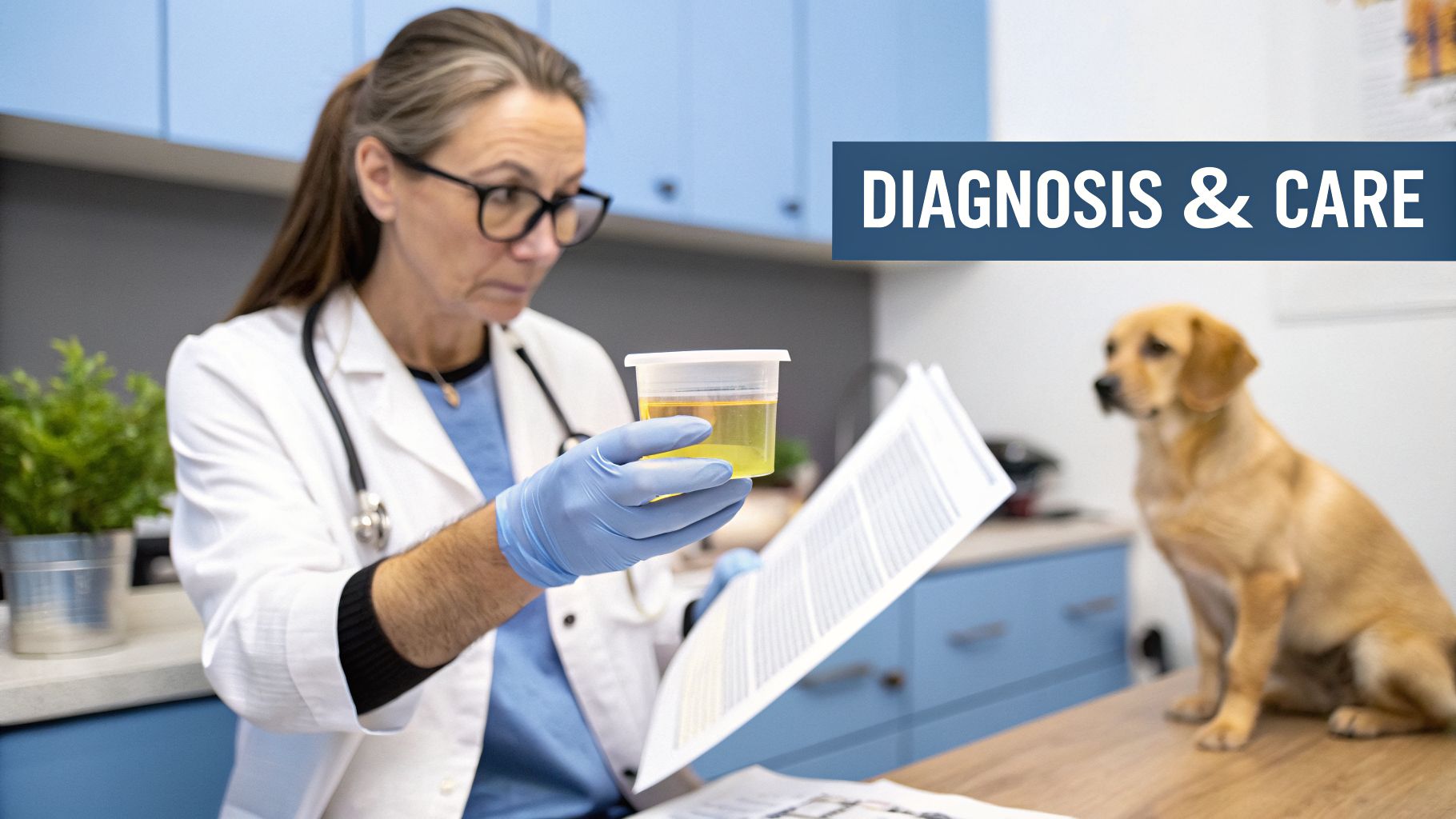
A little preparation can help your veterinarian diagnose the problem more quickly.
Practical Steps to Take:
- Try to Prevent Urination: If possible, don't let your dog urinate right before the appointment. We may need to collect a sterile urine sample for testing.
- Collect a Sample (If You Can): If you can catch fresh urine in a clean, shallow container (a soup ladle works), bring it with you. If not, don't worry.
- Note the Symptoms: Jot down all the signs you've noticed and when they started.
- Call Ahead: If you are going to an emergency hospital, call them while you are on your way so the staff can prepare.
A serious warning: Never give your dog human medications for pain or infection only if your veterinarian advises. Many are toxic to dogs and can cause serious harm.
Text us at 718-301-4030. If symptoms are severe or after hours, go directly to a 24/7 emergency hospital.
Home Care and Prevention Tips
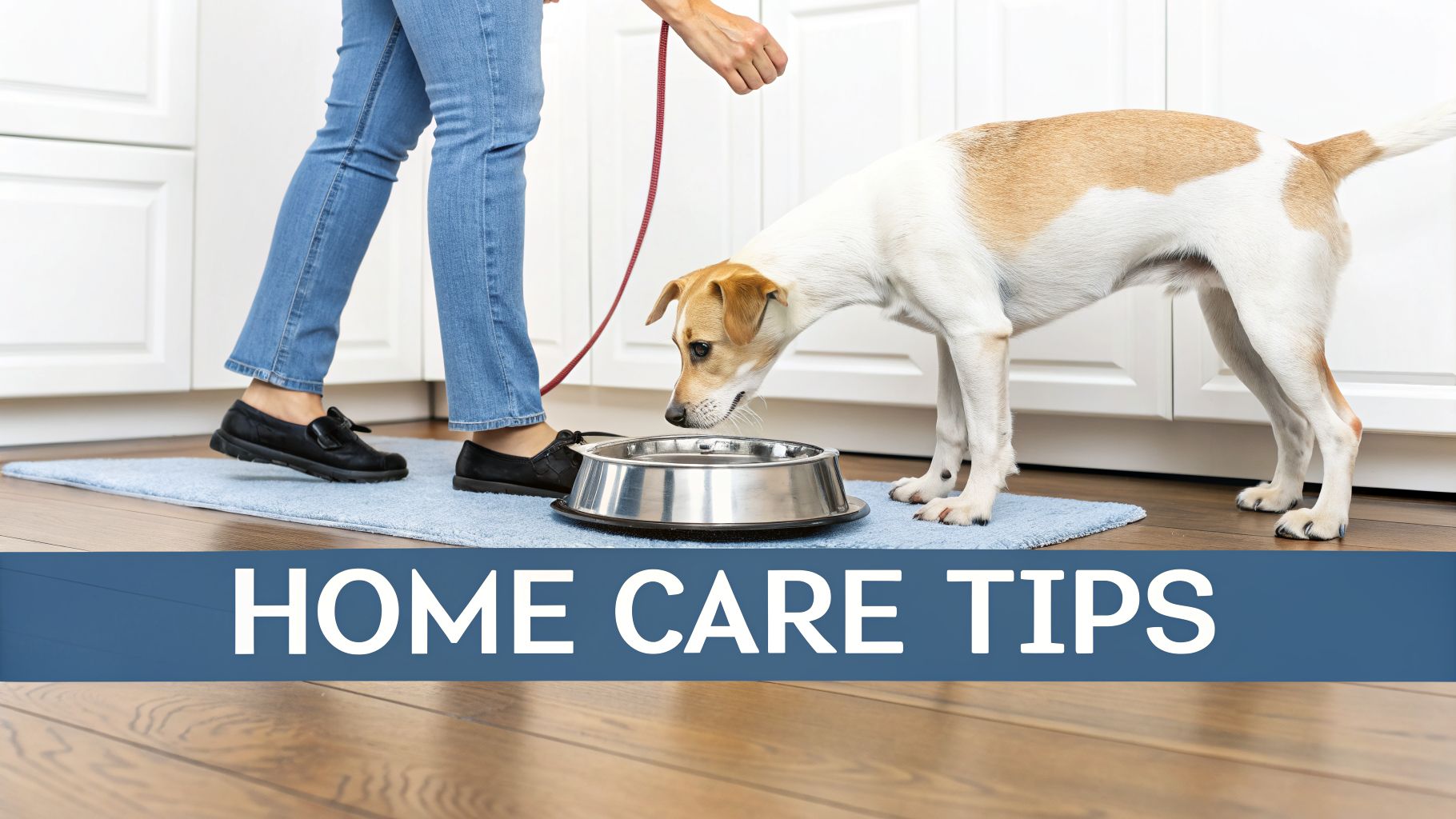
Once your dog has been diagnosed, following your vet's treatment plan is the most important step. But there are things you can do at home to help prevent future infections.
- Provide Constant Fresh Water: Keeping your dog well-hydrated helps flush bacteria from the bladder. Use multiple clean bowls.
- Offer Frequent Potty Breaks: Don't make your dog "hold it." Regular breaks prevent urine from sitting in the bladder, where bacteria can multiply. Take them out first thing in the morning and last thing at night.
- Maintain Good Hygiene: Keep the genital area clean and dry. For long-haired dogs, a "sanitary trim" can prevent urine from clinging to the fur and causing irritation.
- Follow Medication Instructions: Give all antibiotics exactly as prescribed for the full duration. Stopping early can cause the infection to return.
Following these practical habits can make a real difference for your dog's long-term urinary health. You can find more safe suggestions in our guide on at-home UTI remedies for dogs.
UTIs are common, with research showing they affect up to 27% of dogs in their lifetime. You can read the full research on urinary infections in pets to learn more.
Text us at 718-301-4030. If symptoms are severe or after hours, go directly to a 24/7 emergency hospital.
Frequently Asked Questions (FAQ)
We hear these questions often from worried pet owners in Hollis, Queens Village, and across our community.
Can I treat my dog's UTI at home without a vet?
No. A UTI is a bacterial infection that requires prescription antibiotics. At-home remedies cannot cure the infection, and delaying veterinary care can allow it to worsen and potentially spread to the kidneys. The symptoms can also mimic more serious conditions like bladder stones or tumors, which require a proper diagnosis.
How quickly will my dog feel better after starting treatment?
Most dogs start to show improvement within 24 to 48 hours of starting the correct antibiotic. However, you must finish the entire course of medication prescribed by your veterinarian to ensure the infection is fully cleared.
Are some dog breeds more likely to get UTIs?
Yes. While any dog can get a UTI, female dogs are more susceptible due to their anatomy. Breeds with recessed vulvas or deep skin folds, such as Shih Tzus and Pugs, are also at higher risk. Additionally, breeds like Bichon Frises and Miniature Schnauzers are more prone to bladder stones, which can lead to UTIs.
Can stress cause a UTI in my dog?
Stress does not directly cause a UTI, but it can weaken the immune system, making your dog more vulnerable to infections. A stressed dog might also hold their urine longer, giving bacteria more time to multiply in the bladder.
If you have questions about your dog's health, we're here to help.
Text us at 718-301-4030. If symptoms are severe or after hours, go directly to a 24/7 emergency hospital.
