

How to Prevent Urinary Tract Infections in Cats: A Queens Owner’s Guide
For any pet owner in Queens—whether you're in Bayside or Oakland Gardens—it’s stressful to see your cat in pain. Feline urinary tract infections (UTIs) and other urinary issues are a common concern, but the good news is that many are preventable.
This guide uses clear, calm language to help you protect your cat. We'll cover symptoms, how to know if it's an emergency, and practical steps you can take today.
For immediate concerns, text us at 718-301-4030. If symptoms are severe or after hours, go directly to a 24/7 emergency hospital.
A Queens Pet Owner’s Guide to Feline Urinary Health

As a cat owner in a busy neighborhood like Fresh Meadows or Queens Village, you know your cat's health is a top priority. While true bacterial UTIs are less common in younger cats, other painful conditions like Feline Idiopathic Cystitis (FIC) have nearly identical symptoms.
This is why focusing on prevention is so important for your cat's overall urinary wellness. This guide offers practical advice to help you protect your cat from these painful problems by creating a supportive home environment.
Understanding the Basics of Cat Urinary Health
Certain factors can make a cat more prone to urinary issues. Knowing these risks helps you stay one step ahead of a potential problem.
Key risk factors include:
- Age: Cats over 10 years old are more susceptible to UTIs, often linked to other conditions like kidney disease or diabetes.
- Weight: Overweight cats may struggle to groom themselves properly, which can allow bacteria to enter the urinary tract.
- Diet: The wrong diet can change urine pH and encourage crystal formation, which irritates the bladder.
- Stress: A stressful home environment can directly trigger bladder inflammation (cystitis), which looks and feels just like a UTI.
Our pet wellness center is dedicated to a proactive approach to pet health. Small, consistent changes in your cat's daily routine can make a significant difference in their urinary health and overall quality of life.
Recognizing UTI Symptoms and Knowing When to Act
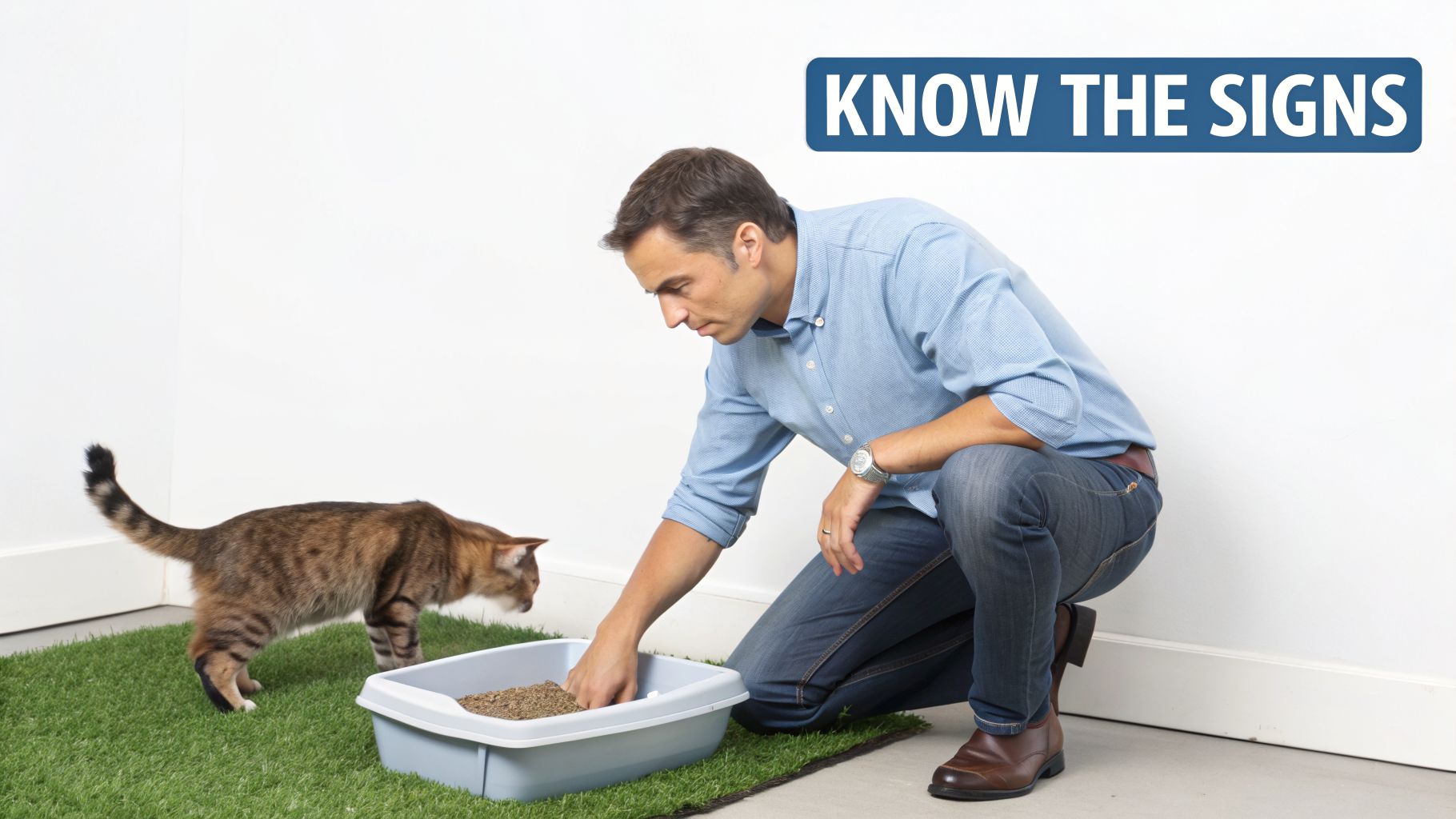
As a cat owner from Hollis to Little Neck, learning the signs of a urinary problem is one of the most important things you can do. Cats are masters at hiding pain, so the first clues are often subtle.
You will likely notice a change in your cat’s litter box habits first. A major red flag is your cat making many trips to the box but only passing a tiny amount of urine—or none at all.
Common Signs of a Urinary Problem
Keep a close eye on your cat’s behavior. If you see any of the following signs, it’s time to call a veterinarian.
- Frequent trips to the litter box: The cat goes in and out repeatedly, trying to urinate.
- Straining or crying: They might meow or cry out while squatting, which signals pain.
- Urinating outside the box: Finding urine in unusual places like the bathtub or on laundry is a classic sign of distress. They often start associating the litter box with pain.
- Excessive licking: You may notice them constantly licking their genital area due to irritation.
- Bloody or discolored urine: Even a slight pink tinge is abnormal and requires a vet visit.
These symptoms can point to various issues, from a bacterial infection to bladder inflammation or painful crystals. You can learn more about a cat urinary tract infection on our blog, but the key is not to wait for these signs to improve on their own.
Urgent vs. Emergency: Knowing When to Rush to the Vet
Knowing the difference between an urgent issue and a life-threatening emergency can save your cat's life. This is especially true for male cats, whose narrow urethra makes them highly prone to a complete urinary blockage—a condition that can be fatal in just 24-48 hours if not treated.
Here is a quick guide to help you assess your cat's symptoms.
| Symptom Level | Signs to Watch For | Recommended Action |
|---|---|---|
| Urgent | Straining but still passing some urine Blood in the urine Urinating outside the litter box Crying or meowing while urinating |
Contact your veterinarian. These symptoms are serious and require prompt attention, but the bladder is likely not completely blocked. |
| Emergency | Straining repeatedly with no urine coming out Extreme vocalizing or crying in pain Lethargy, hiding, or collapse Vomiting Loss of appetite |
This is a life-threatening emergency. Go directly to the nearest 24/7 emergency veterinary hospital immediately. Do not wait. |
A urinary blockage is one of the most critical emergencies in veterinary medicine. If you see the signs of an emergency, especially in a male cat, every minute counts.
What to Do Before You Arrive
If your cat needs to see a vet, staying calm is the best way to keep their stress levels from rising.
- Contact the Vet: Call ahead to let the veterinary clinic know you are on your way. Clearly describe the symptoms, especially if your cat is unable to pass any urine.
- Prepare the Carrier: Place a soft, clean towel inside a secure cat carrier.
- Transport Calmly: Move slowly and speak in a quiet, reassuring voice. Avoid loud noises and sudden movements.
- Do Not Give Human Medications: Never give your cat human pain relievers or other medications unless explicitly stated as "only if your veterinarian advises." Many are toxic to cats and can worsen the situation.
Your only job is to get your cat to professional care safely and quickly.
Text us at 718-301-4030. If symptoms are severe or after hours, go directly to a 24/7 emergency hospital.
How Diet and Weight Management Prevent Cat UTIs
What your cat eats is a major factor in preventing urinary issues. For cat owners in Queens neighborhoods like Fresh Meadows and Bayside, understanding the link between diet, weight, and urinary health can save you and your cat from painful, stressful emergency vet visits.
A proper diet does more than just fill a bowl—it creates an internal environment where urinary problems are far less likely to develop.
The Problem with Extra Pounds
There is a direct connection between obesity and urinary infections. Overweight cats often struggle to groom themselves properly, which can allow bacteria to travel up the urethra and cause a painful infection.
Extra weight can also create skin folds that trap moisture and bacteria, turning a simple hygiene issue into a recurring problem.
Prescription Diets: A Powerful Tool for Urinary Health
If your cat is prone to urinary problems, a specialized prescription diet can make a significant difference. These are not regular cat foods; they are therapeutic diets precisely formulated to manage urinary health.
Here’s how they help:
- Control Urine pH: These diets create urine that is too acidic for common urinary crystals and stones (like struvite) to form.
- Limit Minerals: They contain controlled levels of minerals like magnesium and phosphorus, which are the building blocks of bladder stones.
- Boost Hydration: The wet food versions are high in moisture, which naturally increases your cat’s water intake, dilutes their urine, and helps flush the bladder.
A lean body condition is one of the most effective ways to prevent recurring urinary issues. As cats get older, their dietary needs change. You can learn more by reading our guide on the best diet for senior cats.
A prescription diet should only be started after a veterinarian has diagnosed your cat’s specific condition. We can determine if a therapeutic diet is the right choice for your pet.
Text us at 718-301-4030. If symptoms are severe or after hours, go directly to a 24/7 emergency hospital.
Hydration and Litter Box Hygiene: Your First Line of Defense
When it comes to preventing urinary tract infections in cats, some of the most powerful tools are also the simplest: more water and a clean litter box.
For pet owners in busy Queens communities like Bayside or Oakland Gardens, building these two simple habits into your daily routine can make all the difference for your cat's long-term urinary health. More water helps dilute your cat's urine and flush out bacteria before an infection can take hold.
How to Get Your Cat to Drink More Water
Cats evolved as desert animals and don’t have a strong natural thirst drive. Just leaving out a bowl of water often isn’t enough. You may need to be a little creative.
Here are a few practical tips that work:
- Switch to wet food. This is the single easiest and most effective change. Wet food is typically 75% water, while dry kibble contains very little.
- Try a water fountain. The sound and sight of moving water attract many cats and can encourage them to drink more often.
- Add water to their food. Mixing a splash of water or low-sodium broth into their food is an easy way to boost hydration.
- Offer multiple water stations. Place a few fresh water bowls in different spots around your home. Keep them away from food and litter boxes.
Why a Clean Litter Box Is So Important
A clean litter box is non-negotiable for urinary health. A dirty box is a breeding ground for bacteria and a major source of stress for cats.
Cats who avoid a dirty box will hold their urine longer, which is a huge risk factor for UTIs. Poor hygiene can also let bacteria like E. coli travel up the urethra, a problem you can learn more about from the experts at MiDogTest.com. A clean litter box encourages your cat to urinate frequently, which is nature’s best way to flush the urinary system.
Litter Box Best Practices
Follow these simple rules for a clean, inviting, and healthy litter box environment:
- The "N+1" Rule: The golden rule for multi-cat homes is one litter box per cat, plus one extra. So if you have two cats, you need three boxes.
- Scoop Daily: Get in the habit of scooping waste at least once a day. A clean box is an inviting box.
- Choose the Right Box: Most cats prefer large, open-top litter boxes that are easy to enter and exit.
- Location Matters: Place boxes in quiet, low-traffic areas where your cat feels safe and won't be startled.
Text us at 718-301-4030. If symptoms are severe or after hours, go directly to a 24/7 emergency hospital.
Managing Stress and Special Risks for Senior Cats
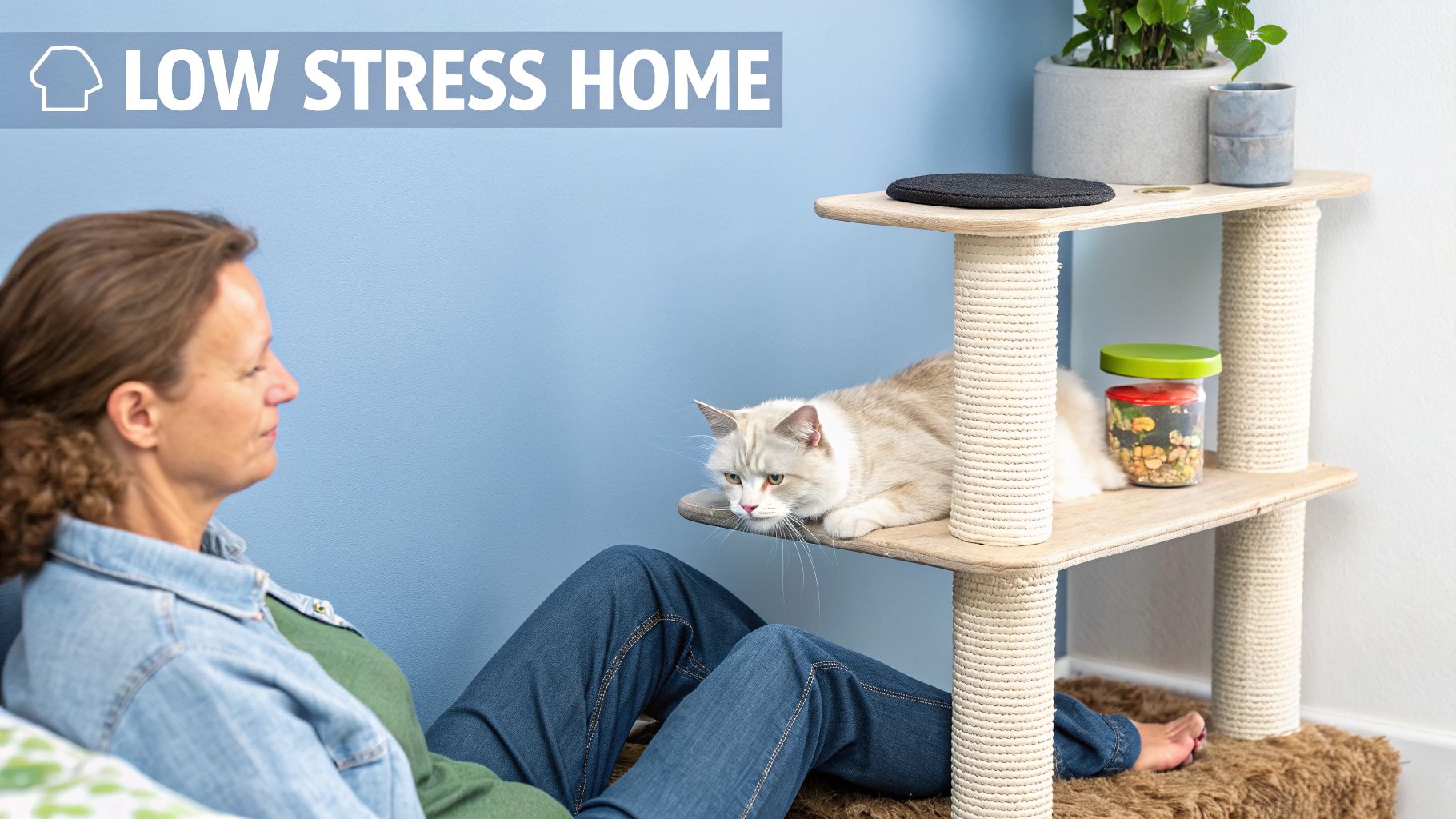
Two of the biggest triggers for urinary issues are often the ones we overlook: stress and old age. For cats living in a busy Queens household, from Little Neck to Queens Village, the daily commotion can be more stressful than you think. As cats get older, their bodies also change, leaving them more vulnerable to problems like UTIs.
Knowing how to manage these risks is a key part of prevention.
Creating a Calm Oasis for Your Cat
Stress is a known trigger for Feline Idiopathic Cystitis (FIC), a painful inflammation of the bladder that mimics a UTI. Loud noises, a new pet, or even just moving furniture can set it off.
Making your home a more serene place is a powerful step in how to prevent urinary tract infections in cats.
- Provide Vertical Space: Cats feel safer when they can watch things from above. A cat tree or wall shelves provide a secure escape from household hustle.
- Use Puzzle Feeders: These toys channel nervous energy into a positive activity, preventing boredom and stress.
- Create Quiet Retreats: Ensure your cat has a quiet spot, like a covered bed in a low-traffic room, where they know they won’t be bothered.
The Unique Challenges for Senior Cats
Age is a major risk factor for true bacterial UTIs. In fact, research shows that cats over 10 years old are at a much higher risk. You can read more about how age impacts feline UTI risk in this study.
This is often because senior cats are more likely to have other health issues, like chronic kidney disease or diabetes. These underlying conditions can alter a cat's urine, making it easier for bacteria to thrive. This is why regular wellness exams for senior cats are so important.
For a senior cat, a UTI is often a sign of a larger issue. Proactive screening lets us catch underlying problems early, so we can manage their overall health instead of just treating infections.
Text us at 718-301-4030. If symptoms are severe or after hours, go directly to a 24/7 emergency hospital.
Short FAQ: Your Cat UTI Questions Answered
Here are quick, calm answers to some of the most common questions we get from cat owners in Queens.
Can I give my cat cranberry supplements for a UTI?
While cranberry can help people, it is not a proven fix for cats and can sometimes do more harm than good. A cat's urinary issues are often caused by inflammation or stress, not just bacteria. Some supplements can make urine too acidic, creating a perfect environment for different, more dangerous bladder stones to form. Never give your cat a supplement unless your veterinarian specifically advises it.
Is my cat's UTI contagious to my other pets?
No, a standard bacterial UTI is not contagious. Your other cats, dogs, or family members are not at risk. However, if multiple pets show urinary symptoms at the same time, it may point to a shared environmental trigger like stress or a problem with the litter box setup.
How does a vet diagnose a UTI?
A veterinarian's diagnosis is the only way to know what’s really going on. What looks like a simple UTI could be sterile inflammation, crystals, or a life-threatening blockage. We start with a physical exam and then run a urinalysis. This urine test looks for bacteria, white blood cells, crystals, and other signs of trouble. If the problem is recurring, a urine culture can identify the exact bacteria and the best antibiotic to treat it.
At Union Vet NY, we’re here to help you keep your cat healthy and comfortable.
Text us at 718-301-4030. If symptoms are severe or after hours, please go directly to a 24/7 emergency hospital.
