

How to Brush Your Dog’s Teeth: A Guide for Queens Pet Owners
Brushing your dog's teeth at home doesn't have to be complicated. The basic idea is to use a dog-specific toothbrush and toothpaste, make it a positive experience, and gently brush the outside of their teeth in small circles. It’s all about creating a calm, daily habit to stop plaque in its tracks and boost their overall health.
Why Brushing Your Dog's Teeth Is So Important
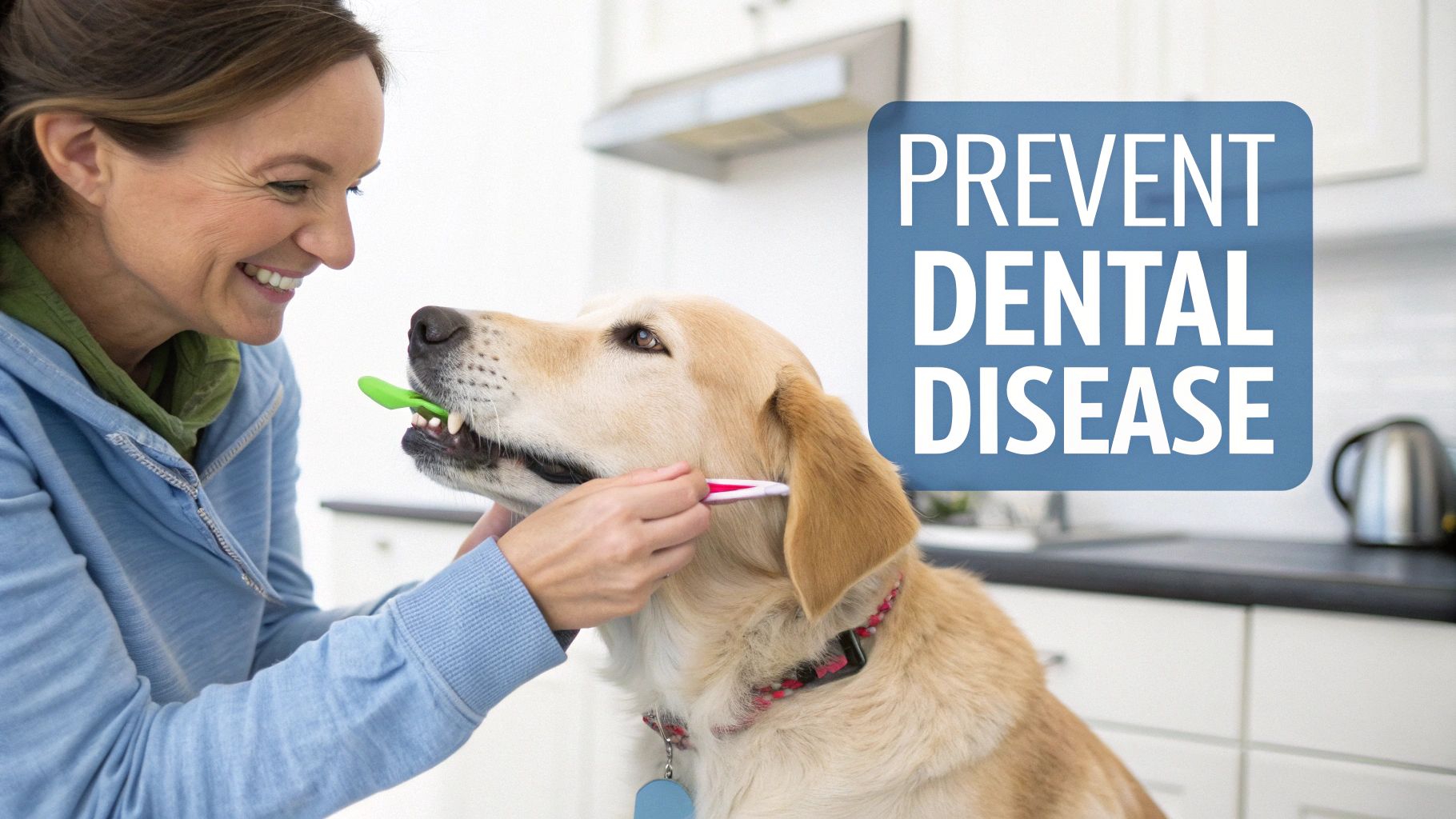
If you're a busy pet owner in Queens—whether you're in Bayside, Oakland Gardens, or Fresh Meadows—adding another task can feel overwhelming. We get it. But when it comes to your dog's well-being, a couple of minutes of daily dental care can prevent serious pain and help you avoid costly vet bills later on.
Ignoring your dog's teeth is about more than just bad breath. That sticky film of bacteria on their teeth, called plaque, can harden into stubborn tartar in just 24-48 hours. This tartar buildup is the root cause of periodontal disease, a painful condition that unfortunately affects most adult dogs.
From Plaque to Systemic Problems
Think of plaque as the first domino. It's relatively easy to manage with daily brushing. But once it hardens into tartar, it starts irritating the gum line and causing inflammation, or gingivitis. Left untreated, this progresses to periodontitis, which destroys the bone and tissues holding the teeth in place, often leading to tooth loss.
The problem doesn't stop in the mouth. Bacteria from a severe dental infection can enter your dog's bloodstream and travel to their vital organs. This is why poor oral health is directly linked to more serious, body-wide conditions:
- Heart Disease: Oral bacteria can inflame the heart valves, a dangerous condition called endocarditis.
- Kidney Issues: The kidneys work hard to filter these bacteria from the blood and can become damaged in the process.
- Liver Problems: The liver is another organ that can be negatively affected as bacteria spread.
Regular brushing isn't just about a pretty smile; it’s a cornerstone of preventative health. Every time you brush, you're actively reducing the risk of systemic infections and protecting your dog's entire body.
The True Cost of Neglecting Dental Health
For many pet owners in Glen Oaks and Queens Village, the thought of a surprise vet bill is a huge source of stress. A professional dental cleaning is essential, but it can be expensive—especially if extractions are needed. The cost of treating systemic problems that stem from dental disease is even higher.
Investing a few minutes a day in brushing is a small, consistent effort that pays off big time in your dog's comfort, health, and longevity.
By learning how to brush your dog's teeth at home, you become their first line of defense. Our veterinary team, including dedicated experts like Dr. Lara Cabugawan, is here to help you get this vital routine started. This guide will walk you through everything, from picking the right tools to making it a positive experience for your dog.
Choosing the Right Dog Dental Care Tools
Walking into a pet store and seeing a whole aisle dedicated to dental care can feel like a lot. The good news? You don't need all of it. To get started with brushing your dog’s teeth at home, you just need a couple of key items that are safe, effective, and make the process easier for both of you.
Getting the right gear can mean the difference between a frustrating chore and a great bonding routine. It all starts with a toothbrush and toothpaste made just for dogs.
Picking the Perfect Toothbrush and Toothpaste
First, you need a toothbrush that fits your dog’s mouth. What works for a large dog in Hollis isn't going to work for a tiny dog over in Little Neck.
- Dual-Headed Toothbrushes: These are fantastic for medium-to-large breeds. One end has a larger brush for easy-to-reach surfaces, and the other has a smaller brush for getting into tight spots.
- Finger Brushes: A soft, silicone brush that fits over your fingertip. This is a great starting point for puppies or small dogs who might be wary of a long-handled brush.
- Soft-Bristled Human Toothbrushes: Only if your veterinarian advises, a kid's toothbrush with extra-soft bristles can work. Just know that brushes designed for dogs usually have better angles for hitting those back molars.
Next, you absolutely need dog-specific toothpaste. Never use human toothpaste on your dog. It contains ingredients like fluoride and xylitol, which are toxic to dogs and can cause serious health issues. Your go-to should always be a vet-approved enzymatic toothpaste. These formulas use enzymes to help break down plaque and come in flavors dogs like (think poultry or beef), making the experience more pleasant.
Your At-Home Dog Dental Care Kit
To make things simple, here’s a quick rundown of the essential tools you’ll want to have on hand.
| Tool | Best For | A Practical Tip for Pet Owners |
|---|---|---|
| Dog Toothbrush | Daily plaque removal | Choose a dual-headed brush for large dogs or a finger brush for puppies and small breeds. |
| Enzymatic Toothpaste | Breaking down bacteria and plaque safely | Pick a flavor your dog enjoys, like chicken or beef, to make brushing feel like a treat. |
| Dental Wipes | Quick clean-ups and nervous dogs | Great for in-between brushing days or for wiping down the outer surfaces of the teeth. |
| VOHC-Approved Chews | Supplementing your brushing routine | Look for the VOHC seal to ensure the chew has been proven to help reduce plaque or tartar. |
These are the core items that will set you up for success.
Other Tools for a Healthier Mouth
While nothing beats daily brushing, a few other products can support your routine. Think of them as helpful extras, not replacements.
Dental wipes are a convenient option for days when you're short on time or for dogs still warming up to a toothbrush. You can use them to wipe plaque off the tooth surface, though they won't get under the gumline as well as bristles can.
Dental chews and treats can also make a difference. When shopping, look for products with the Veterinary Oral Health Council (VOHC) Seal of Acceptance. That seal means the product has been scientifically proven to help reduce plaque or tartar as your dog chews.
Even with the right tools, you might have questions. If you notice persistent bad breath, red or swollen gums, or if your dog seems hesitant to chew, these could be signs of a deeper dental issue.
Text us at 718-301-4030. If symptoms are severe or after hours, go directly to a 24/7 emergency hospital.
Making Teeth Brushing a Positive Routine
The secret to brushing your dog's teeth at home is patience, not force. Your goal is to turn a new chore into a predictable, rewarding ritual. For pet owners across Queens, from Oakland Gardens to Hollis, creating a calm, low-pressure vibe is the most important first step. Pick a time when you’re both already relaxed, like after a long walk or a quiet evening cuddle.
Creating a Calm Environment
First, find a comfortable spot where your dog already feels safe, like on the floor or a favorite chair. Avoid cornering or holding them down, as this creates anxiety. Your dog is an expert at reading your energy. If you’re stressed or rushing, they’ll know something is up. Speak in a calm, reassuring voice.
Before grabbing the toothbrush, your dog needs to be okay with you handling their mouth. Gently lift their lip for a second, then immediately praise them and offer a high-value treat. Repeat this over several days until they see it as no big deal.
A Step-by-Step Introduction
Once your dog is comfortable with you touching their muzzle, you can introduce the tools. The good news is that dog toothpaste often tastes like a treat.
- Step 1: Introduce Toothpaste: Put a tiny dab of enzymatic toothpaste on your finger and let them lick it off. Praise them the moment they taste it.
- Step 2: Gentle Touch: After they like the toothpaste, gently rub a little on their outer gums with your finger. This mimics the motion of brushing.
- Step 3: Introduce the Brush: Let your dog sniff the brush. Put a bit of toothpaste on the bristles for them to lick off. Don't try to brush yet.
- Step 4: First Brushing: When they are comfortable, gently lift their lip and brush one or two teeth in a small, circular motion. Stop after a few seconds, praise them enthusiastically, and give a treat.
Be patient. Each step might take a few days. Rushing is the number one mistake and can set you back. Let your dog’s comfort level set the pace.
The Gentle Brushing Technique
When your dog is ready, squeeze a pea-sized amount of paste onto the brush. Focus on the outside surfaces of the teeth, especially along the gumline, where most tartar builds up.
Keep initial sessions very short—30 seconds at most. As your dog gets used to the routine, you can slowly add more time and more teeth. The ultimate goal is about one minute of brushing per side.
Advice for Puppies and Reluctant Dogs
Your approach will change depending on your dog's age and temperament.
For a New Puppy:
Puppies are ideal for building good habits. Get them used to you handling their mouth, paws, and ears from day one.
- Start with a soft finger brush; it’s less intimidating.
- Keep sessions short and make it feel like a game.
- Work mouth-handling into daily cuddle time.
For an Older, Reluctant Dog:
If you have an older dog who is nervous, you’ll need extra patience.
- Go back to square one. Let them lick toothpaste off your finger for several days before moving on.
- Use high-value treats like tiny bits of plain chicken to build positive associations.
- If a toothbrush is a non-starter, try a dental wipe or gauze wrapped around your finger as an intermediate step.
Consistency is more important than perfection. Even brushing a few times a week is a huge win. If you see signs of pain like bleeding gums, stop. That’s a sign that a professional check-up is needed.
Text us at 718-301-4030. If symptoms are severe or after hours, go directly to a 24/7 emergency hospital.
How to Spot Signs of Dental Problems
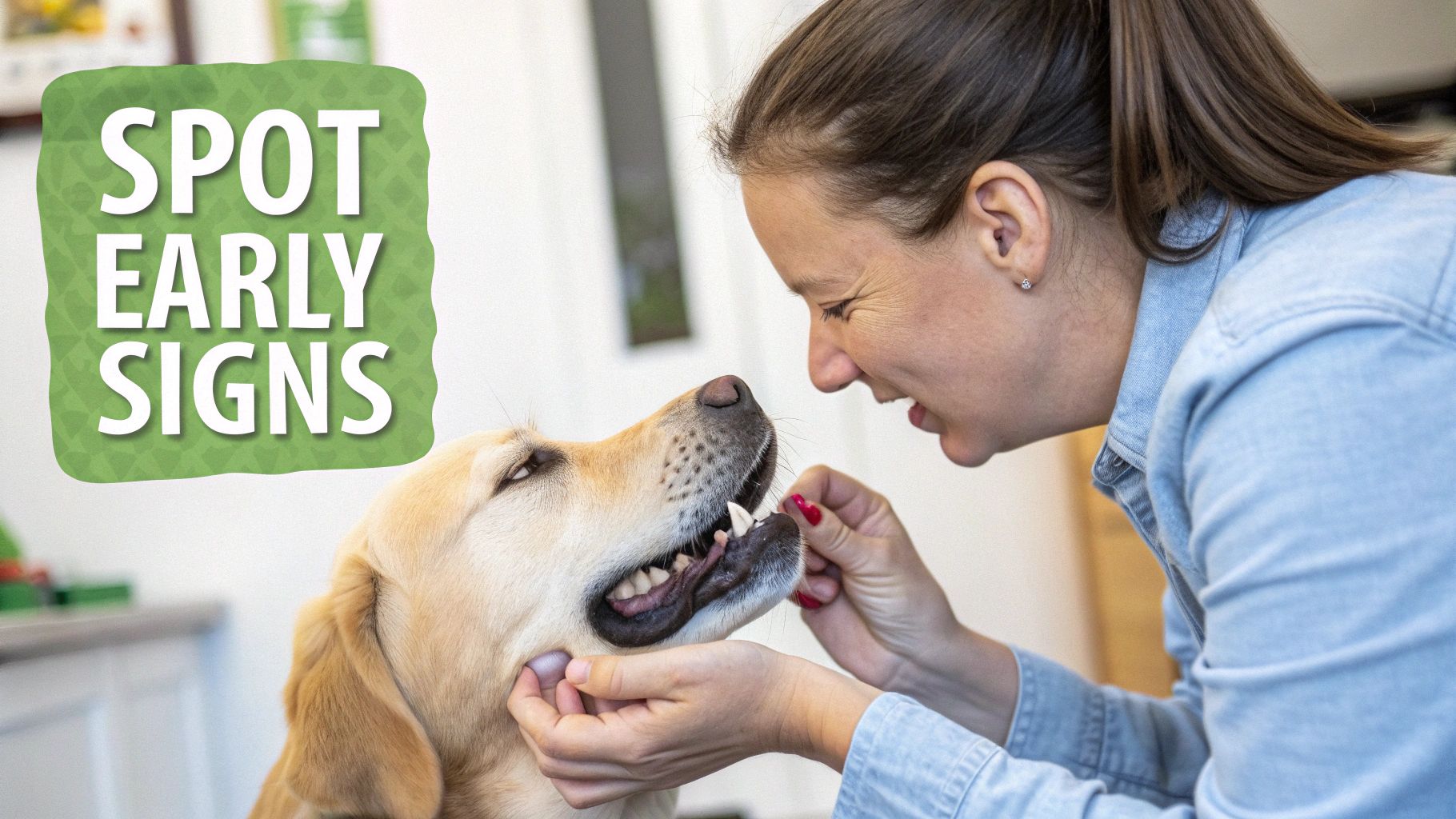
As a pet owner, you are the first to notice small changes that might signal a problem. Dogs are masters at hiding discomfort, so catching early signs makes all the difference. Get in the habit of lifting your dog’s lip for a quick peek to learn what’s normal for them.
Common Symptoms of Dental Disease
Here are the key warning signs to watch for:
- Persistent Bad Breath (Halitosis): A strong, foul odor that sticks around is the most common sign of bacterial buildup.
- Red, Swollen, or Bleeding Gums: Healthy gums are firm and pink. Puffy, bright red, or bleeding gums are a clear sign of inflammation (gingivitis).
- Visible Tartar Buildup: Plaque hardens into a yellow or brown deposit, usually seen clinging to the gumline, especially on the back teeth.
- Changes in Chewing Habits: Suddenly dropping food, chewing only on one side, or avoiding hard toys is a classic sign of mouth pain.
- Pawing at the Face or Mouth: If your dog is rubbing their face or pawing at their muzzle, they might be trying to tell you something hurts.
- Excessive Drooling: A sudden increase in drooling, or drool that’s tinged with blood, is a major red flag.
Urgent vs. Emergency: When to Act Fast
Knowing the difference between a routine concern and a true emergency helps you make the right call.
Urgent Issues (Schedule an Appointment Soon):
These signs mean your dog needs to see a vet, but it can usually wait for the next available appointment.
- Mildly red or puffy gums
- Consistent bad breath
- Visible yellow or brown tartar
- Slight hesitation to eat hard food
Emergency Situations (Seek Immediate Care):
These symptoms point to severe pain or infection and require immediate veterinary attention.
- Facial Swelling: Any swelling on the muzzle, especially under the eye, often signals a painful tooth root abscess.
- Visible Loose Teeth: A tooth that is clearly wobbly is causing significant pain and is a high risk for infection.
- Heavy or Uncontrolled Bleeding: Any significant bleeding from the mouth is an emergency.
- Inability to Eat or Drink: If pain is preventing your dog from eating, they need to be seen right away.
What to Do Before Arriving
If you're heading to the vet for a dental emergency, do not give your dog any human pain medications like ibuprofen or acetaminophen unless explicitly told to do so by a veterinarian, as they can be toxic. Keep your dog as comfortable as possible and let the veterinary team know you're on your way if you can.
The shocking reality is that a staggering 80% of dogs over the age of three have some form of periodontal disease. To learn more about this research, you can explore the comprehensive state-by-state data.
If you see any of these signs, don't wait for them to get worse.
Text us at 718-301-4030. If symptoms are severe or after hours, go directly to a 24/7 emergency hospital.
When to See a Vet for a Professional Cleaning
Even if you’ve mastered brushing your dog’s teeth at home, professional cleanings are still a non-negotiable part of their long-term health. Think of it this way: you brush your own teeth every day, but you still go to the dentist for a deep cleaning. The same logic applies to our dogs.
At-home brushing is fantastic for managing daily plaque, but it can’t remove tartar that has already hardened onto the teeth. It also can’t touch what’s happening below the gumline—where serious dental disease takes root. A professional cleaning is the only way to safely and completely remove that stubborn tartar and check the health of every single tooth.
Why Anesthesia Is Necessary for a Safe Cleaning
For pet owners in Bayside and Fresh Meadows, the thought of anesthesia can be worrying. We understand. But it is the gold standard of care for good reason. Anesthesia-free cleanings might sound safer, but they are purely cosmetic and can be dangerous. They only scrape visible tartar from the tooth's surface without addressing the real problems underneath.
Anesthesia ensures your dog remains completely still and pain-free, which lets our veterinary team:
- Clean Below the Gumline: This is where periodontal disease causes the most damage. Probing and cleaning these sensitive areas would be too painful for an awake dog.
- Take Detailed X-rays: Up to 60% of dental disease is hidden beneath the gums. X-rays are the only way we can spot problems like abscesses, bone loss, and fractured roots.
- Protect Their Airway: During a cleaning, we use water to flush debris. Anesthesia allows us to place a breathing tube that prevents them from inhaling any of that material into their lungs.
What Happens During a Professional Dental Procedure
A comprehensive dental procedure is much more than just a "cleaning." It’s a detailed oral health assessment designed to catch problems early.
Before we begin, we run pre-anesthetic bloodwork. This is a crucial safety check to ensure your dog’s organs are functioning well. Once they’re cleared, the process involves:
- A full oral exam while your dog is safely under anesthesia.
- Full-mouth dental X-rays to see the health of the jaw and tooth roots.
- Thorough scaling of each tooth—both above and below the gumline—to remove all plaque and tartar.
- Polishing the teeth to smooth the surface, which helps slow future plaque buildup.
- Charting any issues we find for their permanent medical record.
This process is a partnership between you and your vet. Consistent at-home brushing makes these professional cleanings more effective. You can learn more about the complete range of our veterinary services and how they support your pet’s overall wellness.
The growing awareness around pet dental health is clear. The U.S. pet dental health market hit $3.15 billion in 2024 and is expected to nearly double by 2034. You can check out the full findings on the pet dental market to see how preventative care is shaping the industry.
If you have questions about your dog's dental health or think it might be time for a professional assessment, we're here to help.
Text us at 718-301-4030. If symptoms are severe or after hours, go directly to a 24/7 emergency hospital.
Frequently Asked Questions
Here are some of the questions we hear most often from pet owners in Oakland Gardens, Bayside, and the surrounding Queens neighborhoods.
How often should I brush my dog's teeth?
The gold standard for preventing plaque from hardening into tartar is daily brushing. However, life gets busy. Brushing three to four times a week still provides huge benefits and is much better than not brushing at all. Consistency is more important than perfection.
Are dental chews a good substitute for brushing?
No. While many dogs love them, dental chews are not a substitute for brushing. Think of them as a helpful supplement, not a replacement. A dental chew is like using mouthwash—it helps, but it doesn't replace the mechanical action of scrubbing plaque off teeth. If you buy chews, look for the VOHC seal to ensure it’s been proven to help reduce plaque.
What if my dog's gums bleed a little?
A small amount of blood is not always a major problem. If your dog has mild gum inflammation (gingivitis), their gums might be sensitive and bleed a little when you first start a brushing routine. With consistent, gentle brushing, this minor bleeding should stop within a week or two. However, if the bleeding is heavy, persistent, or seems painful, stop brushing and consult your veterinarian.
What should I do if my dog hates having their teeth brushed?
If your dog resists, take a step back. Forcing it will only create more fear. Go back to square one and re-introduce the process very slowly.
- Go Back to Basics: For a few days, just let them lick the tasty toothpaste off your finger. No brush, just praise.
- Keep It Short: Re-introduce the toothbrush for just a few seconds at a time. Literally just touch it to their mouth, then reward them.
- Use High-Value Rewards: Use their absolute favorite treats only for toothbrush time to build a powerful positive association.
Struggling can be frustrating, but don't give up. If you need more personalized guidance or worry their resistance might be from pain, a professional check-up can rule out underlying issues. You can easily schedule an appointment with our team to get the support you need.
At Union Vet NY, we believe great at-home care is the foundation of a long, healthy life for your pet. If you have any concerns about your dog’s dental health or need help getting started with a brushing routine, we're here for you.
Text us at 718-301-4030. If symptoms are severe or after hours, go directly to a 24/7 emergency hospital.
