
What to Feed a Dog with a Sensitive Stomach in Queens, NY
When your dog has an upset stomach, the best first step is often to simplify their diet. Foods that are easy to digest, low in fat, and made with a limited number of ingredients are your best bet. This might mean a short-term bland diet, like boiled chicken and rice, or a specialized veterinary food designed for long-term gut health.
For pet owners in Queens neighborhoods like Oakland Gardens, Bayside, and Fresh Meadows, seeing your dog uncomfortable is stressful. This guide will help you understand the signs, know when to seek care, and make informed choices for your companion.
Understanding Your Dog’s Sensitive Stomach
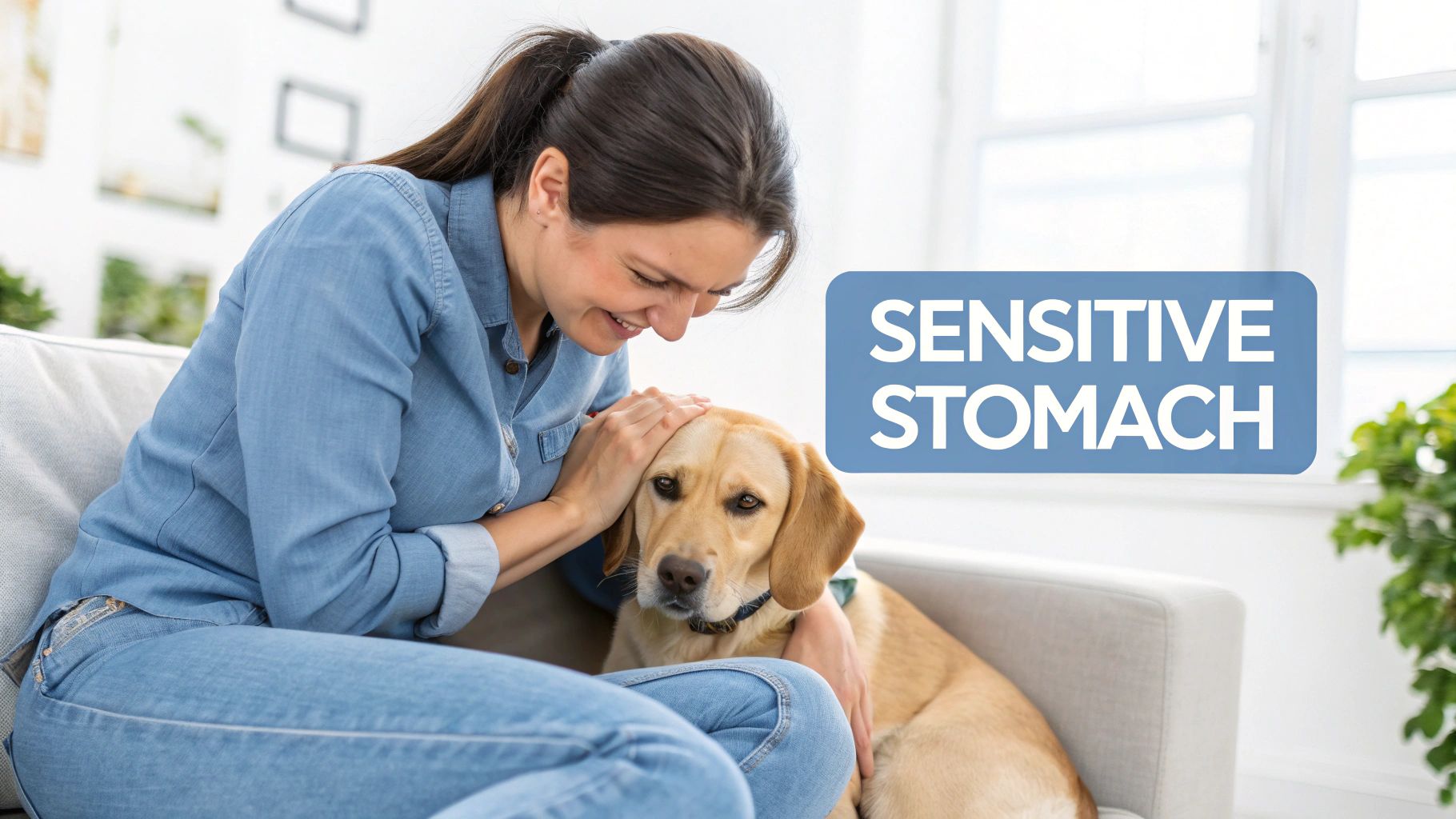
A "sensitive stomach" isn't a specific disease. It's a general term for when something is irritating your dog's digestive system. Sometimes it's a minor issue from eating something they shouldn't have. Other times, it can be a chronic problem that requires a long-term plan.
The first step is learning to spot the signs so you know how to respond.
Common Symptoms of a Sensitive Stomach
Digestive upset can show up in several ways. Keep an eye out for these recurring symptoms:
- Loose Stools or Diarrhea: This is the most common sign of digestive trouble.
- Occasional Vomiting: Spitting up, especially after a meal, often points to irritation.
- Excessive Gas: A sudden increase in gas or a particularly foul smell is worth noting.
- Loud Stomach Noises: Audible gurgling from your dog’s belly (borborygmi) means their gut is working overtime.
- Changes in Appetite: Suddenly refusing to eat can be a sign of nausea or discomfort.
If this sounds familiar, you're not alone. Digestive support diets are a growing part of the pet health market. According to GlobeNewswire, the market for functional pet food for digestive health is projected to grow significantly, showing how common this issue is.
Urgent Care vs. a True Emergency
Knowing when to contact your local vet versus when to rush to a 24/7 emergency hospital is critical. Some symptoms are urgent and can be handled during regular hours, while others are emergencies that cannot wait.
An urgent situation means your pet is uncomfortable but stable. An emergency means their condition is life-threatening and requires immediate intervention.
When to Seek Urgent vs. Emergency Vet Care
| Symptom | When It's Urgent (Contact a Vet) | When It's an Emergency (Go to a 24/7 Hospital) |
|---|---|---|
| Vomiting/Diarrhea | A few episodes, but your dog is still bright and alert. | Non-stop vomiting; unable to keep water down; blood in vomit or stool. |
| Appetite | Skipped one meal but is otherwise acting normally. | Refusing all food and water for over 24 hours; extreme lethargy. |
| Abdomen | Mild gassiness or occasional soft belly sounds. | A bloated, hard, or swollen abdomen; signs of severe pain when touched. |
| Behavior | A little quieter than usual but still responsive. | Collapse, weakness, trouble breathing, pale gums, or seizure. |
This table is a guide. If you feel something is seriously wrong, trust your instincts and seek care immediately.
What to Do Before Arriving
If you are heading to the vet for an urgent visit, try to gather this information:
- When did the symptoms start?
- What was the last thing your dog ate, and when?
- Have there been any recent changes to their diet or routine?
- Take a photo of the vomit or diarrhea if you can do so safely.
This information helps our team diagnose the problem more quickly. For more details on this topic, see our dog vomiting and diarrhea in our Queens-focused guide.
Text us at 718-301-4030. If symptoms are severe or after hours, go directly to a 24/7 emergency hospital.
Choosing the Right Food for a Sensitive Stomach
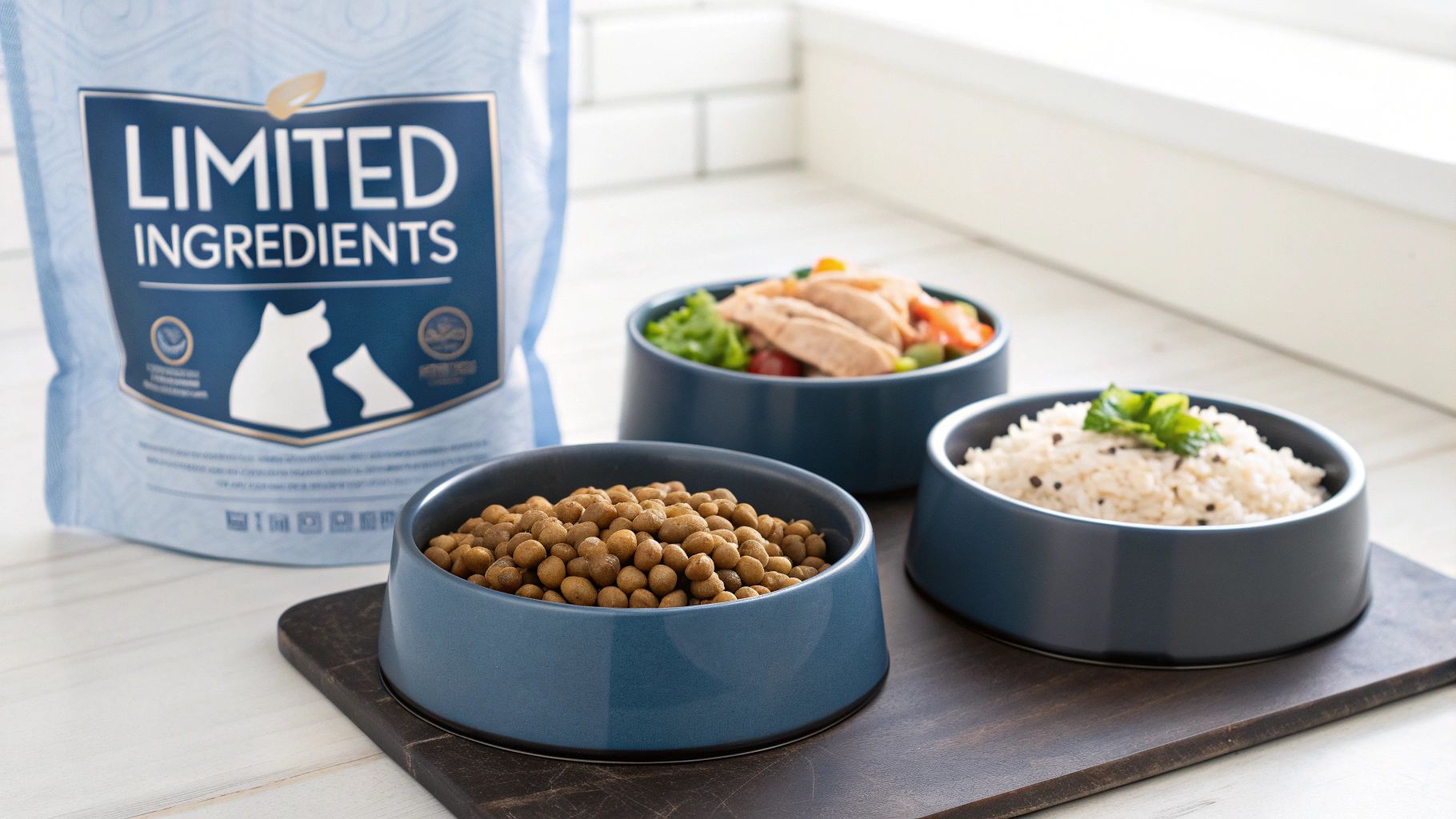
The pet food aisle can be overwhelming. Let's simplify the options veterinarians often recommend for dogs in Glen Oaks, Little Neck, and surrounding Queens areas.
- Limited Ingredient Diets (LID): These foods contain fewer ingredients, reducing the chance of triggering an intolerance. They typically use a single protein (like salmon) and a single carbohydrate (like sweet potato).
- Novel Protein Diets: A "novel" protein is one your dog has likely never eaten, such as duck, venison, or kangaroo. This can be effective for food allergies, as the immune system doesn't recognize the protein as a threat.
- Hydrolyzed Protein Diets: Available by prescription, these diets contain proteins that are broken down into tiny pieces. The fragments are too small for the immune system to detect, preventing an allergic reaction.
- Low-Fat & GI-Specific Diets: These formulas are highly digestible and low in fat, making them ideal for dogs with conditions like pancreatitis or general gastroenteritis. They often include prebiotics to support healthy gut bacteria.
Choosing the right food is a big decision, but you don't have to make it alone. Our team offers dietary counseling to help you find a plan that fits your dog’s specific needs.
Text us at 718-301-4030. If symptoms are severe or after hours, go directly to a 24/7 emergency hospital.
How to Transition Your Dog to a New Food Safely
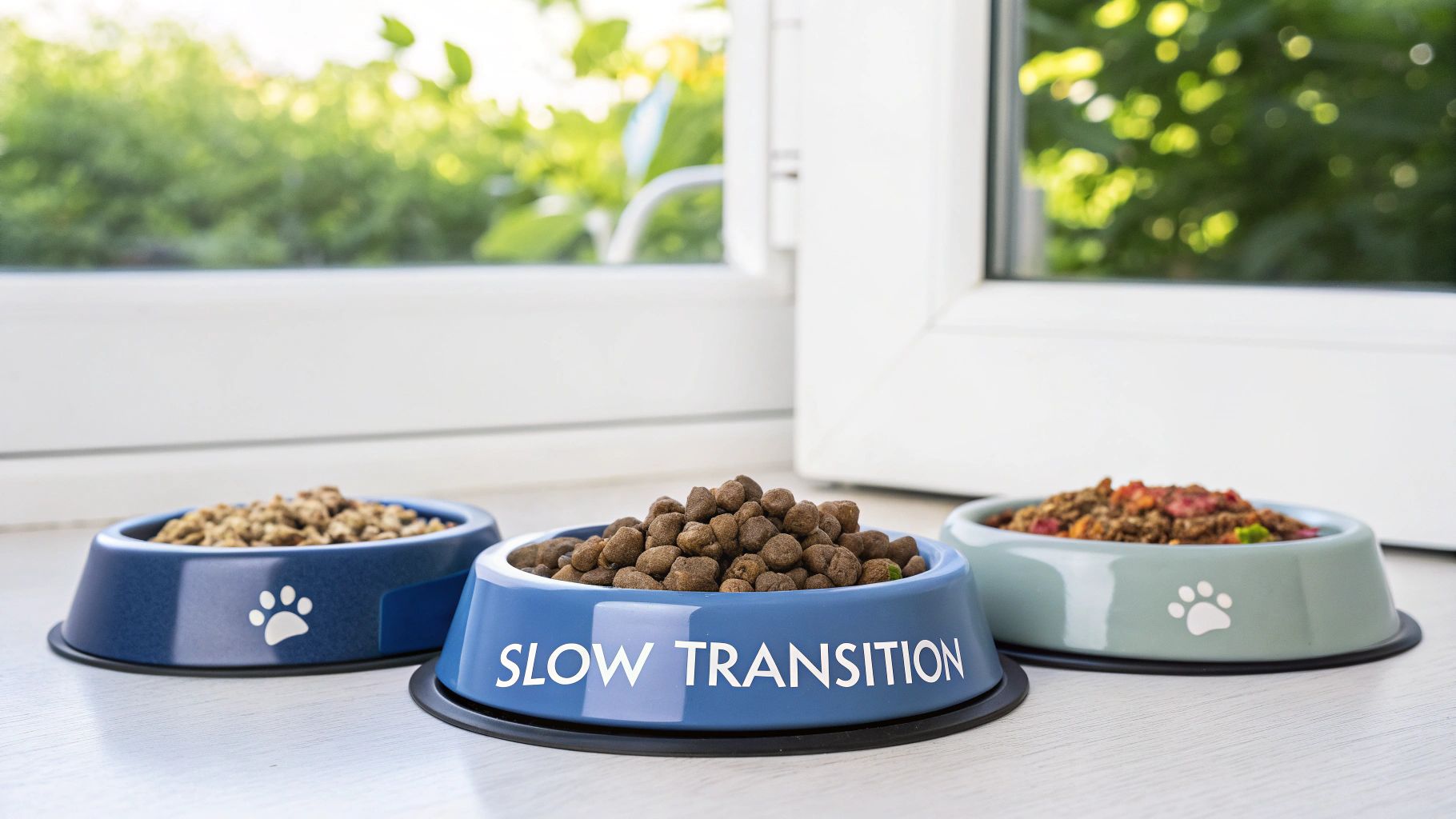
Switching your dog’s diet too quickly can cause the very digestive upset you are trying to solve. A slow, gradual transition gives their gut bacteria time to adapt.
A Practical 7 to 10-Day Plan
We recommend this simple schedule for pet owners in Hollis and Queens Village to ensure a smooth transition.
- Days 1–3: Mix 25% new food with 75% old food.
- Days 4–6: Move to a 50/50 mix of old and new food.
- Days 7–9: Increase to 75% new food and 25% old food.
- Day 10: If stools are firm and there is no upset, you can switch to 100% new food.
For very sensitive dogs, you may need to extend this process to 14 days. Watch your dog’s stool quality and energy levels—they will tell you if you are moving too fast.
If you see mild digestive upset, take a step back to the previous ratio for another day or two before trying to move forward again.
Text us at 718-301-4030. If symptoms are severe or after hours, go directly to a 24/7 emergency hospital.
Safe Treats and Supplements for Sensitive Dogs
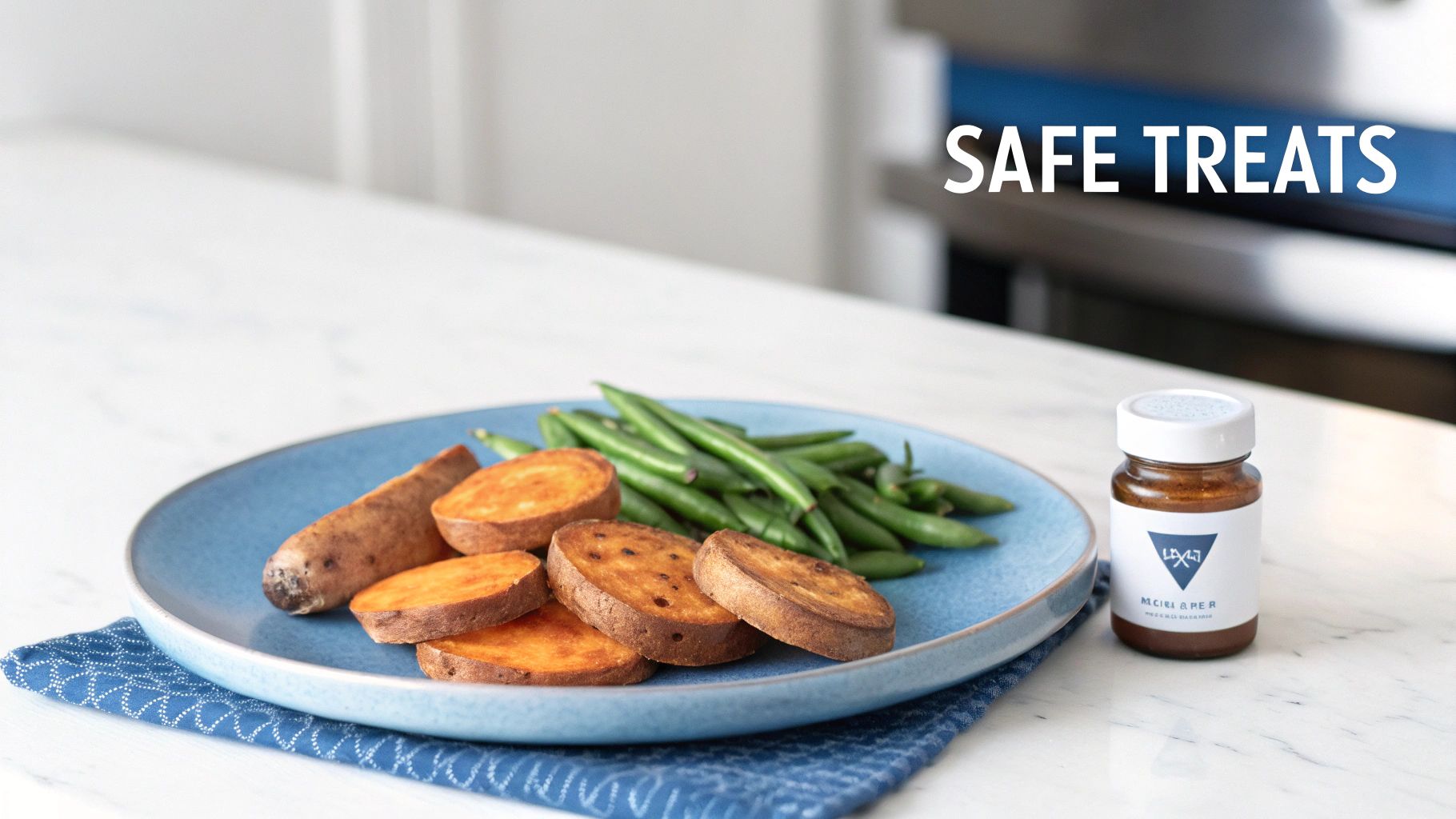
The wrong treat can easily undo all your hard work. Stick to simple, single-ingredient options.
Gut-Friendly Treats
- Plain, cooked sweet potato or pumpkin
- Small bites of boiled chicken or turkey
- Steamed or boiled green beans or carrots
Foods to Avoid
- Fatty or Greasy Foods: Table scraps like bacon or gravy can trigger pancreatitis.
- Dairy Products: Most adult dogs cannot digest lactose properly.
- Processed Commercial Treats: Many contain artificial ingredients and common allergens.
- Rawhide Chews: These can be difficult to digest and may pose a choking hazard.
Supplements like probiotics can be beneficial, but it’s important to use them correctly. Only if your veterinarian advises, you can add a vet-recommended probiotic to support gut health. Never add supplements without professional guidance.
For personalized advice on what to feed your dog, book an appointment with our team. The digestive health dog food market is growing, with more research showing the benefits of specialized diets. You can explore more market insights on wiseguyreports.com.
Text us at 718-301-4030. If symptoms are severe or after hours, go directly to a 24/7 emergency hospital.
Frequently Asked Questions (FAQ)
Here are answers to a few common questions we hear from pet owners in Queens.
Can my dog just stay on a bland diet of chicken and rice?
A bland diet is a temporary fix, meant for only a day or two. It lacks the essential vitamins and minerals your dog needs for long-term health. For chronic issues, a veterinary therapeutic diet is a safer, more complete option.
Are grain-free diets better for a sensitive stomach?
Not necessarily. True grain allergies are uncommon in dogs. Sensitivities to protein sources like chicken or beef are far more frequent. The goal is to identify the specific trigger ingredient, not eliminate an entire food group without a reason. A vet-guided food trial is the best way to do this.
What about human medications for diarrhea or vomiting?
Do not give your dog any human medications for digestive upset only if your veterinarian advises you to do so. Many over-the-counter drugs are toxic to dogs or have incorrect dosages. Always consult a professional first.
How do I know if it’s a food allergy or just an intolerance?
A food allergy is an immune system response that often causes skin issues (itching, rashes, ear infections) in addition to digestive upset. A food intolerance is purely a digestive problem where the gut can't process an ingredient, leading to gas or diarrhea without the skin signs. A veterinarian can help you distinguish between the two.
Figuring out the right diet for your dog is a team effort. For personalized guidance, the team at Union Vet NY is here to help pet owners throughout Queens.
Text us at 718-301-4030. If symptoms are severe or after hours, go directly to a 24/7 emergency hospital.
